


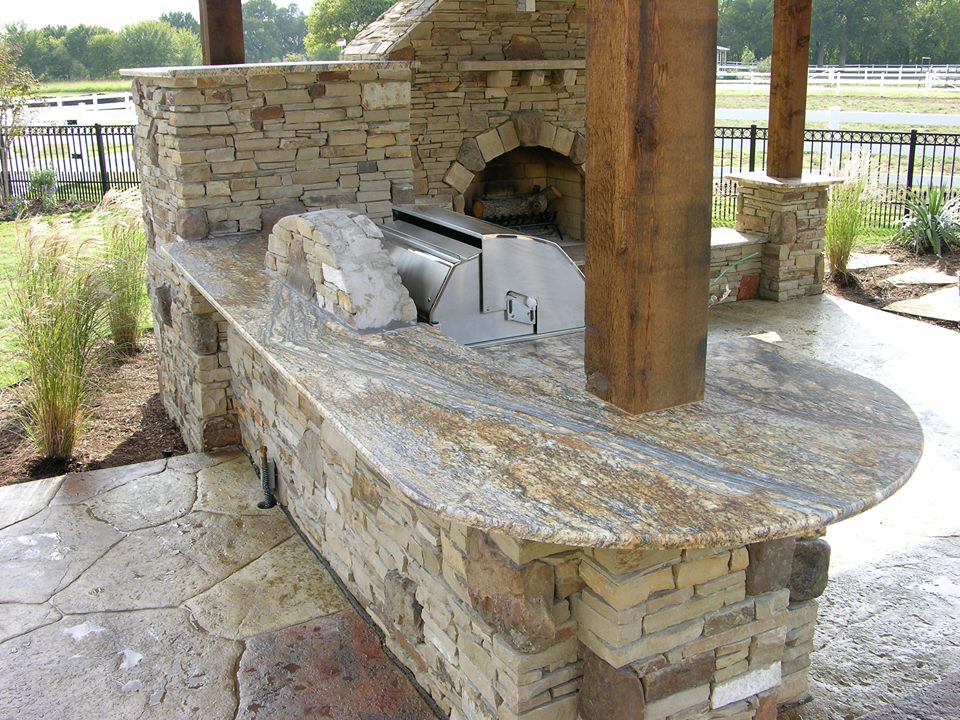
Outdoor kitchens, barbecue areas, rooftop entertainment spaces, garden bars, and swimming pool patios are becoming increasingly popular in Kenya. As homeowners invest in premium outdoor living areas, many naturally wonder whether engineered quartz is suitable for exterior use. The question is simple, but the answer requires understanding how engineered quartz is made. When considering quartz outdoors in Kenya, one of the biggest concerns is prolonged exposure to ultraviolet (UV) radiation.
Unlike natural stones such as granite and quartzite, engineered quartz is manufactured by combining crushed natural quartz with polymer resins, pigments, and bonding agents. While this creates a dense, attractive, and low-maintenance surface for indoor applications, the resin binder reacts differently when exposed to continuous sunlight. Over time, intense UV exposure can cause changes in colour, surface appearance, and overall performance.
Recommended Stone Solutions
Kenya’s climate presents unique challenges for outdoor materials. Many parts of the country receive strong sunshine throughout the year, and high UV levels can accelerate ageing in materials that are not specifically designed for exterior use. A countertop that performs exceptionally well inside a kitchen may not provide the same long-term results in a fully exposed outdoor setting.
This guide explains how quartz outdoors in Kenya performs under UV exposure, why engineered slabs behave differently from natural stone, which outdoor applications may still be suitable, and when alternative materials such as granite, quartzite, or porcelain are a better long-term investment.
At Maruti Mining Limited, we help homeowners, architects, designers, contractors, and developers select countertop materials that are appropriate for Kenya’s climate and the specific conditions of each project.
Explore premium natural stone and engineered surface collections from Maruti Mining Limited at quartz-stone.
What Is Engineered Quartz Made From?
Understanding quartz outdoors in Kenya begins with understanding how engineered quartz differs from natural stone.
Most engineered quartz slabs contain:
- Natural quartz crystals
- Polymer resins
- Pigments
- Bonding additives
Natural quartz itself is highly resistant to sunlight.
The component that creates challenges outdoors is the resin used to bind the quartz particles together.
Why UV Radiation Matters
Ultraviolet radiation gradually breaks down many synthetic materials.
Examples include:
- Plastics
- Paint
- Certain adhesives
- Polymer resins
Because engineered quartz contains resin, prolonged UV exposure may gradually affect its appearance over time.
The speed of change depends on:
- UV intensity
- Daily exposure
- Product quality
- Resin formulation
- Installation location
What Happens to Quartz in Direct Sunlight?
When engineered quartz receives continuous direct sunlight for extended periods, several changes may occur.
Possible effects include:
- Yellowing
- Slight fading
- Colour inconsistency
- Resin degradation
- Surface dulling
These changes usually develop gradually rather than suddenly.
Not every quartz slab ages at exactly the same rate, as manufacturing quality varies between products.
Does Every Quartz Slab Fade Outdoors?
No.
Some manufacturers produce quartz with improved UV stability.
However, most standard indoor engineered quartz products are designed primarily for interior environments rather than continuous outdoor exposure.
Always check the manufacturer’s recommendations before specifying quartz for external use.
Kenya’s Climate and UV Exposure
Kenya experiences high levels of sunlight throughout much of the year.
Outdoor countertops may receive:
- Direct midday sun
- Seasonal heat
- UV radiation
- Temperature fluctuations
- Rain
- Dust
These environmental conditions make material selection particularly important for long-term performance.
Outdoor Areas That Receive Less UV Exposure
Not every outdoor installation experiences the same conditions.
Quartz may perform better in:
- Fully covered verandas
- Enclosed outdoor kitchens
- Roofed entertainment areas
- Shaded courtyards
Reduced direct sunlight generally slows UV-related ageing.
Outdoor Areas with Continuous Sunlight
Fully exposed areas include:
- Open terraces
- Poolside kitchens
- Garden bars
- Rooftop entertainment spaces
- Courtyards without shade
For these applications, natural stone or porcelain often provides greater long-term stability.
Comparing Quartz with Natural Stone Outdoors
Natural granite and quartzite do not rely on resin binders in the same way engineered quartz does.
Benefits include:
- Excellent UV resistance
- Stable natural colour
- Long-term outdoor durability
- High heat resistance
This is why they are frequently specified for exterior kitchens and commercial outdoor spaces.
Common Myths About Quartz Outdoors
Myth: Quartz and quartzite perform the same outdoors.
Reality: Engineered quartz contains resin, while quartzite is a natural stone. Their outdoor performance is very different.
Myth: Every quartz slab immediately turns yellow outside.
Reality: UV-related changes usually occur gradually over time and depend on exposure and product quality.
Myth: Shade completely eliminates UV exposure.
Reality: Shade reduces direct sunlight but does not completely eliminate UV radiation.
For more expert natural stone advice, visit the Maruti Mining Knowledge Base at knowledge-base.
Can Quartz Outdoors in Kenya Still Be Used Successfully?
Quartz outdoors in Kenya is not always unsuitable, but success depends on where and how the material is installed. The level of UV exposure is the most important factor. A countertop installed beneath a permanent roof performs very differently from one exposed to direct sunlight every day.
Understanding the environment before selecting the material helps avoid premature discolouration and unnecessary replacement costs.
Covered Outdoor Kitchens
A covered outdoor kitchen provides one of the safest environments for engineered quartz.
These areas typically protect the countertop from:
- Direct midday sunlight
- Heavy rainfall
- Extreme temperature fluctuations
- Continuous UV exposure
Although some indirect UV light still reaches the surface, the risk of noticeable colour change is significantly lower than in fully exposed locations.
Semi-Covered Entertainment Areas
Pergolas, verandas, and gazebos provide partial protection.
However, consider:
- The direction of the afternoon sun
- Seasonal sun angles
- Reflected sunlight from surrounding surfaces
Even partial exposure over several years may gradually affect some engineered quartz products.
Fully Exposed Outdoor Countertops
For areas with uninterrupted sunlight, engineered quartz is generally not the preferred material.
Examples include:
- Garden kitchens
- Rooftop bars
- Poolside counters
- Outdoor serving stations
- Barbecue islands without roofing
Natural stone usually provides greater long-term stability under these conditions.
Granite vs Quartz Outdoors
Granite is one of the most popular choices for outdoor countertops.
Advantages include:
- Excellent UV resistance
- Outstanding heat resistance
- Natural colour stability
- Long service life
- High scratch resistance
Because granite is entirely natural, it is not affected by resin degradation in the same way as engineered quartz.
Quartzite vs Quartz Outdoors
Although their names are similar, quartz and quartzite are very different materials.
Engineered Quartz
Contains:
- Natural quartz
- Polymer resin
- Pigments
Best suited for interior environments.
Quartzite
Quartzite is a completely natural metamorphic stone.
Benefits include:
- Exceptional UV resistance
- Outstanding hardness
- Excellent weather resistance
- Natural beauty
For exposed outdoor projects, quartzite is often a superior choice.
Porcelain as an Outdoor Alternative
Large-format porcelain slabs have become increasingly popular for exterior kitchens.
Advantages include:
- UV stability
- Heat resistance
- Scratch resistance
- Low maintenance
- Wide range of colours and patterns
Many porcelain collections successfully imitate marble, concrete, and natural stone.
Does Heat Damage Quartz Outdoors?
Heat and UV exposure are separate issues.
While engineered quartz tolerates ordinary temperatures well, excessive heat from:
- Hot barbecue equipment
- Fire pits
- Pizza ovens
- Hot cookware
may damage the resin binder.
Heat-resistant mats or trivets should always be used around cooking appliances.
Questions to Ask Before Choosing Outdoor Countertops
Before specifying quartz outdoors in Kenya, ask your supplier:
- Is this product rated for outdoor use?
- Does the manufacturer provide an outdoor warranty?
- How much direct sunlight will the countertop receive?
- Would granite or quartzite perform better?
- Is porcelain a suitable alternative?
- What maintenance will be required?
Professional guidance helps ensure the chosen surface matches the environment.
Why Material Selection Matters More Than Appearance
Many countertop materials appear similar in a showroom.
However, outdoor performance depends on factors that are not immediately visible, including:
- UV stability
- Resin formulation
- Thermal performance
- Moisture resistance
- Weather durability
Choosing a surface based solely on appearance may lead to disappointment after several years of outdoor exposure.
Seeing Outdoor Stone Samples Before You Buy
Whenever possible, compare full-size samples under natural daylight.
Observe:
- Colour consistency
- Surface finish
- Reflection
- Texture
- Overall appearance
Viewing materials outdoors often provides a much better understanding of how they will perform than indoor showroom lighting alone.
Clients can also explore engineered quartz collections at quartz-stone, discover premium granite surfaces at top-granite-manufacturer-kenya-maruti-mining, browse marble collections at marble-manufacturer-kenya, or view completed stone projects at our-works.


Leave a Reply