


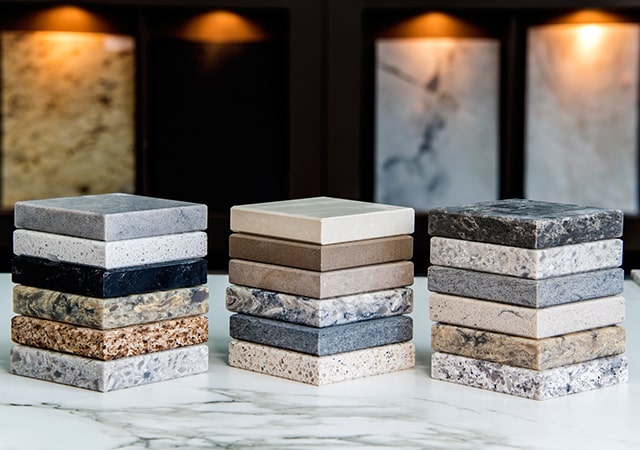
Choosing an engineered quartz countertop involves more than selecting a colour or pattern. Homeowners are often surprised to discover significant price differences between premium engineered quartz brands and generic slabs that appear almost identical at first glance. While both products may look similar in a showroom, the differences often become more apparent after years of everyday use.
The higher cost of recognised engineered quartz brands is not simply about marketing. Premium manufacturers invest heavily in raw material selection, manufacturing technology, quality control, colour consistency, and product testing. Generic slabs, on the other hand, can vary considerably in composition and manufacturing standards, leading to differences in durability, appearance, and long-term performance.
Recommended Stone Solutions



One of the biggest distinctions lies in the ratio of natural quartz to polymer resin. High-quality slabs generally contain a carefully controlled proportion of natural quartz crystals combined with premium resin systems and UV-stable pigments. Lower-quality products may contain more filler materials, inconsistent pigments, or lower-grade resins, which can affect stain resistance, colour stability, and overall durability.
Understanding the differences between engineered quartz brands and generic alternatives helps homeowners, architects, interior designers, contractors, and developers make informed purchasing decisions based on value rather than price alone.
At Maruti Mining Limited, we help clients compare premium engineered quartz products by focusing on measurable quality factors instead of marketing claims.
Explore premium engineered quartz collections from Maruti Mining Limited at quartz-stone.
What Is Engineered Quartz?
Before comparing engineered quartz brands, it is helpful to understand how engineered quartz is manufactured.
Most engineered quartz slabs consist of:
- Natural quartz crystals
- Polymer resins
- Colour pigments
- Performance additives
These materials are compressed under high pressure and cured to create a dense, durable, low-porosity surface suitable for kitchens, bathrooms, commercial spaces, and hospitality projects.
Why Prices Vary So Much
Two quartz slabs may appear almost identical while carrying significantly different prices.
Price differences often reflect:
- Manufacturing technology
- Raw material quality
- Pigment consistency
- Quality control
- Surface finishing
- Warranty support
- Research and development
These factors contribute to the long-term reliability of the finished countertop.
Resin Quality Matters
One of the biggest differences between engineered quartz brands and generic products is the quality of the resin system.
High-quality resins help improve:
- Colour stability
- Flexibility
- Bond strength
- Surface durability
- Long-term performance
Inferior resin systems may increase the likelihood of:
- Discolouration
- Surface dulling
- Premature wear
- Reduced resistance to chemicals
Quartz Content and Purity
Natural quartz is one of the hardest minerals used in countertop manufacturing.
Premium slabs typically contain carefully selected quartz particles that provide:
- Excellent scratch resistance
- Consistent appearance
- High durability
- Improved structural performance
Lower-quality slabs may use more filler materials or less consistent raw materials, affecting overall quality.
Pigment Quality
Colour consistency is another area where premium manufacturers often outperform generic products.
High-quality pigments help achieve:
- Uniform colour
- Stable patterns
- UV resistance
- Long-lasting appearance
Lower-grade pigments may fade, shift, or vary between production batches.
Manufacturing Technology
Premium manufacturers invest heavily in advanced production equipment.
Modern manufacturing helps produce slabs with:
- Better density
- Lower porosity
- Consistent thickness
- Improved structural integrity
- More uniform finishes
Consistent production standards also reduce defects.
Quality Control Standards
One of the major advantages of established engineered quartz brands is rigorous quality control.
Typical inspections may include:
- Surface inspection
- Thickness verification
- Colour consistency checks
- Impact testing
- Dimensional accuracy
- Structural testing
These inspections improve reliability before products reach the customer.
Why Warranties Matter
Warranty coverage often reflects the manufacturer’s confidence in its product.
Premium brands may provide warranties covering manufacturing defects, subject to installation and usage conditions.
While warranties differ between manufacturers, they can provide additional peace of mind for homeowners and commercial clients.
Common Myths About Engineered Quartz Brands
Several misconceptions influence buying decisions.
Myth: All quartz slabs are identical.
Reality: Manufacturing quality, resin systems, pigments, and quality control vary considerably between products.
Myth: Higher price only reflects branding.
Reality: Premium pricing often reflects better materials, stricter quality control, and stronger warranty support.
Myth: Generic slabs always perform poorly.
Reality: Some generic products offer good value, but quality varies much more widely than among established premium manufacturers.
For more expert countertop buying advice, visit the Maruti Mining Knowledge Base at knowledge-base.
Comparing Engineered Quartz Brands with Generic Slabs
When comparing engineered quartz brands with generic slabs, the biggest differences usually appear over years of use rather than on the day of installation. While both may look attractive when new, consistency, durability, and long-term performance often separate premium products from lower-cost alternatives.
Appearance and Colour Consistency
One of the first indicators of manufacturing quality is colour consistency.
Premium manufacturers invest in advanced pigment control systems that help ensure:
- Uniform colours between slabs
- Consistent veining
- Predictable patterns
- Reliable batch matching
This is particularly important for:
- Kitchen islands
- Waterfall ends
- Large commercial projects
- Open-plan kitchens
Generic slabs may show greater variation between production batches, making it more difficult to achieve a seamless appearance across multiple pieces.
Surface Finish Quality
The finish of a quartz slab affects both its appearance and ease of maintenance.
Well-manufactured engineered quartz brands typically offer:
- Even polishing
- Consistent sheen
- Smooth surface texture
- Better edge finishing
A high-quality finish also makes routine cleaning easier because dirt and food residue are less likely to cling to microscopic surface imperfections.
Dimensional Accuracy
Fabricators appreciate slabs that are manufactured to consistent dimensions.
Accurate production provides:
- Uniform thickness
- Straighter edges
- Better joint alignment
- More precise fabrication
These factors help installers achieve cleaner seams and more professional-looking finished countertops.
Long-Term Colour Stability
Kitchen countertops receive years of exposure to:
- Natural daylight
- Artificial lighting
- Heat
- Cleaning products
- Everyday use
Premium pigments and high-quality resin systems generally provide better long-term colour stability, reducing the likelihood of noticeable fading or discolouration.
Resistance to Everyday Wear
Both premium and generic quartz surfaces are durable, but differences may emerge after prolonged use.
Higher-quality slabs often provide improved resistance to:
- Everyday scratches
- Surface dulling
- Minor impacts
- Household chemicals
- Routine cleaning
Good maintenance remains important regardless of the manufacturer.
Fabrication Experience
Professional stone fabricators frequently notice differences that homeowners cannot immediately see.
Higher-quality slabs often machine more consistently during:
- Cutting
- Edge profiling
- Polishing
- Sink cut-outs
- Hob cut-outs
- Drilling
Consistent fabrication contributes to a better finished installation.
Warranty and After-Sales Support
One important advantage of recognised engineered quartz brands is the support that often accompanies the product.
Depending on the manufacturer, benefits may include:
- Product warranties
- Technical documentation
- Care recommendations
- Installation guidance
- Customer support
Generic slabs may offer more limited documentation or warranty coverage.
Is the Premium Always Worth It?
Not necessarily.
The best choice depends on:
- Budget
- Project size
- Expected lifespan
- Design priorities
- Intended use
For a luxury family kitchen expected to last many years, investing in a premium product may provide greater long-term value.
For some commercial or budget-conscious projects, a carefully selected generic slab may still perform well when professionally fabricated and installed.
Questions to Ask Before Buying
Rather than focusing only on brand names, ask your supplier:
- What is the slab’s warranty?
- Who manufactured it?
- Is colour matching available?
- What is the recommended cleaning method?
- Has the slab been professionally certified?
- What support is available after installation?
These questions often reveal more about quality than price alone.
Why Professional Advice Matters
Comparing engineered quartz brands requires more than looking at showroom displays.
Experienced stone specialists consider:
- Manufacturing quality
- Fabrication requirements
- Colour consistency
- Long-term durability
- Maintenance expectations
- Project budget
This helps clients choose a countertop that delivers reliable performance as well as visual appeal.
Clients can also explore engineered quartz collections at quartz-stone, discover premium granite surfaces at top-granite-manufacturer-kenya-maruti-mining, view elegant marble collections at marble-manufacturer-kenya, or browse completed natural stone installations at our-works.




Leave a Reply