



When it comes to premium natural stone surfaces, few materials combine breathtaking beauty with exceptional durability as successfully as Brazilian quartzite. Renowned for its remarkable hardness, striking mineral patterns, and resistance to everyday wear, Brazilian quartzite in Kenya has become an increasingly popular choice for luxury homes, commercial developments, hospitality projects, and high-end architectural spaces.
Often mistaken for marble because of its elegant veining, quartzite offers a completely different level of performance. Formed naturally when sandstone is subjected to intense heat and pressure deep beneath the Earth’s surface, quartzite becomes one of the hardest natural stones available for architectural applications. This transformation creates a dense material capable of resisting scratches, heat, and heavy daily use while preserving the sophisticated appearance traditionally associated with marble.
Recommended Stone Solutions
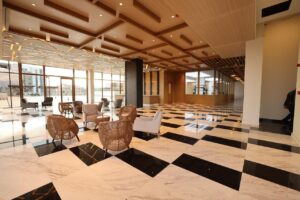
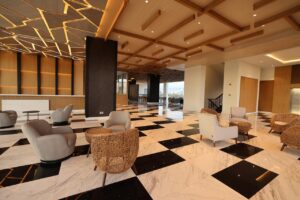
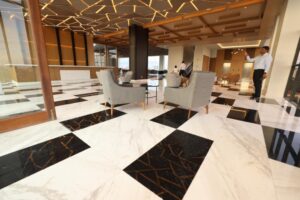
For homeowners and developers seeking premium worktops, flooring, staircases, wall cladding, or statement kitchen islands, Brazilian quartzite presents an attractive balance between luxury and practicality. Its ability to withstand demanding environments while maintaining unique natural beauty makes it especially suitable for projects where long-term performance is just as important as visual appeal.
However, selecting Brazilian quartzite in Kenya requires a clear understanding of its composition, finishes, slab thicknesses, fabrication process, pricing, maintenance, and how it compares with granite, marble, and engineered quartz. Each project has different structural, functional, and aesthetic requirements, making informed material selection essential.
At Maruti Mining Limited, we help homeowners, architects, interior designers, contractors, and developers choose premium natural stone solutions tailored to their specific projects. Whether you are designing a luxurious contemporary kitchen, an elegant commercial reception area, or a statement staircase, understanding Brazilian quartzite enables you to make a confident long-term investment.
You can explore the complete collection of premium natural stone available through Maruti Mining Limited and compare quartzite alongside granite, marble, and quartz surfaces for projects throughout Kenya and East Africa.
What Is Brazilian Quartzite?
Brazilian quartzite is a natural metamorphic stone formed when sandstone undergoes immense geological pressure and heat over millions of years. During this transformation, the individual quartz grains within the sandstone fuse together, producing an exceptionally dense and durable material.
Unlike engineered surfaces, every slab of Brazilian quartzite is entirely natural, displaying unique mineral formations, colours, and veining created by geological processes that cannot be replicated artificially.
Some of the defining characteristics of Brazilian quartzite in Kenya include:
- Exceptional hardness
- Natural crystalline appearance
- Unique veining
- High heat resistance
- Excellent scratch resistance
- Long service life
These qualities explain why quartzite has become one of the fastest-growing choices for luxury architectural projects worldwide.
For more information about selecting natural stone, you can visit our Knowledge Base for expert insights: knowledge-base.
Why Brazilian Quartzite Is Growing in Popularity
The increasing popularity of Brazilian quartzite in Kenya is driven by its rare combination of aesthetics and performance.
Many homeowners admire the soft flowing appearance traditionally associated with marble but require a material that performs better under demanding everyday conditions.
Quartzite satisfies both objectives by providing:
- Marble-like elegance
- Granite-level durability
- Outstanding structural strength
- Natural uniqueness
- Premium architectural appeal
Because each slab forms naturally, every installation becomes entirely unique.
This exclusivity has made Brazilian quartzite particularly attractive for bespoke residential developments and prestigious commercial interiors.
How Brazilian Quartzite Differs from Marble
Although quartzite and marble may appear similar from a distance, they possess fundamentally different geological structures.
Marble is a metamorphic limestone composed primarily of calcite.
Quartzite is formed from quartz-rich sandstone.
This distinction results in major performance differences.
Hardness
Quartzite is significantly harder than marble, making it far more resistant to scratches during normal use.
Stain Resistance
When professionally sealed, quartzite generally offers better resistance to everyday staining than marble.
Heat Resistance
Quartzite tolerates heat exceptionally well, making it highly suitable for kitchens and food preparation areas.
Durability
Its dense crystal structure enables quartzite to perform exceptionally well in busy residential and commercial environments.
These characteristics explain why many clients who appreciate marble aesthetics ultimately choose quartzite for practical reasons.
Brazilian Quartzite Compared with Granite
Quartzite is frequently compared with granite because both materials offer outstanding durability.
However, important differences exist.
Granite typically displays:
- Speckled mineral patterns
- Visible crystal formations
- Consistent colour distribution
Quartzite often features:
- Flowing veins
- Marble-like movement
- Layered mineral structures
- Dramatic natural patterns
While granite remains one of the world’s most reliable worktop materials, quartzite offers a softer, more elegant visual appearance without sacrificing strength.
Clients can also explore our extensive collection of granite at top-granite-manufacturer-kenya-maruti-mining to compare both natural stone options before making a final decision.
Popular Brazilian Quartzite Colours
Brazil produces an extraordinary range of premium quartzite varieties.
Some of the most sought-after colours include:
White Quartzite
Bright white backgrounds combined with elegant grey veining create timeless sophistication suitable for luxury kitchens and bathrooms.
Taj Mahal Quartzite
Known for its warm cream tones and soft flowing movement, Taj Mahal quartzite complements both contemporary and traditional interiors.
Blue Quartzite
Rare blue mineral formations create spectacular feature walls, statement islands, and luxury commercial installations.
Green Quartzite
Natural green minerals introduce organic character while maintaining the durability expected from premium quartzite.
Grey Quartzite
Neutral grey tones pair beautifully with modern cabinetry, steel fittings, and minimalist architectural styles.
Because every slab differs naturally, no two installations are ever identical.
Common Applications
The remarkable performance of Brazilian quartzite in Kenya allows it to be used across numerous residential and commercial applications.
Popular uses include:
- Kitchen worktops
- Kitchen islands
- Bathroom vanities
- Flooring
- Staircases
- Wall cladding
- Reception counters
- Fireplace surrounds
- Dining tables
- Commercial interiors
Its versatility makes it one of the most adaptable natural stones available for luxury architectural design.
Why Brazilian Quartzite Is Ideal for Kitchen Worktops
Kitchen worktops experience constant use, making durability one of the most important considerations when selecting a surface. One of the reasons Brazilian quartzite in Kenya continues to gain popularity is its ability to withstand the demands of busy kitchens while maintaining the elegant appearance of natural stone.
Quartzite performs exceptionally well because it naturally offers:
- Excellent scratch resistance
- High heat resistance
- Outstanding compressive strength
- Long-term durability
- Distinctive natural beauty
These qualities make it suitable for both family homes and high-end commercial kitchens where reliability is essential.
Large-format quartzite slabs also create impressive kitchen islands with uninterrupted natural veining that becomes the centrepiece of the room.
Quartzite Flooring
Although quartzite is often associated with worktops, it is equally suitable for flooring.
Its dense composition enables it to perform exceptionally well in areas exposed to continuous foot traffic.
Quartzite flooring is commonly specified for:
- Luxury residences
- Hotels
- Shopping centres
- Executive offices
- Reception areas
- Educational institutions
Its natural mineral patterns introduce character while maintaining excellent structural performance over many years.
Quartzite Staircases
Few materials create a stronger architectural impression than a professionally fabricated quartzite staircase.
The exceptional hardness of Brazilian quartzite in Kenya makes it highly suitable for stair construction where strength, durability, and visual elegance are equally important.
Quartzite staircases offer:
- Premium appearance
- Long-term durability
- Excellent wear resistance
- Timeless architectural appeal
When fabricated with precision and installed correctly, they become a permanent design feature that enhances the value of the property.
For inspiration, you can also explore our gallery of completed projects at our-works.
Surface Finish Options
Selecting the appropriate finish influences both the appearance and functionality of quartzite.
Polished Finish
The polished finish remains the most popular choice because it enhances:
- Natural colour depth
- Crystal clarity
- Veining contrast
- Surface reflectivity
It is widely specified for:
- Kitchen countertops
- Bathroom vanities
- Reception counters
- Dining tables
Honed Finish
A honed finish provides a smooth matte appearance.
It is ideal for:
- Contemporary interiors
- Minimalist kitchens
- Bathroom flooring
- Luxury residential spaces
This finish creates a softer aesthetic while preserving the natural elegance of the stone.
Leathered Finish
Leathered quartzite introduces subtle texture while maintaining the stone’s distinctive colours and mineral patterns.
Many designers specify this finish for statement kitchen islands and bespoke architectural projects.
Thickness Options
The appropriate slab thickness depends on the intended application and structural requirements.
20 mm Quartzite
Suitable for:
- Kitchen worktops
- Bathroom vanities
- Wall cladding
- Furniture applications
This thickness provides an excellent balance between weight and strength.
30 mm Quartzite
Often specified for:
- Kitchen islands
- Commercial counters
- Staircases
- Heavy-duty worktops
- Executive reception areas
The additional thickness creates a more substantial appearance while increasing structural capacity.
Professional consultation helps determine the most suitable thickness for each project.
What Influences the Cost of Brazilian Quartzite in Kenya?
The overall cost of Brazilian quartzite in Kenya depends on several important factors rather than a single price per slab.
Key pricing considerations include:
- Quartzite variety
- Colour rarity
- Slab dimensions
- Thickness
- Surface finish
- Fabrication requirements
- Installation complexity
- Transportation
- Project size
Understanding these variables enables homeowners and developers to compare quotations more accurately and make informed investment decisions.
Colour and Rarity
Some quartzite varieties occur in limited quantities because of their unique geological formation.
Rare colours featuring:
- Blue minerals
- Gold veining
- Emerald green movement
- Exceptional crystal formations
often command premium prices because of limited availability.
Fabrication Requirements
Quartzite’s exceptional hardness requires specialist fabrication equipment.
Professional fabrication typically includes:
- Digital templating
- CNC cutting
- Edge profiling
- Sink cut-outs
- Hob cut-outs
- Precision polishing
- Quality inspection
Because quartzite is harder than many other natural stones, fabrication demands greater technical expertise and specialised machinery.
Installation Complexity
Installation costs vary depending on:
- Access to the property
- Surface preparation
- Number of joints
- Slab size
- Structural support
- Wall height
- Staircase design
Professional installation ensures accurate fitting while protecting the stone from unnecessary stress during placement.
Comparing Quartzite with Engineered Quartz
Although their names are similar, natural quartzite and engineered quartz are entirely different materials.
Engineered quartz consists of crushed quartz combined with resins and pigments under factory-controlled conditions.
Natural quartzite is formed entirely by geological processes.
Engineered quartz typically offers:
- Uniform appearance
- Consistent colour
- Non-porous surface
- Minimal maintenance
Brazilian quartzite provides:
- Natural mineral formations
- Unique slab patterns
- Superior heat resistance
- Authentic geological character
Clients interested in engineered alternatives can also discover the full range of quartz surfaces at quartz-stone.
Why Brazilian Quartzite Is a Long-Term Investment
One of the strongest advantages of Brazilian quartzite in Kenya is its ability to combine luxury with long-term durability.
Unlike decorative finishes that may require replacement after several years, quartzite can remain structurally sound and visually attractive for generations when professionally maintained.
Quartzite contributes to:
- Increased property value
- Premium architectural appeal
- Reduced long-term maintenance
- Exceptional durability
- Timeless interior design
Its natural beauty remains relevant regardless of changing interior design trends, making it a valuable investment for residential and commercial developments alike.


Leave a Reply