



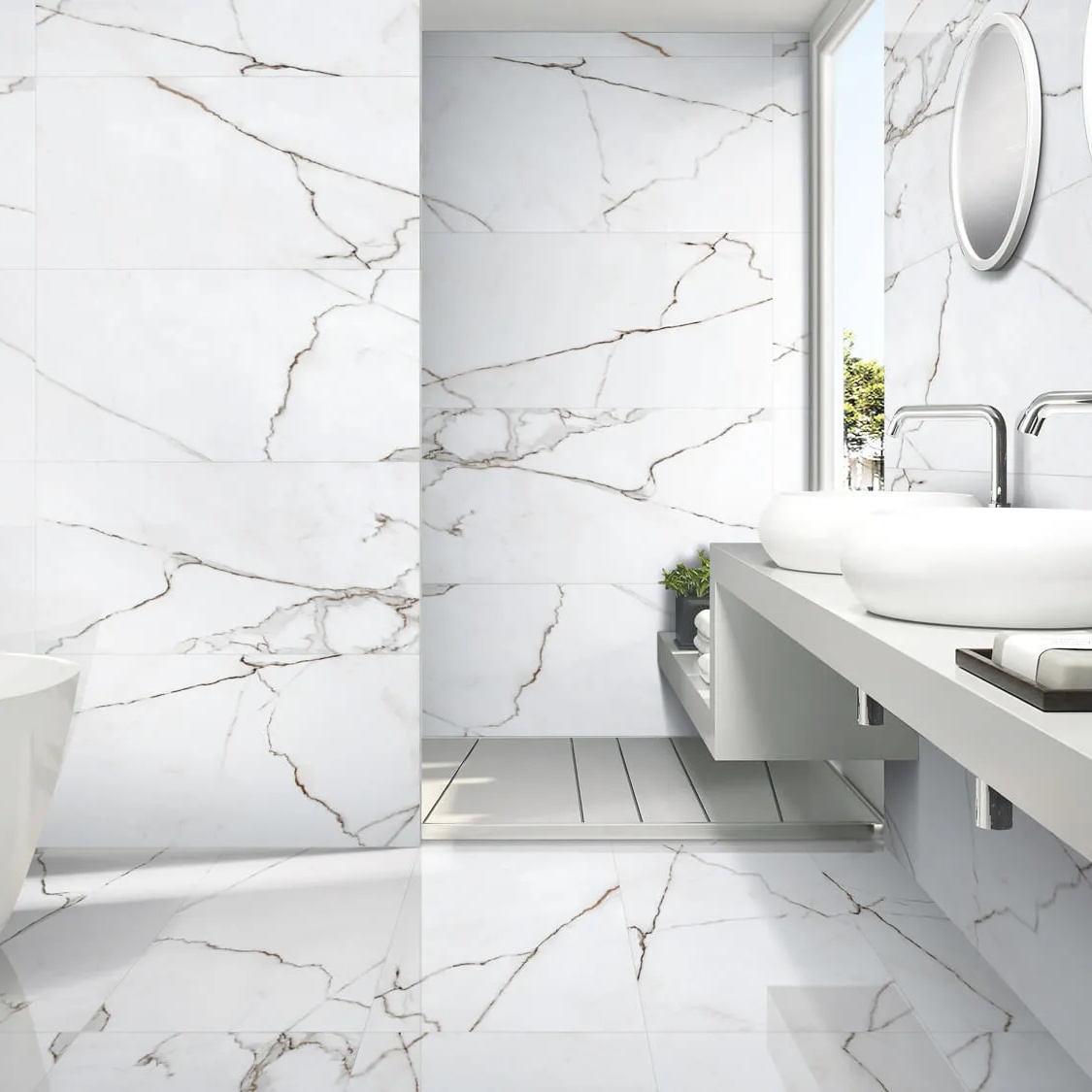
White marble has remained one of the most desirable natural stones in architecture and interior design because of its unmatched elegance, brightness, and timeless appeal. From luxury residences and five-star hotels to prestigious commercial developments, white marble continues to represent sophistication, craftsmanship, and architectural excellence.
What makes white marble unique is not simply its clean background colour but the natural variation created by mineral deposits formed over millions of years. The subtle grey lines, dramatic gold movements, and delicate crystalline patterns found within each slab make every installation completely individual. Unlike engineered materials that attempt to reproduce natural beauty, genuine marble carries geological characteristics that cannot be duplicated.
Recommended Stone Solutions



Understanding the different grades of white marble, the meaning behind its vein patterns, and where each type performs best is essential before selecting the ideal stone for a project. A bright white marble with minimal movement may create a completely different atmosphere compared to a slab with bold dramatic veins. Similarly, the best marble for a feature wall may not always be the most suitable choice for flooring or kitchen applications.
At Maruti Mining Limited, we help homeowners, architects, contractors, and developers select premium natural stone solutions that combine aesthetic appeal with practical performance. By understanding marble grades, patterns, finishes, and applications, clients can make informed decisions that create elegant spaces designed to last for generations.
You can explore the complete range of natural stone solutions available through Maruti Mining Limited and discover how premium marble can transform residential and commercial interiors.
Understanding White Marble Formation
Before comparing different grades of white marble, it is important to understand how this remarkable stone develops. Marble begins as limestone, a sedimentary rock formed from accumulated marine materials over millions of years.
Through geological processes involving extreme heat and pressure, limestone undergoes metamorphism and transforms into marble. During this transformation, minerals trapped within the stone create the distinctive patterns and colours that make each slab unique.
Pure marble with very few mineral impurities develops a brighter white appearance. Additional minerals introduce variations such as:
- Grey veining from graphite deposits
- Gold and brown tones from iron minerals
- Green shades from serpentine minerals
- Darker markings from carbon-based materials
These natural elements determine the final appearance and classification of each marble slab.
The formation process explains why no two pieces of natural white marble are exactly identical. Even slabs extracted from the same quarry may display differences in movement, colour intensity, and vein direction.
For more information about natural stone characteristics and selection, clients can visit our Knowledge Base for expert insights.
What Determines White Marble Grade?
The term “grade” in marble refers to the overall quality, appearance, consistency, and suitability of the stone. While different suppliers may use slightly different grading systems, several common factors determine the perceived quality of white marble.
Colour Background
The brightness and consistency of the white background significantly influence the value of marble.
Premium white marble typically features:
- Bright, clean white tones
- Minimal unwanted discolouration
- Balanced mineral distribution
- Consistent visual appearance
Marbles with darker backgrounds or irregular colour changes may still be beautiful but are often classified differently depending on the intended application.
Veining Quality
Veining is one of the most important characteristics when evaluating white marble. The quality of the veins depends on:
- Pattern movement
- Colour contrast
- Natural flow
- Distribution across the slab
Some buyers prefer subtle veins for calm, minimalist interiors, while others choose dramatic movement for statement features.
Surface Quality
High-quality marble should have:
- Strong structural integrity
- Minimal surface defects
- Good polishing ability
- Consistent finishing characteristics
Professional inspection is essential before fabrication because natural stone must be evaluated as an individual slab rather than only by sample images.
Thickness and Structural Performance
The thickness of marble slabs affects their suitability for different applications. Thicker slabs may be preferred for certain countertops, staircases, and heavy-use installations, while thinner slabs can work effectively for wall cladding and decorative applications.
Choosing the correct specification ensures both beauty and long-term performance.
Popular Grades of White Marble
Although marble classification varies globally, several categories are widely recognised based on appearance and application.
Pure White Marble
Pure white marble represents the highest level of visual simplicity. It features a predominantly white background with minimal visible veining or mineral movement.
This type creates interiors that feel:
- Clean
- Bright
- Minimalist
- Luxurious
Common applications include:
- Luxury bathroom walls
- Contemporary flooring
- Sculptural features
- Premium residential interiors
Because of its refined appearance, pure white marble is often selected for projects where simplicity and elegance are the primary design goals.
White Marble with Soft Grey Veins
This is one of the most popular varieties because it balances brightness with natural character.
The soft grey movement creates visual interest while maintaining a calm and sophisticated appearance.
It works particularly well for:
- Kitchen countertops
- Bathroom vanities
- Living room flooring
- Wall panels
- Hotel interiors
The subtle contrast allows it to complement both modern and traditional design styles.
White Marble with Bold Grey Veining
For clients seeking dramatic architectural impact, heavily veined white marble provides a powerful design statement.
The strong contrast between the white background and dark grey movement creates a luxurious appearance often associated with high-end interiors.
Applications include:
- Feature walls
- Kitchen islands
- Reception counters
- Luxury fireplaces
- Statement flooring
These slabs are often selected individually because the vein arrangement becomes the main decorative element.
White Marble with Gold Veins
Gold-veined white marble represents one of the most luxurious categories available. The warm mineral tones create a rich appearance that pairs beautifully with brass, bronze, timber, and warm lighting.
Popular uses include:
- Luxury hotels
- Executive offices
- Premium residential interiors
- Designer bathrooms
Gold veining introduces warmth and exclusivity while maintaining the elegance of a white stone background.
Understanding White Marble Vein Patterns
The beauty of white marble comes largely from its vein patterns. These natural formations determine how the stone interacts with surrounding architecture.
Linear Veining
Linear patterns create a directional appearance with long flowing lines across the slab.
They are particularly effective for:
- Large walls
- Long countertops
- Contemporary flooring
Linear veins can visually extend spaces and create a sense of movement.
Feather Veining
Feather-like patterns provide delicate, organic movement throughout the slab.
This style works well in:
- Bathrooms
- Bedrooms
- Boutique interiors
The softer appearance creates elegance without overwhelming the space.
Cloud Veining
Cloud patterns create gentle transitions rather than strong lines.
They are ideal for:
- Large flooring areas
- Open-plan interiors
- Calm minimalist designs
Dramatic Movement Veining
Large sweeping veins create a bold artistic effect.
These slabs are often reserved for:
- Feature installations
- Bookmatched walls
- Luxury kitchen islands
They allow the marble itself to become the artwork within the room.
Bookmatched White Marble: Turning Natural Stone into Artwork
One of the most luxurious applications of white marble is bookmatching. This technique involves placing two or more marble slabs together so that their natural vein patterns mirror each other, creating a symmetrical design similar to the pages of an open book.
Bookmatched white marble has become increasingly popular in luxury residential and commercial architecture because it transforms ordinary surfaces into artistic focal points. Instead of simply functioning as a wall, floor, or countertop material, the marble becomes an architectural feature that attracts attention and defines the character of the space.
Common applications for bookmatched white marble include:
- Feature walls
- Luxury bathroom interiors
- Fireplace surrounds
- Reception areas
- Hotel lobbies
- Executive offices
- Kitchen backsplashes
For example, a white marble slab with flowing grey veins can be positioned alongside a matching slab to create a continuous pattern across a large wall. The result is a dramatic natural composition that highlights the stone’s geological history.
Achieving a successful bookmatched installation requires careful slab selection, precision cutting, and expert installation. The slabs must be chosen from compatible sections of stone to ensure the veins align naturally.
At Maruti Mining Limited, experienced stone specialists help clients select marble slabs that achieve the desired visual effect while maintaining the highest standards of fabrication and installation. You can also explore our gallery of completed projects to see examples of premium natural stone applications.
Where White Marble Works Best
The versatility of white marble allows it to be used throughout residential, commercial, and hospitality spaces. However, selecting the right grade and pattern for each application is essential to achieving both beauty and practicality.
White Marble for Kitchen Countertops
White marble countertops remain one of the most requested luxury finishes in modern kitchen design. The bright appearance creates a clean, spacious atmosphere while the natural veining introduces character.
Popular choices include:
- White marble with soft grey veins
- White marble with subtle gold movement
- Medium-veined marble for statement islands
Kitchen applications require careful consideration because countertops experience daily exposure to:
- Food preparation
- Spills
- Heat
- Cleaning products
- Heavy usage
Professional sealing is recommended to protect the stone and maintain its appearance.
Although some homeowners prefer engineered alternatives for busy kitchens, many luxury projects continue to select natural white marble because of its unique beauty and premium appeal.
White Marble for Bathroom Design
Bathrooms are among the most suitable applications for white marble. The material naturally creates a spa-like atmosphere while reflecting light and making spaces feel larger.
Popular bathroom applications include:
- Vanity tops
- Shower walls
- Bathtub surrounds
- Floor tiles
- Decorative panels
White marble works especially well in bathrooms because its elegant appearance creates a sense of cleanliness and relaxation.
Designers often combine white marble with:
- Glass shower panels
- Matte black fixtures
- Brass accessories
- Natural timber details
These combinations create contemporary spaces that remain timeless.
White Marble Flooring
White marble flooring has been associated with luxury architecture for centuries. Its reflective qualities help brighten interiors, while the natural patterns create movement across large surfaces.
Suitable locations include:
- Residential living spaces
- Hotel entrances
- Corporate offices
- Luxury apartments
- Showrooms
When selecting white marble flooring, designers should consider:
- Expected foot traffic
- Surface finish
- Maintenance requirements
- Lighting conditions
- Room size
Large spaces often benefit from marble with more noticeable veining, while smaller rooms may require softer patterns to maintain visual balance.
White Marble Feature Walls
Feature walls provide one of the best opportunities to showcase dramatic marble patterns.
Because walls experience less physical wear compared to floors or countertops, designers can select highly expressive slabs with bold movement.
Popular applications include:
- Living room feature walls
- TV backgrounds
- Hotel reception walls
- Restaurant interiors
- Office entrances
A carefully selected white marble wall can become the defining architectural element of a space.
White Marble Staircases
A marble staircase creates a powerful impression in both residential and commercial buildings.
White marble staircases are valued for:
- Elegant appearance
- Smooth finishing
- Long-lasting durability
- Premium architectural appeal
Professional fabrication is particularly important for staircase applications because every step requires accurate measurement, edge finishing, and secure installation.
Comparing White Marble with Other Stone Options
When choosing materials, many clients compare white marble with granite and engineered quartz. Each option has unique advantages depending on the project requirements.
White Marble vs Granite
Granite is known for exceptional durability and resistance to scratches, making it popular for demanding applications.
White marble provides:
- More dramatic natural veining
- Softer luxury appearance
- Greater design individuality
- Classic architectural appeal
Granite provides:
- Higher resistance to wear
- Excellent heat resistance
- Lower maintenance requirements
For areas requiring maximum durability, clients may also consider our extensive collection of granite.
White Marble vs Quartz
Quartz surfaces are engineered materials designed to provide consistency and easy maintenance.
Quartz offers:
- Non-porous surfaces
- Uniform patterns
- Strong stain resistance
- Minimal maintenance
White marble offers:
- Genuine natural variation
- Unique mineral patterns
- Luxury appeal
- Individual character
The right choice depends on whether the priority is natural authenticity or engineered practicality.
Clients interested in alternative premium surfaces can discover the full range of quartz surfaces.
Factors to Consider Before Buying White Marble
Selecting white marble requires careful evaluation beyond simply choosing an attractive colour.
View Full Slabs Before Purchase
Small samples cannot always represent the complete appearance of natural stone. Veining intensity and pattern movement can vary significantly across a full slab.
Whenever possible, buyers should inspect complete slabs before making a final selection.
Consider the Final Application
A marble suitable for a decorative wall may not necessarily be ideal for a heavily used countertop.
Always consider:
- Location
- Usage level
- Maintenance expectations
- Exposure conditions
Evaluate Lighting Conditions
Lighting affects how white marble appears.
A slab that looks bright in a showroom may appear different under warm home lighting or natural daylight.
Professional guidance helps ensure the selected marble achieves the desired result within the final environment.
Check Fabrication Requirements
Certain marble patterns require careful planning during cutting and installation. Dramatic veins may need special positioning to achieve the intended visual effect.
Working with experienced fabricators helps maximise the beauty of the material.




Leave a Reply