


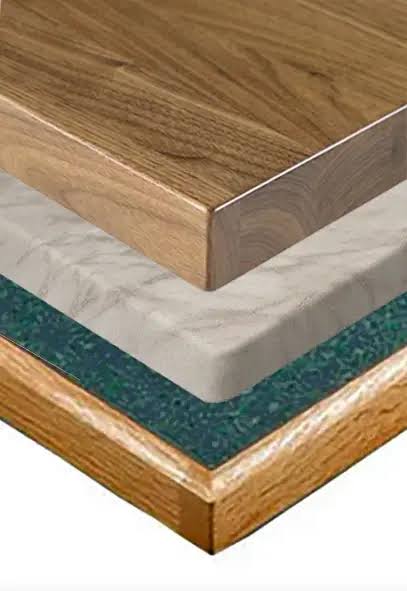
Choosing the right table top materials involves more than comparing colours and prices. The best surface depends on how the table will be used, how much maintenance is acceptable, the desired appearance, durability requirements and the overall design of the room.
A dining table in a busy family home has different requirements from a boardroom table in a corporate office.
Recommended Stone Solutions
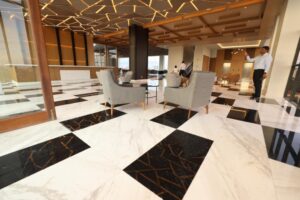
A restaurant table experiences different conditions from a bedroom side table.
A reception desk may need a surface that withstands continuous daily use, while a decorative occasional table may prioritise appearance over heavy-duty performance.
The choice of material therefore matters.
Common options include natural stone such as granite and marble, engineered quartz, wood, glass and laminate. Each offers a different combination of appearance, durability, maintenance, fabrication requirements and cost.
For projects where natural stone is being considered, explore Maruti Mining’s collection of stone solutions to see how granite, marble and quartz can be incorporated into furniture and architectural surfaces.
What Should You Consider When Choosing Table Top Materials?
The most important factors are durability, maintenance, appearance, moisture resistance, heat resistance, scratch resistance, fabrication requirements and the intended use of the table.
Before selecting a material, consider the environment.
Will the table be used indoors or outdoors?
Will people eat directly from it?
Will hot cookware be placed on it?
Will children use it?
Will it experience constant commercial traffic?
Will liquids frequently be spilled?
Does the surface need to look exactly the same across multiple tables?
These questions can narrow the options quickly.
A material that performs exceptionally well in one application may be unnecessary or unsuitable in another.
1. Granite Table Tops
Granite is one of the strongest natural-stone options for table tops, combining high durability with natural variation and a substantial architectural appearance.
Granite is a natural igneous rock formed through geological processes.
It is available in many colours and patterns, ranging from relatively uniform surfaces to stones with dramatic mineral movement.
This makes granite particularly attractive where the table is intended to become a significant visual element.
Granite can work well for:
- Dining tables
- Conference tables
- Reception furniture
- Side tables
- Hospitality furniture
- Outdoor applications where the selected stone is suitable
One of its major advantages is durability.
It can resist everyday wear well when properly fabricated and maintained.
You can explore Maruti Mining’s granite collection when considering granite for a table or other architectural application.
Granite Appearance
Granite provides natural colour variation that can make every finished table top visually distinctive.
Depending on the selected stone, granite may feature:
- Black backgrounds
- White backgrounds
- Grey movement
- Brown tones
- Gold mineral patterns
- Speckled structures
- Dramatic veining
Because it is natural stone, variation should be expected.
This can be an advantage for clients who want an individual surface rather than a perfectly uniform manufactured appearance.
Granite Maintenance
Granite is generally straightforward to maintain, but cleaning methods should still be compatible with the specific stone and finish.
Routine care usually involves removing spills promptly and using appropriate cleaning products.
Avoid unnecessary abrasive cleaning.
Depending on the granite’s porosity and application, sealing may be recommended.
The maintenance requirement should be established when the stone is selected.
2. Marble Table Tops
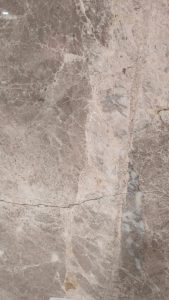
Marble is an excellent choice when visual elegance and natural veining are priorities, although it requires greater care than some harder, more stain-resistant surfaces.
Marble is a metamorphic natural stone.
Its characteristic veining and colour variation make it popular for luxury interiors.
Marble table tops can work particularly well in:
- Dining rooms
- Executive offices
- Hotel interiors
- Reception areas
- Living rooms
- Decorative furniture
The material creates a refined appearance that is difficult to reproduce exactly with manufactured alternatives.
You can learn more about marble options when comparing natural stone for furniture and interior applications.
Marble’s Main Weakness
Marble can be more vulnerable to scratching and acid etching than granite, so it requires more disciplined maintenance.
Acidic substances such as lemon juice and vinegar can affect susceptible marble surfaces.
A spilled acidic drink should therefore be cleaned promptly.
This does not make marble unsuitable.
It simply means that the material should be selected with its maintenance requirements understood.
Marble and Dining Tables
Marble can create a striking dining table, but users should understand that natural patina and surface changes may develop over time.
For some interiors, this ageing process is part of the character of natural stone.
For clients seeking a surface that always looks exactly as it did on installation day, another material may be preferable.
3. Quartz Table Tops
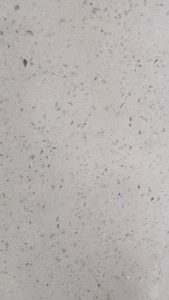
Engineered quartz provides a controlled, contemporary appearance with relatively low routine maintenance, making it attractive for modern residential and commercial furniture.
Engineered quartz is manufactured using quartz-rich mineral material combined with binding components and other ingredients.
This allows manufacturers to create consistent colours and patterns.
Quartz can be particularly useful where multiple pieces of furniture need to coordinate.
Potential applications include:
- Dining tables
- Office desks
- Reception counters
- Meeting tables
- Vanity surfaces
- Side tables
For a closer look at available options, discover the full range of quartz surfaces.
Quartz Appearance
Engineered quartz can provide a highly controlled appearance, including designs inspired by marble, concrete and other natural materials.
This consistency can be useful in commercial developments.
A hotel, office or apartment project may require multiple surfaces to maintain a consistent design language.
Natural stone can provide variation, while engineered quartz can offer greater visual predictability.
Quartz Maintenance
Quartz generally requires straightforward routine cleaning, although it should still be protected from excessive heat, abrasive products and unsuitable chemicals.
Hot cookware should not be placed directly on an engineered quartz table top unless the product manufacturer specifically confirms suitability.
Use trivets or heat-resistant pads.
This simple precaution can help protect the surface.
4. Wooden Table Tops
Wood provides warmth, texture and natural character, making it one of the most versatile table top materials for residential, hospitality and office interiors.
Wood has a very different visual and tactile quality from stone.
It can make an interior feel:
- Warm
- Natural
- Comfortable
- Traditional
- Contemporary
depending on the species, colour and finish.
Wood can be used for:
- Dining tables
- Desks
- Boardroom tables
- Coffee tables
- Side tables
- Restaurant furniture
Wood’s Major Advantage
Wood can be refinished more readily than many other table top materials, allowing damaged surfaces to be sanded, repaired or recoated in appropriate applications.
This can extend the useful life of a wooden table.
However, refinishing requirements depend on:
- Wood species
- Finish
- Thickness
- Construction
- Type of damage
Wood should not be treated as maintenance-free.
Wood and Moisture
Wood is more sensitive to moisture than many stone surfaces, so prolonged exposure to water can cause swelling, staining or finish deterioration.
This is particularly important around:
- Dining areas
- Kitchens
- Restaurants
- Outdoor spaces
Spills should be cleaned promptly.
The finish should also be maintained according to the manufacturer’s recommendations.
5. Glass Table Tops
Glass creates a light, contemporary appearance and can visually open a room, but fingerprints, scratches, impact and cleaning requirements should be considered before selection.
Glass works particularly well in modern interiors.
It can make furniture appear visually lighter.
Common applications include:
- Coffee tables
- Dining tables
- Conference tables
- Side tables
- Display furniture
Glass can also be combined with:
- Wood
- Metal
- Stone
- Composite structures
Glass Maintenance
Glass is easy to wipe clean but can show fingerprints, dust and smears more readily than textured materials.
This means a glass table may require frequent wiping to maintain a pristine appearance.
Suitable glass-cleaning products should be used.
Avoid abrasive materials that could scratch the surface.
Glass Safety
Table top glass should be appropriately specified for furniture use, with thickness, edge treatment and safety characteristics considered during fabrication.
The exact glass specification should be determined by:
- Table dimensions
- Support structure
- Intended use
- Thickness
- Edge treatment
For large or heavily used tables, professional fabrication is particularly important.
6. Laminate Table Tops
Laminate offers a practical and often economical table top solution, particularly where consistent appearance, easy cleaning and controlled costs are important.
Laminate can reproduce the appearance of:
- Wood
- Stone
- Concrete
- Solid colours
- Other decorative patterns
This gives designers considerable flexibility.
It is commonly used for:
- Office furniture
- School furniture
- Commercial counters
- Budget-conscious dining furniture
- Retail applications
Laminate’s Main Advantage
The main advantage of laminate is the combination of design flexibility, relatively straightforward maintenance and controlled cost.
It can be a sensible choice where the table needs to perform reliably without the investment associated with natural stone.
However, quality varies.
The substrate, laminate thickness, edge treatment and manufacturing quality all influence performance.
Laminate and Water
Laminate surfaces can resist ordinary spills well, but water penetration at poorly sealed edges or damaged areas can affect the underlying substrate.
This makes edge quality particularly important.
Pay attention to:
- Corners
- Joints
- Sink-adjacent areas
- Damaged edges
- Seams
Once moisture enters the substrate, repairs can become more difficult.
7. Solid Surface Table Tops
Solid-surface materials provide a seamless appearance and can be fabricated into modern furniture designs with integrated edges and details.
Solid surfaces are manufactured materials rather than natural stone.
They can be useful for:
- Reception desks
- Contemporary furniture
- Hospitality applications
- Commercial interiors
Their characteristics vary by manufacturer.
As with engineered quartz, the exact product should be evaluated rather than relying solely on the general material category.
Table Top Materials Compared by Durability
Durability depends on the type of use, but granite and quartzite-based natural stone are particularly robust choices, while quartz, wood, glass and laminate each provide different forms of practical performance.
A simplified comparison looks like this:
| Material | General Durability | Scratch Resistance | Heat Consideration | Maintenance |
|---|---|---|---|---|
| Granite | High | High | Strong | Low to moderate |
| Marble | Moderate to high | Moderate | Strong | Moderate to high |
| Engineered Quartz | High | High | Requires caution | Low |
| Wood | Moderate | Moderate | Requires protection | Moderate |
| Glass | Moderate | Moderate | Generally good | Moderate |
| Laminate | Moderate | Moderate | Requires care | Low |
| Solid Surface | Moderate to high | Moderate | Product-dependent | Low to moderate |
These are general comparisons.
Actual performance depends on the specific product, thickness, finish, fabrication and application.
Table Top Materials Compared by Appearance
Appearance is one of the strongest reasons clients choose a particular material, and the best option depends on whether the design requires natural variation, consistency, warmth or a contemporary finish.
Granite
Natural and visually varied.
Marble
Elegant, veined and highly decorative.
Quartz
Controlled and contemporary.
Wood
Warm and organic.
Glass
Light and modern.
Laminate
Highly flexible and design-oriented.
The visual objective should be established before material selection.
Table Top Materials Compared by Maintenance
Low-maintenance users may prefer engineered quartz or laminate, while natural stone and wood require more material-specific care to preserve their appearance.
Maintenance involves more than cleaning.
It also includes:
- Spill management
- Heat protection
- Scratch prevention
- Sealing
- Refinishing
- Edge care
The table’s environment should determine how much maintenance is acceptable.
Table Top Materials for Dining Tables
Dining tables need to balance appearance with resistance to food spills, heat, scratching and frequent cleaning.
Granite can provide strong performance.
Quartz offers a low-maintenance manufactured option.
Marble provides exceptional visual character but requires more care.
Wood creates warmth but needs protection from moisture and heat.
Glass is easy to wipe but shows marks easily.
Laminate can provide a practical cost-conscious solution.
The correct choice depends on the household.
Table Top Materials for Office Desks
Office furniture often benefits from surfaces that are easy to clean, comfortable to use and capable of withstanding repeated daily contact.
Engineered quartz can create a premium executive appearance.
Wood provides warmth and traditional character.
Laminate is often practical for larger office installations.
Glass can suit modern boardrooms.
Granite and marble may be selected for executive or reception applications where visual impact is important.
Table Top Materials for Boardrooms
Boardroom tables often require a combination of visual prestige, dimensional stability, durability and practical maintenance.
Natural stone can create a strong executive statement.
Wood remains a classic choice.
Glass can support a modern corporate aesthetic.
Engineered quartz can provide a contemporary stone appearance with controlled patterns.
The structural design of a large table is also important.
A heavy stone surface requires appropriate support.
Table Top Materials for Restaurants
Restaurant tables require materials that can tolerate frequent cleaning, spills, repeated use and commercial traffic.
The choice should consider:
- Cleaning chemicals
- Food acids
- Heat
- Impact
- Maintenance labour
- Replacement requirements
Laminate can be practical for high-volume dining.
Stone can create a premium appearance.
Wood can provide warmth.
Glass can suit contemporary concepts.
The best option depends on the restaurant’s operating model.
Table Top Materials for Reception Areas
Reception desks and tables often function as visual focal points, making natural stone, engineered quartz, glass and premium wood attractive options where appearance is especially important.
A reception surface communicates something about the business.
Stone can convey:
- Permanence
- Quality
- Luxury
- Architectural confidence
Wood can communicate warmth.
Glass can create a contemporary feel.
The selection should support the brand and interior architecture.
Table Top Materials for Outdoor Use
Outdoor furniture requires careful material selection because sunlight, rain, humidity, temperature changes and environmental contamination can accelerate deterioration.
Not every indoor table top material should be used outdoors.
Consider:
- UV exposure
- Water
- Drainage
- Temperature
- Maintenance
- Structural support
Natural stone can be appropriate for some outdoor applications when the selected stone and finish are suitable.
Wood requires appropriate species and exterior finishing.
Laminate must be specifically designed for outdoor exposure if it is to be used in such conditions.
Natural Stone Versus Manufactured Surfaces
The choice between natural stone and manufactured materials is ultimately a choice between natural variation and controlled production, with each approach offering legitimate advantages.
Natural stone includes:
- Granite
- Marble
- Quartzite
- Limestone
- Travertine
Manufactured surfaces include:
- Engineered quartz
- Laminate
- Solid surface
Natural stone provides geological character.
Manufactured materials provide controlled production.
Neither category should be selected solely because it is marketed as premium.
Why Slab Selection Matters for Stone Tables
A stone table top can look dramatically different depending on the actual slab selected, particularly when the material has strong natural movement or veining.
This is especially relevant to:
- Marble
- Quartzite
- Dramatically veined granite
The client should ideally approve the actual slab before fabrication.
A small sample cannot always represent the complete finished surface.
For inspiration, explore our gallery of completed projects to see how natural stone can be incorporated into architectural applications.
Thickness and Table Top Design
Table top thickness affects both appearance and structural requirements, so the selected thickness should be coordinated with the table’s dimensions, support structure and material.
A large stone table requires appropriate engineering.
Stone is substantially heavier than laminate or thin wood.
The support frame must therefore be designed accordingly.
This is especially important for:
- Large dining tables
- Boardroom tables
- Conference tables
- Stone islands
- Freestanding desks
Edge Profiles for Table Tops
The edge treatment can significantly change the appearance and perceived quality of a table, while also affecting durability and user comfort.
Options can include:
- Straight edge
- Eased edge
- Bullnose
- Bevelled edge
- Custom profiles
Sharp edges may be inappropriate in some residential applications.
The profile should reflect both design and practical use.
Weight and Structural Support
Natural stone table tops can be considerably heavier than wood, glass or laminate, so the supporting structure must be designed for the material rather than adapted afterward.
This is one of the most commonly overlooked issues.
Before fabrication, confirm:
- Table dimensions
- Stone thickness
- Support locations
- Frame strength
- Leg positions
- Transport requirements
A beautiful slab is only successful when the finished table is stable and properly supported.
Repairability Compared
Different table top materials offer different repair possibilities, and understanding this can help determine long-term value.
Wood can often be sanded and refinished.
Some solid surfaces can be repaired and refinished.
Laminate can sometimes be replaced at the panel level.
Glass may need replacement if significantly damaged.
Natural stone can sometimes be repaired, polished or refinished depending on the damage.
Engineered quartz repairs depend on the type and severity of damage.
No material is completely immune to damage.
Table Top Materials and Long-Term Value
Long-term value should consider initial price, expected lifespan, maintenance, repairability and how well the surface continues to meet the property’s needs.
A cheaper table may not be cheaper over its entire service life.
Similarly, a premium material may be unnecessary for an application where a lower-cost surface would perform adequately.
The correct question is:
What material provides the right performance for the intended use at an acceptable total cost?
The Importance of Professional Fabrication
Even a high-quality table top material can fail to meet expectations if measurements, cutting, edge finishing, supports or installation are poorly executed.
For stone surfaces, professional fabrication is particularly important.
The process may involve:
- Site measurement
- Slab selection
- Digital templating
- Cutting
- Edge profiling
- Polishing
- Reinforcement where necessary
- Transportation
- Installation
Each stage affects the final result.
Choosing the Right Table Top Material
The simplest way to choose is to rank your priorities before looking at colours and finishes.
If your priority is natural luxury, consider marble or granite.
If your priority is natural durability, granite is a strong candidate.
If your priority is controlled appearance and straightforward maintenance, engineered quartz may be suitable.
If your priority is warmth, wood is a natural choice.
If your priority is visual lightness, glass may work well.
If your priority is cost and design flexibility, laminate may be practical.
If your priority is seamless contemporary design, a suitable solid-surface material may be worth considering.
Seven Questions to Ask Before Buying
A short checklist can prevent an attractive material from becoming the wrong choice after installation.
Ask:
- Where will the table be used?
- How heavily will it be used?
- Will hot objects contact the surface?
- Will food or acidic liquids be present?
- How much maintenance is acceptable?
- Does the table need a completely uniform appearance?
- What support structure is required?
These questions make material selection more objective.
Why Natural Stone Remains a Premium Choice
Natural stone continues to be popular because it combines physical durability with geological variation that cannot be reproduced exactly from one slab to another.
A stone table can become more than furniture.
It can become an architectural feature.
The natural patterns can coordinate with:
- Flooring
- Countertops
- Walls
- Fireplaces
- Reception areas
- Staircases
This creates continuity across an interior.
Coordinating Tables With Other Stone Surfaces
Using the same or complementary stone across furniture and architectural surfaces can create a cohesive interior design language.
For example, a project could coordinate:
- Granite table tops
- Granite kitchen counters
- Marble bathroom vanities
- Stone feature walls
Alternatively, contrasting materials can create visual interest.
A quartz table can complement natural stone flooring.
Wood can soften a stone-heavy interior.
Glass can create visual separation.
Making the Final Decision
There is no single best table top material for every project; the correct choice is the material that balances design, durability, maintenance, budget and application requirements.
For a luxury dining table, marble may be compelling.
For heavy everyday use, granite may be preferable.
For a modern low-maintenance interior, engineered quartz can be attractive.
For warmth, wood remains difficult to replace.
For a light contemporary aesthetic, glass can work beautifully.
For cost-conscious commercial furniture, laminate can be highly practical.
The important thing is to choose intentionally.
Final Guide to Table Top Materials
The best table top materials are not determined by appearance alone; they should be evaluated according to the environment, expected use, maintenance requirements, durability, fabrication and long-term value.
Granite offers natural durability and strong visual character.
Marble provides exceptional elegance and natural veining but requires more care.
Engineered quartz offers controlled aesthetics and relatively straightforward maintenance.
Wood brings warmth and can often be refinished.
Glass provides a clean, contemporary appearance but requires regular cleaning and appropriate safety specifications.
Laminate provides design flexibility and practical value.
Solid-surface materials can offer seamless contemporary solutions.
The decision should therefore begin with the table’s purpose.
A family dining table needs to withstand everyday use.
A boardroom table needs to project professionalism while remaining practical.
A restaurant table needs to tolerate repeated cleaning and heavy traffic.
A reception surface needs to balance durability with visual impact.
An outdoor table requires materials suitable for environmental exposure.
For stone table tops, the process should go beyond choosing a colour from a catalogue.
Inspect the actual slab.
Consider the stone’s natural variation.
Confirm thickness.
Review edge profiles.
Check support requirements.
Coordinate the fabrication process.
Understand cleaning and maintenance.
And make sure the material is appropriate for its intended application.
When correctly selected and fabricated, a table top can last for many years while becoming an important part of the interior architecture.
For projects considering granite, marble or quartz table tops, contact Maruti Mining’s stone team for project consultation and discuss the material, fabrication and installation requirements before making the final selection.
You May Also Like


Bring Your Vision to Life in Stone
Imagine a space defined by elegance, durability, and timeless beauty. At Maruti Mining Limited, we transform your vision into reality with the finest selection of granite, marble, and quartz, backed by expert fabrication and installation.
Contact our team for a consultation and let’s create a legacy set in stone.
CUSTOM FABRICATION & INSTALLATION ACROSS EAST AFRICA
✔ Premium Collection of Over 80 Stone Varieties
✔ Expert Cutting, Polishing & Installation
✔ Free Project Consultation & Quote
✔ Serving Kenya (Nairobi, Karen, Mombasa), Uganda, Tanzania & beyond.
Request Your Free Consultation:
Maruti Mining Limited
Email: [email protected]
Phone: +254 736 701 174 | +254 728 789 164 | +254 733 519 836
Visit Us: Nairobi, Kenya
Website: https://marutimining.com/

Leave a Reply