


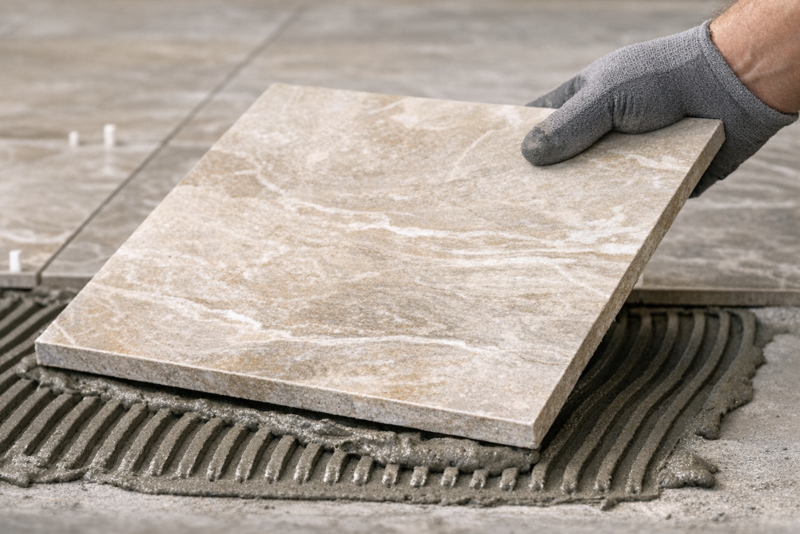
nstalling natural stone is about far more than selecting a beautiful slab or tile. The performance of marble, granite, quartzite, travertine, and other stone surfaces depends heavily on what lies beneath them. Choosing the correct natural stone adhesive in Kenya is one of the most important decisions during installation because the wrong product can lead to staining, loose tiles, hollow spots, cracked stone, or complete installation failure.
Unlike ceramic tiles, natural stone behaves differently. Some stones absorb moisture, others are extremely dense, and many are sensitive to certain chemicals found in standard construction adhesives. An adhesive that performs perfectly with porcelain tiles may cause permanent damage when used with marble or other natural stones.
Recommended Stone Solutions

Whether you are installing marble flooring, granite countertops, stone wall cladding, outdoor paving, or large-format stone tiles, the adhesive system must match the stone type, substrate, environmental conditions, and expected loads.
At Maruti Mining Limited, we help homeowners, architects, contractors, and developers select suitable installation systems that maximise the lifespan and appearance of premium natural stone.
Explore premium natural stone collections from Maruti Mining Limited at marutimining/.
Why Does the Choice of Adhesive Matter?
The correct natural stone adhesive in Kenya ensures proper bonding, reduces movement, prevents staining, and supports the long-term durability of the installation.
Natural stone is heavier than many finishing materials and often requires stronger, more specialised bonding systems.
A suitable adhesive helps to:
- Support the weight of the stone
- Minimise movement
- Reduce hollow areas
- Resist moisture
- Improve durability
- Protect against bond failure
Selecting an unsuitable adhesive can result in expensive repairs or complete replacement.
What Is a Natural Stone Adhesive?
A natural stone adhesive in Kenya is a specially formulated bonding material designed to secure natural stone to prepared substrates such as concrete floors, screeds, masonry walls, cement boards, or other approved installation surfaces.
Unlike general tile adhesives, natural stone adhesives are formulated to account for:
- Stone weight
- Moisture sensitivity
- Thermal movement
- Bond strength
- Long-term stability
Different projects require different adhesive systems depending on the installation conditions.
The Three Main Types of Natural Stone Adhesives
Most natural stone installations use one of three broad adhesive systems:
- Cement-based adhesives
- Epoxy adhesives
- Rapid-set adhesive systems
Each has strengths and limitations.
Choosing the right option depends on the project rather than simply selecting the strongest product.
Cement-Based Adhesives
Cement-based adhesives are among the most commonly used natural stone adhesives for residential and commercial flooring applications.
These adhesives consist primarily of cement blended with polymers and specialised additives that improve flexibility and bonding performance.
Advantages
Cement-based systems offer:
- Good bond strength
- Wide availability
- Cost-effective installation
- Compatibility with many stone types
- Ease of application
They are commonly used for:
- Marble flooring
- Granite floor tiles
- Stone wall cladding
- Internal residential installations
Limitations
Not every cement adhesive is suitable for every natural stone.
Some stones are highly moisture-sensitive.
Excess moisture from certain cement products may contribute to:
- Temporary darkening
- Staining
- Curling
- Moisture-related movement
Professional product selection helps minimise these risks.
Epoxy Adhesives
Epoxy adhesives provide extremely strong bonding and excellent chemical resistance, making them suitable for demanding applications.
Unlike cement-based products, epoxy systems cure through a chemical reaction rather than hydration.
This creates a highly durable bond.
Advantages
Epoxy adhesives provide:
- Exceptional bond strength
- Low water absorption
- High chemical resistance
- Excellent durability
- Strong adhesion to dense stone
They are often specified for:
- Commercial kitchens
- Laboratories
- Heavy-duty industrial areas
- Moisture-sensitive stone
- Specialised installations
Limitations
Epoxy systems may involve:
- Higher material costs
- More demanding installation
- Shorter working times
- Greater application precision
For these reasons, experienced installers are generally recommended.
Rapid-Set Adhesive Systems
Rapid-set adhesives are designed to develop strength more quickly than conventional cement-based products.
They are particularly useful when projects have tight construction schedules.
Benefits include:
- Faster curing
- Reduced downtime
- Earlier grouting
- Quicker access
Rapid-set systems are commonly selected for:
- Retail projects
- Commercial renovations
- Time-sensitive developments
- High-traffic areas
However, because they cure quickly, installers must work efficiently to achieve proper coverage and positioning.
Which Stones Need Special Adhesives?
Different natural stones have different installation requirements.
Examples include:
Marble
Some marble varieties are sensitive to moisture and may require carefully selected adhesives that minimise the risk of staining or warping.
Granite
Granite is dense and heavy, requiring strong bond strength and good substrate preparation.
Quartzite
Quartzite combines high strength with natural variation, making proper adhesive selection essential for long-term performance.
Travertine
Travertine may contain natural voids and varying densities, influencing the type of adhesive and installation method required.
Selecting the appropriate natural stone adhesive in Kenya helps ensure each stone performs as intended.
Factors That Influence Adhesive Selection
Professionals rarely choose adhesives based on stone type alone.
They also evaluate:
- Indoor or outdoor installation
- Moisture exposure
- Tile or slab size
- Substrate condition
- Floor loading
- Temperature changes
- Installation schedule
- Traffic levels
Considering these factors together produces a more reliable installation.
Common Problems Caused by the Wrong Adhesive
Using an unsuitable natural stone adhesive in Kenya can lead to problems such as:
- Loose stone tiles
- Hollow sounds beneath the surface
- Cracked joints
- Stone staining
- Uneven bonding
- Moisture damage
- Premature installation failure
Correct preparation and product selection are far less expensive than repairing failed stone installations.
For more expert advice on stone installation and care, visit the Maruti Mining Knowledge Base at knowledge-base.
Matching the Adhesive to the Installation Area
Choosing the correct natural stone adhesive in Kenya depends not only on the stone itself but also on where it will be installed. Different environments expose stone to varying levels of moisture, temperature changes, traffic, and structural movement.
Understanding the application helps installers select an adhesive system that delivers reliable long-term performance.
Kitchen Countertops
Kitchen countertops experience:
- Daily use
- Moisture
- Food preparation
- Cleaning chemicals
- Heavy appliances
Although stone countertops are often mechanically supported by cabinets, adhesives are still used during fabrication and installation.
Suitable adhesive systems should provide:
- Strong bonding
- Colour stability
- Moisture resistance
- Compatibility with natural stone
Professional fabricators also use specialised adhesives when joining countertop sections and creating mitred edges.
Marble and Granite Flooring
Floor installations place constant stress on adhesives because they support both the stone and foot traffic.
A suitable natural stone adhesive in Kenya for flooring should offer:
- High bond strength
- Even support beneath the stone
- Flexibility to accommodate minor movement
- Long-term durability
Large-format stone tiles require full adhesive coverage to minimise hollow spots and reduce the risk of cracking.
Stone Wall Cladding
Wall installations present different challenges because gravity acts directly on the stone.
The adhesive system must securely support the weight of each panel while maintaining long-term stability.
For heavier stone cladding, installers may also specify:
- Mechanical anchors
- Support brackets
- Combined fixing systems
These additional supports improve safety, particularly on large commercial projects.
Wet Areas
Bathrooms, spas, swimming pool surrounds, and similar environments expose adhesives to continuous moisture.
In these conditions, installers often prioritise adhesives with:
- Excellent water resistance
- Strong long-term bonding
- Compatibility with waterproofing systems
Proper waterproofing beneath the adhesive is equally important to protect both the substrate and the stone.
Outdoor Installations
Exterior stone surfaces experience:
- Rain
- Sunlight
- Temperature fluctuations
- Expansion and contraction
Outdoor installations often require adhesive systems that can accommodate movement while maintaining strong bonds.
The adhesive should also be compatible with the selected stone and the environmental conditions.
Preparing the Surface Before Applying Adhesive
Even the best natural stone adhesive in Kenya cannot compensate for poor substrate preparation.
Before installation begins, professionals inspect the surface to ensure it is:
- Clean
- Dry where required
- Structurally sound
- Level
- Free from loose materials
- Properly cured
If the substrate is uneven or unstable, corrective work should be completed before adhesive application.
Why Full Adhesive Coverage Matters
Natural stone performs best when properly supported.
Rather than applying isolated dabs of adhesive, professionals generally aim for continuous coverage beneath each tile or slab.
Full coverage helps:
- Distribute loads evenly
- Reduce hollow areas
- Improve bond strength
- Minimise cracking
- Enhance durability
Large-format stone installations are particularly dependent on proper adhesive coverage.
Common Installation Mistakes
Even premium adhesives cannot compensate for poor installation practices.
Some common mistakes include:
Using General-Purpose Tile Adhesive
Standard tile adhesives may not be suitable for heavy or moisture-sensitive natural stones.
Always confirm that the adhesive is designed for natural stone applications.
Mixing Adhesive Incorrectly
Improper water ratios or mixing methods can reduce:
- Bond strength
- Working time
- Overall performance
Manufacturers’ instructions should always be followed.
Applying Adhesive to a Dirty Surface
Dust, oil, paint, and loose materials reduce adhesion.
Proper surface preparation is essential for successful bonding.
Ignoring Open Time
Every adhesive has a recommended working or “open” time.
If installers wait too long before placing the stone, bonding performance may be reduced.
Insufficient Adhesive Coverage
Partial coverage leaves unsupported areas beneath the stone.
This may increase the likelihood of:
- Hollow sounds
- Cracks
- Loose tiles
- Uneven loading
Professional installation techniques help avoid these issues.
Does Adhesive Colour Matter?
Yes, in some situations.
Certain light-coloured marbles and translucent stones can be affected by the colour of the adhesive beneath them.
For this reason, installers often select adhesive colours that complement the stone and reduce the risk of visible shadowing or discolouration.
Professional advice is particularly valuable when installing premium white or light-toned marble.
Adhesive and Stone Movement
Natural stone and substrates may expand or contract slightly because of:
- Temperature changes
- Moisture variations
- Structural movement
Some adhesive systems are formulated with flexibility to accommodate these small movements without compromising the bond.
Movement joints within the installation also help protect larger stone surfaces.
How Long Does Natural Stone Adhesive Take to Cure?
The curing time of a natural stone adhesive in Kenya depends on:
- Adhesive type
- Temperature
- Humidity
- Stone size
- Substrate condition
Rapid-set products develop strength much faster than conventional cement-based systems, while epoxy adhesives cure according to their specific chemical reaction.
Stone should not be subjected to heavy loads until the adhesive has cured as recommended by the manufacturer.
Why Professional Installation Is Worth It
Natural stone is a premium building material, and its installation deserves specialist expertise.
Professional installers understand:
- Adhesive selection
- Surface preparation
- Expansion requirements
- Stone handling
- Cutting techniques
- Joint placement
This knowledge helps reduce the risk of expensive failures and ensures the finished installation performs as intended.
Clients can also explore premium marble collections at marble-manufacturer-kenya, discover granite solutions at top-granite-manufacturer-kenya-maruti-mining, view engineered quartz surfaces at quartz-stone, or browse completed stone projects at our-works.


Leave a Reply