


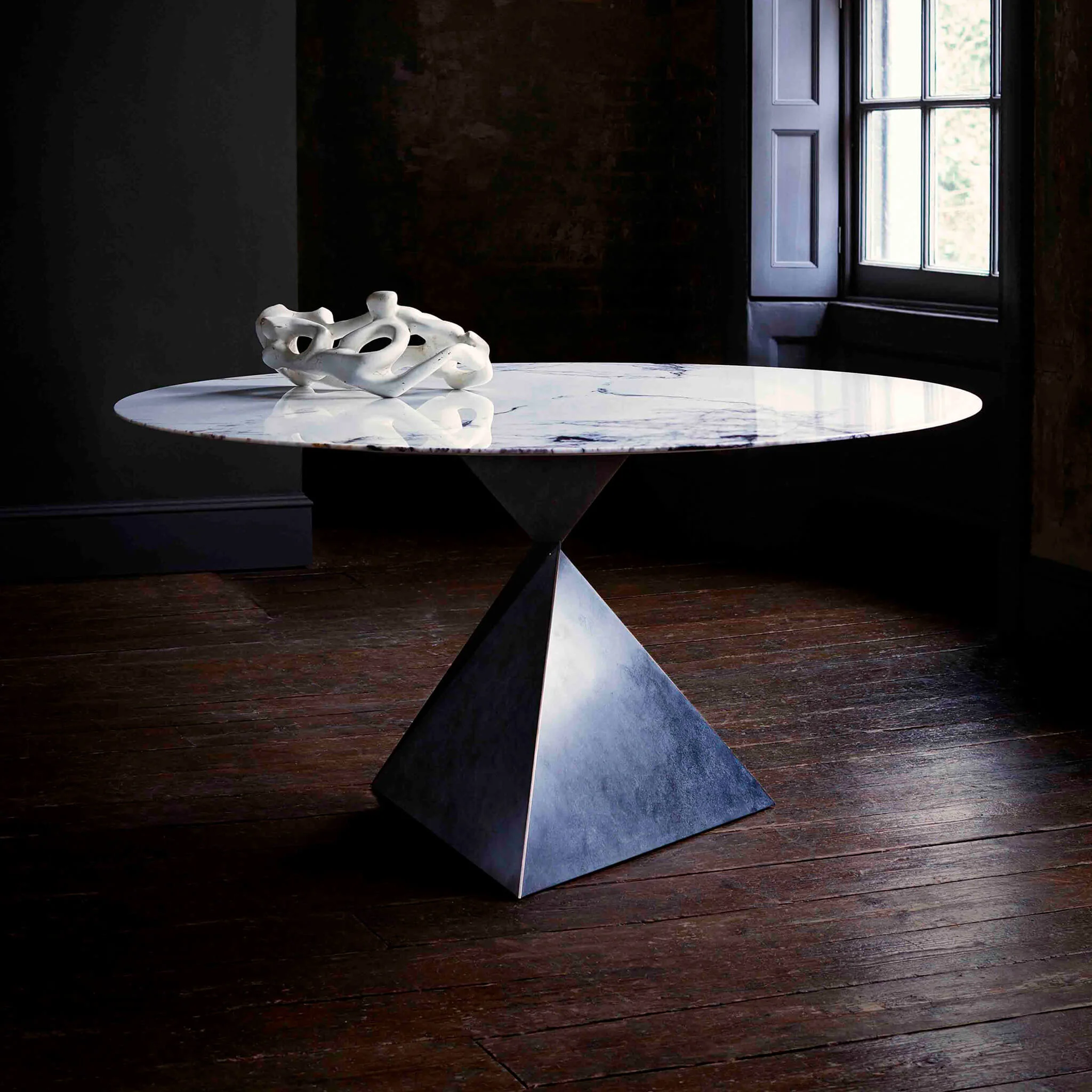
Table top care is largely about everyday habits rather than complicated cleaning routines. Using coasters, mats, suitable cloths, prompt spill removal and stone-safe cleaning products can help granite, marble and quartz surfaces remain attractive for years.
A stone table top can become one of the most noticeable surfaces in a home, office, restaurant or hospitality space.
Recommended Stone Solutions

Because it is usually positioned at eye level when people are seated around it, marks and damage can be more visible than they are on floors or other architectural surfaces.
Coffee cups leave rings.
Food can spill.
Dust settles on the surface.
Decorative objects can scratch polished finishes.
Hot serving dishes can create unnecessary thermal stress.
And unsuitable cleaning products can gradually dull or damage the surface.
The good news is that most everyday problems are preventable.
Proper table top care does not require an elaborate maintenance programme. It requires understanding the characteristics of the stone and developing a few consistent habits.
Granite, marble, quartzite and engineered quartz each have different properties, so the maintenance approach should always take the specific material into account.
For homeowners, architects, interior designers and developers selecting stone furniture, explore Maruti Mining’s stone collection for granite, marble and quartz options suitable for a range of interior applications.
What Does Proper Table Top Care Involve?
Proper table top care means protecting the surface from unnecessary heat, moisture, scratches, stains and unsuitable chemicals while cleaning spills before they have time to cause problems.
The basic routine is simple:
- Use coasters.
- Use mats and trivets.
- Wipe spills promptly.
- Use soft cleaning cloths.
- Avoid abrasive products.
- Avoid unsuitable acidic cleaners.
- Do not drag heavy objects.
- Follow the recommended sealing schedule where applicable.
- Address damage before it becomes worse.
These habits take very little time.
Their value comes from consistency.
1. Use Coasters Every Day
Coasters are one of the simplest and most effective ways to protect a stone table top from drink rings, heat and unnecessary moisture exposure.
Coffee, tea, soft drinks, wine and water can all leave marks under certain conditions.
This is particularly relevant to polished surfaces, where rings and residue can become highly visible.
Keep coasters within easy reach.
If the table is used frequently, make them part of the normal setup rather than something brought out only for special occasions.
Why Drink Rings Happen
A ring is not always a sign that the stone itself has been permanently damaged, but repeated moisture and residue can create staining, deposits or visible marks on susceptible surfaces.
Condensation from cold drinks can also leave water around the base of a glass.
Using a coaster prevents direct contact between the container and the stone.
2. Use Mats and Trivets
Mats and trivets provide an additional layer of protection against heat, scratches, moisture and contact with objects that could damage a finished stone surface.
They are particularly useful for:
- Serving dishes
- Hot plates
- Decorative objects
- Vases
- Candles
- Heavy trays
Do not assume that because a material is heat-resistant it is completely immune to thermal damage.
Extreme heat and sudden temperature changes should always be treated carefully.
3. Wipe Spills Immediately
Prompt spill removal is one of the most important table top care habits because it reduces the time liquids have to penetrate porous materials or react with susceptible stone surfaces.
This matters particularly with:
- Coffee
- Tea
- Wine
- Fruit juice
- Tomato-based sauces
- Oils
- Vinegar
- Citrus drinks
A spill does not become safer simply because it is left to dry.
The best approach is simple:
Blot or wipe the spill as soon as you notice it.
Avoid aggressively rubbing a fresh spill across a large area.
4. Use the Right Cleaning Cloth
A soft, non-abrasive cloth is usually preferable for everyday stone cleaning because it removes dust and residue without unnecessarily scratching or dulling the surface.
Good options include suitable:
- Microfibre cloths
- Soft cotton cloths
- Non-abrasive cleaning cloths
Avoid rough materials that can introduce fine scratches over time.
This is particularly important on highly polished surfaces.
Why Abrasive Cloths Are a Problem
Repeated use of abrasive materials can gradually affect the appearance of polished stone even when individual cleaning sessions appear harmless.
Avoid using:
- Steel wool
- Rough scouring pads
- Abrasive cleaning sponges
- Harsh scrubbing materials
If a mark does not disappear with gentle cleaning, investigate the cause rather than increasing the pressure.
5. Use Stone-Safe Cleaning Products
Stone should be cleaned with products appropriate for the specific material rather than generic household chemicals selected without checking their compatibility.
Different stones have different chemical sensitivities.
Marble, for example, can be affected by acidic substances.
Some household cleaners may contain:
- Acids
- Strong alkalis
- Solvents
- Abrasives
- Bleaching agents
The fact that a cleaner works well on glass, ceramic or another surface does not automatically mean it is appropriate for natural stone.
When uncertain, follow the stone supplier’s maintenance recommendations.
Cleaning Granite Table Tops
Granite is generally practical to maintain, but routine cleaning should still use appropriate products and non-abrasive tools.
For everyday cleaning:
- Remove loose dust and debris.
- Wipe the surface with a soft cloth.
- Use an appropriate stone-safe cleaner where required.
- Remove residue.
- Dry the surface.
Avoid allowing cleaning chemicals to remain on the surface unnecessarily.
Cleaning Marble Table Tops
Marble requires greater care because acidic substances can etch susceptible surfaces and abrasive cleaning can affect the finish.
Avoid:
- Vinegar
- Lemon-based cleaners
- Strong acidic products
- Abrasive powders
- Rough scrubbing pads
Instead, use a suitable pH-neutral stone cleaner and a soft cloth.
If an acidic substance is spilled, remove it promptly.
Cleaning Quartz Table Tops
Engineered quartz is generally easy to clean, but harsh chemicals, excessive heat and abrasive materials should still be avoided.
Routine cleaning normally requires little more than a suitable surface cleaner and a soft cloth.
Always follow the specific manufacturer’s care instructions because formulations can differ.
6. Never Drag Objects Across Stone
Dragging objects across a stone table top can create scratches, particularly when grit or hard particles become trapped underneath the object.
This applies to:
- Decorative bowls
- Ceramic items
- Metal objects
- Vases
- Serving trays
- Heavy ornaments
Instead, lift objects before moving them.
For larger decorative pieces, use protective pads underneath.
The Hidden Problem: Dust and Grit
Tiny particles of sand, dust and other hard debris can act like abrasives when objects are repeatedly moved across the surface.
This is why regular dusting matters.
Do not underestimate small particles simply because they are difficult to see.
A surface that looks clean can still contain abrasive grit.
7. Protect the Surface From Hot Objects
Using a trivet or heat-resistant pad is a simple precaution that reduces the risk of heat-related damage to stone and engineered surfaces.
Be particularly careful with:
- Hot pans
- Cooking pots
- Baking dishes
- Heated serving trays
- Candles
Granite generally performs strongly under ordinary household conditions.
Natural stone can still experience thermal shock under extreme conditions.
Engineered quartz requires particular caution because excessive heat can affect its resin-containing composition.
8. Avoid Cutting Directly on Stone
A stone table top should not be treated as a cutting board because knives can damage the surface and the blade can also be damaged by contact with stone.
Always use a chopping board.
This is particularly important in homes where the dining or coffee table occasionally becomes a food-preparation surface.
The table may be durable, but it is not designed to replace a dedicated cutting board.
9. Keep Decorative Objects on Protective Pads
Felt or suitable protective pads underneath decorative objects can reduce the risk of scratches and surface marks caused by repeated movement.
This is useful for:
- Vases
- Sculptures
- Lamps
- Candle holders
- Metal ornaments
- Ceramic decorations
Replace damaged or worn pads when necessary.
A tiny protective layer can prevent repeated contact between the object and stone.
Table Top Care for Granite
Granite is generally forgiving, making it a practical choice for busy households, but proper care still helps preserve its finish and reduce avoidable staining or scratching.
Routine granite care should focus on:
- Prompt spill removal
- Appropriate cleaning
- Coasters
- Trivets
- Avoiding abrasive products
- Periodic inspection
Some granite varieties may benefit from sealing depending on their porosity and application.
If sealing is required, the correct schedule depends on the specific stone and product used.
You can explore Maruti Mining’s granite solutions when comparing stone options for furniture and architectural applications.
Table Top Care for Marble
Marble requires a more disciplined maintenance routine because its surface can be affected by acids, scratching and staining if it is not properly protected.
Marble owners should become particularly careful about:
- Citrus
- Vinegar
- Wine
- Tomato products
- Abrasive cleaners
- Metal objects
- Spills
The objective is not to prevent the marble from developing any signs of use.
Natural marble can develop character over time.
The objective is to prevent avoidable damage.
For more information about natural marble applications, learn more about Maruti Mining’s marble options.
Table Top Care for Quartz
Engineered quartz generally requires relatively straightforward routine care, but it should be protected from excessive heat, abrasive products and unsuitable chemicals.
Daily maintenance can usually be kept simple.
Wipe spills.
Clean with a suitable product.
Use coasters.
Use trivets.
Avoid harsh chemicals.
Do not place extremely hot objects directly onto the surface.
Table Top Care for Quartzite
Quartzite is natural stone and should be maintained according to the characteristics of the specific stone, including its absorption and sealing requirements.
The name can cause confusion because quartzite is not the same as engineered quartz.
A professional assessment should determine whether sealing is recommended.
Cleaning should remain gentle and appropriate for natural stone.
Why Sealing Matters for Some Stone Tops
Sealing can reduce the absorption of liquids into susceptible natural stone, but it does not make the surface completely stain-proof or maintenance-free.
A sealer works by reducing the rate at which liquids penetrate the stone.
It does not mean:
- Spills can be ignored.
- Acidic products become harmless.
- Scratches cannot occur.
- Heat cannot cause damage.
Sealing should be considered part of a wider maintenance strategy.
How Often Should a Stone Table Top Be Sealed?
There is no single sealing interval that applies to every stone because porosity, usage, sealer type and environmental conditions vary.
Instead of following an arbitrary calendar, assess the actual surface.
A qualified stone professional can advise whether resealing is appropriate.
Testing Stone Sealing
A professional can assess whether a stone still has adequate protection rather than automatically applying another layer of sealer.
Over-sealing can create its own problems.
The correct product and application method matter.
What Not to Use on Stone Table Tops
Many stone surfaces are damaged not by everyday use but by unsuitable cleaning products and aggressive maintenance techniques.
Avoid using products without checking compatibility, particularly:
- Vinegar
- Lemon juice as a cleaner
- Acidic bathroom cleaners
- Abrasive powders
- Strong scouring products
- Steel wool
- Rough scrubbers
For marble, acid exposure deserves particular attention.
Can Vinegar Be Used on Stone?
Vinegar should generally be avoided on marble and other acid-sensitive natural stones because its acidity can cause etching.
Even if the surface looks clean immediately afterward, repeated exposure can gradually change the finish.
Use a stone-compatible cleaner instead.
Can Bleach Be Used on Stone?
Bleach should not be treated as a universal stone cleaner because strong chemical products can affect certain surfaces, finishes or sealers.
Always check the specific stone and product instructions before using bleach.
For everyday cleaning, a suitable stone cleaner is generally the safer approach.
Can Baking Soda Be Used on Stone?
Household DIY cleaning methods should be approached cautiously because even mildly abrasive powders can affect polished surfaces when repeatedly scrubbed.
The safest approach is to use products specifically designed for the type of stone.
If a stain requires specialised treatment, consult a stone professional instead of experimenting with increasingly aggressive household remedies.
Removing Food Stains
Food stains should be addressed according to the type of stone and the substance involved rather than treated with one universal cleaning method.
Common substances include:
- Oil
- Coffee
- Tea
- Wine
- Tomato
- Spices
The longer a spill remains, the greater the potential for staining on porous materials.
Start with gentle cleaning.
If the mark remains, identify the stone and stain before choosing a specialised treatment.
Removing Water Marks
Water marks are often caused by mineral deposits, residue or moisture rather than permanent damage to the stone itself.
Do not immediately use acidic cleaners.
Instead:
- Identify the stone.
- Try a suitable stone-safe cleaner.
- Use a soft cloth.
- Dry the surface thoroughly.
Persistent deposits may require professional treatment.
Removing Scratches From Stone Table Tops
The correct repair method depends on whether the mark is superficial, within the finish or actually cuts into the stone.
Do not attempt aggressive sanding without understanding the finish.
Polished marble, honed stone and textured granite require different approaches.
Professional polishing or refinishing may be necessary for significant damage.
When Should You Call a Stone Professional?
Professional assistance is appropriate when ordinary cleaning no longer resolves a problem or when the surface shows etching, deep scratches, staining, chips or finish deterioration.
Contact a specialist if you notice:
- Deep scratches
- Chips
- Cracks
- Persistent stains
- Acid etching
- Dull areas
- Uneven polishing
- Sealer failure
Trying to repair significant damage with household products can make the problem worse.
Protecting Stone From Children and Pets
Homes with children and pets can still use premium stone furniture, but protective habits become particularly important because spills, impact and accidental scratching are more likely.
Consider:
- Rounded or eased edges
- Coasters
- Protective pads
- Stable furniture bases
- Prompt spill cleaning
- Avoiding fragile decorative objects
Stone can be practical for family homes when properly specified.
Table Top Care in Restaurants
Commercial dining furniture requires a more consistent maintenance routine because tables experience frequent spills, cleaning and physical contact.
Restaurant staff should know:
- Which cleaner to use
- Which products to avoid
- How quickly spills should be removed
- How to handle hot dishes
- How to identify damage
A simple maintenance procedure can protect expensive furniture.
Table Top Care in Offices
Office tables benefit from regular dusting, careful cleaning and protection from equipment or objects that may scratch the surface.
Pay particular attention to:
- Laptops
- Metal accessories
- Stationery holders
- Coffee cups
- Desk organisers
Felt pads under frequently moved objects can reduce scratching.
Table Top Care in Hotels
Hotel and hospitality surfaces require preventive maintenance because they are exposed to a high volume of users and frequent cleaning.
Housekeeping teams should use approved products.
Staff should understand the difference between:
- Natural stone
- Engineered quartz
- Wood
- Glass
- Other surfaces
A universal cleaner can create problems when used across incompatible materials.
Cleaning Frequency for Stone Table Tops
Daily or routine cleaning should be based on usage rather than following an unnecessarily complicated schedule.
A busy dining table may need cleaning several times a day.
A decorative side table may only require occasional dusting.
The principle is simple:
Clean when necessary, but clean correctly.
Daily Table Top Care Routine
A simple daily routine can prevent most common surface problems without requiring specialist equipment.
Step 1: Remove objects
Clear decorative items and tableware.
Step 2: Dust
Use a soft cloth to remove loose particles.
Step 3: Wipe
Use an appropriate stone-safe cleaning solution if needed.
Step 4: Dry
Remove excess moisture.
Step 5: Inspect
Look for spills, scratches, chips or unusual marks.
Step 6: Replace protective items
Return coasters, mats and protective pads to their normal positions.
This routine takes only a few minutes.
Weekly Table Top Care
Weekly care should focus on a closer inspection rather than simply repeating daily cleaning more aggressively.
Check:
- Edges
- Corners
- Underside
- Seams
- Surface finish
- Protective pads
- Decorative objects
Look for small chips or scratches before they become larger problems.
Seasonal Stone Maintenance
Periodic professional inspection can be useful for heavily used stone furniture, particularly where sealing, polishing or repairs may be required.
This is especially relevant to:
- Commercial furniture
- Hospitality projects
- High-value marble
- Large natural-stone tables
Maintenance should be preventative rather than reactive.
Table Top Care and Natural Patina
Natural stone can develop subtle changes over time, and not every change represents damage or failure.
Marble, in particular, can develop a patina as it is used.
Some owners appreciate this ageing process.
Others prefer to maintain a more consistent appearance.
The expected character of the material should therefore be discussed before purchase.
Protecting the Investment in Stone Furniture
Good table top care protects not only the surface but also the investment made in premium stone furniture.
A high-quality stone table may represent a significant expenditure.
Simple habits can reduce the likelihood of:
- Staining
- Scratching
- Etching
- Heat damage
- Surface dulling
Prevention is usually less expensive than restoration.
When Restoration Is Better Than Replacement
A worn stone table top does not automatically need replacement because many surface problems can be treated through professional cleaning, polishing, honing or repair.
Depending on the damage, restoration may address:
- Dullness
- Light scratches
- Surface etching
- Staining
- Minor chips
The condition of the underlying stone should be assessed first.
How Professionals Assess a Stone Surface
A stone specialist will usually consider the stone type, finish, severity of damage and previous treatments before recommending a restoration method.
This prevents inappropriate treatments.
For example, a polished marble surface should not automatically be treated like a honed granite surface.
The restoration process should match the material.
Choosing Stone With Maintenance in Mind
The easiest table top to maintain is not necessarily the same for every homeowner, so maintenance expectations should influence material selection from the beginning.
If you want a surface that tolerates ordinary daily use with relatively simple care, granite or engineered quartz may be attractive.
If visual drama is the priority and you accept greater maintenance, marble can be exceptional.
The right choice is personal and project-specific.
Nine Everyday Habits That Keep Stone Looking New
Consistent small habits are more effective than occasional aggressive cleaning, and nine simple practices cover most everyday table top care needs.
- Use coasters.
- Use trivets.
- Wipe spills immediately.
- Use soft cloths.
- Choose stone-safe cleaners.
- Never drag heavy objects.
- Use protective pads.
- Avoid direct cutting.
- Follow professional sealing and maintenance recommendations.
These habits protect the surface without making maintenance complicated.
Final Guide to Table Top Care
The best table top care routine is simple, consistent and matched to the specific stone. Coasters, mats, prompt spill removal, soft cloths and suitable cleaning products can prevent many of the problems that shorten the visual life of stone furniture.
Granite is generally durable and practical.
Marble provides exceptional elegance but requires greater care around acids and scratching.
Engineered quartz offers straightforward routine maintenance but needs protection from excessive heat and unsuitable chemicals.
Quartzite requires care appropriate to the specific natural stone.
Regardless of the material, the same fundamental principles apply.
Do not drag objects.
Do not use abrasive cleaning materials.
Do not leave spills sitting unnecessarily.
Do not assume that a household cleaner is automatically safe for stone.
Do not place extremely hot objects directly on the surface.
And do not wait until significant damage appears before seeking professional advice.
Good maintenance begins with the right material.
It continues with proper fabrication and installation.
It is then protected through everyday habits.
For homeowners, architects, interior designers and developers, understanding these requirements before purchasing a stone table top can help ensure that the surface remains attractive and functional for many years.
If you are selecting granite, marble or quartz for a new table, or need advice about maintaining an existing stone surface, visit Maruti Mining’s Knowledge Base for expert stone insights or contact our team for project consultation.
You May Also Like


Bring Your Vision to Life in Stone
Imagine a space defined by elegance, durability, and timeless beauty. At Maruti Mining Limited, we transform your vision into reality with the finest selection of granite, marble, and quartz, backed by expert fabrication and installation.
Contact our team for a consultation and let’s create a legacy set in stone.
CUSTOM FABRICATION & INSTALLATION ACROSS EAST AFRICA
✔ Premium Collection of Over 80 Stone Varieties
✔ Expert Cutting, Polishing & Installation
✔ Free Project Consultation & Quote
✔ Serving Kenya (Nairobi, Karen, Mombasa), Uganda, Tanzania & beyond.
Request Your Free Consultation:
Maruti Mining Limited
Email: [email protected]
Phone: +254 736 701 174 | +254 728 789 164 | +254 733 519 836
Visit Us: Nairobi, Kenya
Website: https://marutimining.com/

Leave a Reply