


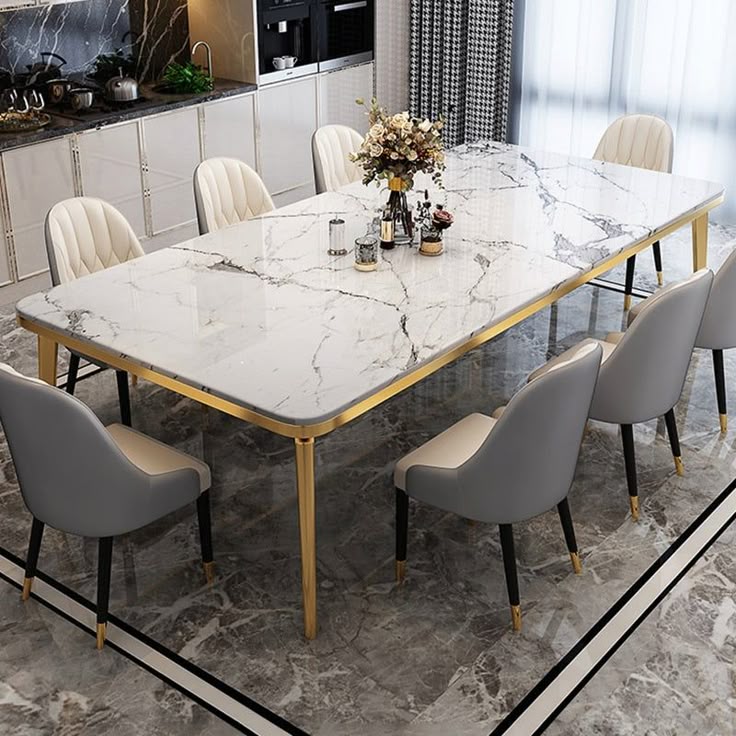
The design of a marble table extends far beyond the stone itself. While the natural veining and colour of marble immediately capture attention, the overall appearance of a finished table depends equally on its shape, edge profile, proportions, and supporting base. The right combination transforms a simple slab into a statement piece that defines the character of an entire room. This is why marble table top designs continue to evolve while maintaining the timeless elegance that has made marble one of the world’s most desirable furniture materials.
Every marble slab is naturally unique. Formed over millions of years through geological processes, no two pieces share the same veining, mineral movement, or colour distribution. This individuality gives designers exceptional creative freedom when developing bespoke dining tables, coffee tables, conference tables, side tables, console tables, and luxury reception furniture. Rather than working with repetitive manufactured patterns, architects and furniture specialists use the natural characteristics of each slab as the foundation of the overall design.
Recommended Stone Solutions


Modern marble table top designs combine natural stone with a wide variety of supporting materials. Powder-coated steel introduces contemporary simplicity, brushed brass creates luxurious warmth, solid timber adds natural texture, while sculptural stone pedestals produce dramatic architectural centrepieces. The choice of base influences not only the appearance of the table but also its stability, functionality, and suitability for different interior environments.
Shape is equally important. A round marble dining table encourages conversation and creates a softer visual presence, while a rectangular table provides generous seating and suits larger spaces. Oval tops combine elegance with improved circulation around the furniture, whereas square designs complement balanced, symmetrical interiors. Every shape serves a different purpose while highlighting the beauty of natural stone in its own way.
Selecting among different marble table top designs also requires consideration of edge profiles, slab thickness, structural support, intended use, and surrounding interior finishes. A slim contemporary profile may perfectly complement a minimalist apartment, while a thicker mitred edge creates the substantial appearance often associated with luxury hospitality and executive commercial projects.
At Maruti Mining Limited, we work with homeowners, architects, furniture designers, developers, and hospitality professionals to fabricate custom marble furniture tailored to individual projects. By combining premium natural stone with precision craftsmanship, we create tables that balance exceptional aesthetics with long-term performance.
You can explore the complete range of premium natural stone available through Maruti Mining Limited at marutimining and compare marble, granite, quartz, and other architectural surfaces suitable for bespoke furniture throughout Kenya and East Africa.
Why Marble Remains the Preferred Furniture Material
Despite the introduction of numerous engineered materials, marble continues to dominate luxury furniture design.
The enduring popularity of marble table top designs comes from several qualities that manufactured surfaces cannot fully replicate.
These include:
- Natural individuality
- Timeless elegance
- Premium architectural appeal
- Long service life
- Exceptional craftsmanship
- Lasting investment value
Every finished table becomes a unique work of natural art.
For more guidance on selecting premium stone surfaces, you can visit our Knowledge Base for expert insights at knowledge-base.
Choosing the Right Table Shape
The overall shape of a marble tabletop influences both appearance and functionality.
Different layouts suit different room sizes, seating arrangements, and architectural styles.
Round Marble Table Top Designs
Round marble table top designs create balanced, welcoming spaces.
They are particularly suitable for:
- Dining rooms
- Breakfast areas
- Coffee tables
- Meeting rooms
Advantages include:
- Easy conversation
- Soft visual lines
- Excellent circulation
- No sharp corners
Round tables work especially well in compact spaces where movement around the furniture is important.
Rectangular Marble Table Top Designs
Rectangular tables remain the most popular choice for larger interiors.
They provide:
- Maximum seating capacity
- Strong architectural presence
- Flexible proportions
- Formal dining arrangements
Large-format marble slabs allow long rectangular tables to showcase uninterrupted natural veining.
Oval Marble Table Top Designs
Oval tables combine many of the strengths of both round and rectangular layouts.
They offer:
- Softer edges
- Improved circulation
- Elegant proportions
- Comfortable seating arrangements
Oval designs are increasingly specified for luxury residential dining areas and hospitality environments.
Square Marble Table Top Designs
Square tables create visual symmetry.
They are often used for:
- Café tables
- Small dining areas
- Executive meeting rooms
- Luxury side tables
Square designs pair particularly well with contemporary minimalist interiors.
Popular Edge Profiles
The edge profile significantly influences the final appearance of marble table top designs.
Even subtle variations create entirely different architectural styles.
Straight Edge
A straight edge provides:
- Clean lines
- Contemporary appearance
- Minimalist character
It remains one of the most popular choices for modern interiors.
Pencil Edge
The pencil edge softens the corners slightly while maintaining a refined appearance.
It offers:
- Improved comfort
- Elegant detailing
- Reduced sharpness
Bevelled Edge
A bevelled edge introduces additional visual depth.
It complements:
- Transitional interiors
- Luxury dining tables
- Executive furniture
Bullnose Edge
The rounded bullnose profile produces a softer traditional appearance.
It is frequently selected for:
- Family dining tables
- Classical interiors
- Hospitality furniture
Mitred Edge
A mitred edge creates the illusion of a much thicker slab.
This technique delivers a bold luxury appearance without significantly increasing the overall weight of the tabletop.
Selecting the Right Thickness
Thickness contributes to both structural performance and visual impact.
Common options include:
- 20 mm
- 30 mm
- Mitred thicker-edge construction
The choice depends on:
- Table dimensions
- Base design
- Desired appearance
- Structural requirements
Why Base Design Matters
The base does far more than support the tabletop.
It determines:
- Stability
- Seating comfort
- Leg clearance
- Visual balance
- Overall architectural style
Selecting the right combination of stone and base ensures that the finished table performs as beautifully as it looks.
For inspiration, you can also explore our gallery of completed projects at our-works.
Popular Base Pairings for Marble Table Top Designs
The base is one of the defining elements of successful marble table top designs. While the marble surface attracts immediate attention, the base determines how the table functions, how stable it feels, and how it complements the surrounding interior.
The most effective designs balance structural performance with visual harmony.
Metal Bases
Metal remains one of the most popular choices for supporting marble because of its strength, versatility, and contemporary appearance.
Common finishes include:
- Matte black
- Powder-coated white
- Brushed brass
- Stainless steel
- Bronze
Metal bases suit:
- Contemporary homes
- Executive offices
- Restaurants
- Luxury apartments
Slim steel frames also allow the marble to remain the visual centrepiece.
Timber Bases
Solid timber introduces warmth and natural texture.
It pairs particularly well with:
- White marble
- Beige marble
- Grey marble
Popular timber species include oak, walnut, ash, and teak, each creating a different architectural character.
Timber bases work beautifully in Scandinavian, contemporary, and transitional interiors.
Pedestal Bases
Pedestal designs continue to dominate luxury marble table top designs, particularly for round and oval tables.
Advantages include:
- Excellent legroom
- Elegant proportions
- Strong architectural presence
- Flexible seating arrangements
Pedestal tables are widely specified for dining rooms, hotel restaurants, and executive meeting areas.
Sculptural Stone Bases
Some designers choose matching marble or complementary natural stone for the base itself.
This creates:
- Seamless visual continuity
- Monumental appearance
- Luxury architectural impact
Stone pedestal tables often become statement pieces in premium residential and hospitality projects.
Glass Bases
Glass bases create the illusion that the marble is floating.
This pairing is particularly effective when showcasing dramatic veining because the focus remains entirely on the natural stone.
Glass bases are often used for:
- Coffee tables
- Console tables
- Display furniture
Matching Shapes with Different Rooms
Choosing the correct shape is just as important as selecting the right marble.
Different marble table top designs perform better in different spaces.
Dining Rooms
Popular options include:
- Round pedestal tables
- Oval dining tables
- Large rectangular tables
These layouts maximise comfort while complementing the overall room proportions.
Living Rooms
Coffee tables often feature:
- Round tops
- Oval tops
- Organic free-form shapes
These designs encourage movement while softening the appearance of seating arrangements.
Executive Offices
Boardroom and executive furniture frequently incorporates:
- Large rectangular tables
- Boat-shaped tops
- Long conference tables
The generous surface area supports meetings while creating a prestigious working environment.
Matching Marble Colours with Base Materials
The relationship between stone colour and base material significantly influences the finished design.
Some of the most popular combinations include:
White Marble
Pairs beautifully with:
- Matte black steel
- Brass
- Walnut
- White powder-coated metal
Black Marble
Works exceptionally well with:
- Brushed brass
- Bronze
- Black steel
- Dark walnut
These combinations create dramatic contemporary interiors.
Grey Marble
Grey marble complements:
- Stainless steel
- Matte black frames
- Oak
- Glass
Its neutral appearance allows considerable design flexibility.
Green Marble
Green marble pairs naturally with:
- Brass
- Walnut
- Bronze
- Timber finishes
This combination creates luxurious interiors inspired by natural materials.
Choosing the Right Edge for Each Design
Different marble table top designs benefit from different edge treatments.
For example:
- Straight edges suit minimalist interiors.
- Pencil edges soften contemporary furniture.
- Bullnose profiles complement traditional homes.
- Mitred edges create bold luxury dining tables.
The chosen profile should complement both the marble itself and the surrounding furniture.
Proportion and Scale
Successful furniture design depends on balanced proportions.
Factors considered by professional designers include:
- Table length
- Table width
- Overall height
- Base dimensions
- Slab thickness
- Seating capacity
Proper proportions ensure the table remains both visually balanced and comfortable to use.
Book-Matching for Large Tables
Large-format slabs allow designers to create spectacular book-matched marble table top designs.
Book-matching involves placing adjoining slabs as mirror images so that the natural veining flows symmetrically across the surface.
This technique is particularly popular for:
- Executive boardroom tables
- Luxury dining tables
- Hotel reception furniture
The result is a dramatic centrepiece showcasing the artistry of natural stone.
What Influences the Cost?
Several factors affect the investment required for bespoke marble table top designs.
These include:
- Marble variety
- Slab dimensions
- Thickness
- Edge profile
- Base material
- Fabrication complexity
- Installation requirements
Custom furniture typically represents a higher investment than mass-produced alternatives because each piece is individually fabricated to suit the client’s specific requirements.
Marble Compared with Other Table Materials
While numerous furniture materials are available, marble continues to distinguish itself through its individuality and architectural presence.
Compared with manufactured surfaces, marble offers:
- Unique veining
- Natural mineral movement
- Timeless elegance
- Long-term prestige
Clients comparing premium furniture materials can also learn more about marble options at marble-manufacturer-kenya, explore our extensive collection of granite at top-granite-manufacturer-kenya-maruti-mining, or discover the full range of quartz surfaces at quartz-stone.


Leave a Reply