


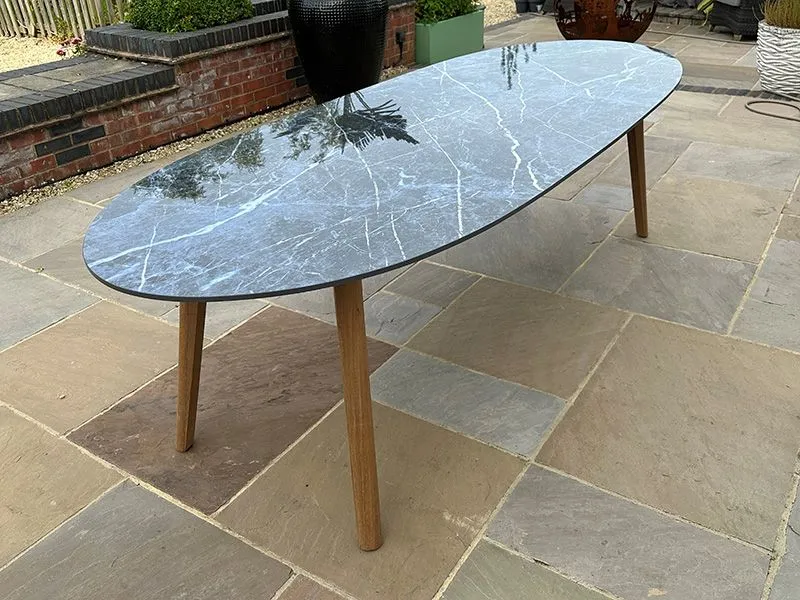
Dining table tops are more than decorative surfaces: when stone is selected correctly, the right thickness, slab, finish, edge profile and support structure can create a table that remains beautiful and functional for years.
A dining table is one of the hardest-working pieces of furniture in a home.
Recommended Stone Solutions
It is used for meals, conversations, homework, entertaining guests and, in many households, everyday activities that have little to do with dining.
That means the surface needs to perform.
It needs to tolerate repeated cleaning.
It needs to withstand ordinary spills.
It needs to handle plates, cutlery and serving dishes.
It needs to look good under different lighting conditions.
And, if it is made from natural stone, it needs to be properly supported because stone is substantially heavier than many conventional table-top materials.
Granite, marble and quartz can all create exceptional dining table tops, but they do not behave in exactly the same way.
The right choice therefore starts with understanding how the table will be used rather than choosing a slab simply because its colour looks attractive.
For projects requiring premium stone surfaces, explore Maruti Mining’s stone collection to see the range of granite, marble and quartz options available for architectural and furniture applications.
What Makes a Good Stone Dining Table Top?
A good stone dining table top balances appearance, durability, thickness, weight, maintenance requirements and structural support rather than focusing on appearance alone.
A beautiful slab can still be a poor choice if the table structure cannot support it.
Likewise, an exceptionally durable stone may not be the right choice if the client wants a highly delicate marble appearance and accepts the maintenance that comes with it.
The selection should therefore consider:
- Stone type
- Slab dimensions
- Thickness
- Surface finish
- Edge profile
- Table size
- Support structure
- Expected usage
- Heat exposure
- Cleaning requirements
- Installation
- Transportation
Every one of these factors contributes to the final result.
1. Choose the Right Stone for the Way You Eat
The best dining table top material depends on how frequently the table is used, how much maintenance is acceptable and whether durability or visual character is the primary priority.
Three major stone options are particularly relevant:
- Granite
- Marble
- Engineered quartz
Quartzite may also be considered where a natural stone with distinctive visual character and strong performance is desired.
Each material has its own strengths.
Granite Dining Table Tops
Granite is a strong choice for busy dining environments because it combines natural beauty with excellent resistance to everyday wear.
Granite is a natural igneous stone with a wide range of colours and patterns.
It can be relatively subtle or highly dramatic depending on the selected variety.
This makes it suitable for both contemporary and traditional interiors.
Granite can work particularly well where the dining table will receive frequent daily use.
You can explore our extensive collection of granite when comparing natural stone options.
Marble Dining Table Tops
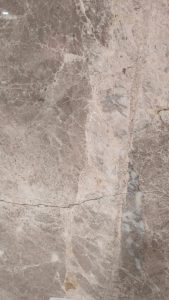
Marble is ideal when the dining table is intended to be a major visual feature, but it requires greater care because the surface can be more susceptible to scratching and acid etching.
Marble’s natural veining is one of its greatest advantages.
No two slabs are necessarily identical.
A marble dining table can therefore provide a highly individual appearance.
However, dining environments involve acidic foods and drinks.
Items such as:
- Lemon
- Vinegar
- Wine
- Tomato
- Certain fruit juices
can potentially affect susceptible marble surfaces if left in contact for too long.
This does not make marble unsuitable.
It means the owner should understand the material.
You can learn more about marble options before selecting a slab.
Quartz Dining Table Tops
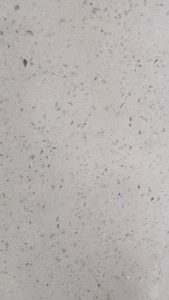
Engineered quartz can provide a contemporary appearance with controlled patterns and relatively straightforward routine maintenance, making it attractive for modern dining furniture.
Unlike natural granite or marble, engineered quartz is manufactured.
This allows manufacturers to create consistent patterns and colours.
It can be useful when a designer wants:
- Consistency
- Low routine maintenance
- Contemporary styling
- Predictable appearance
However, engineered quartz should be protected from excessive heat.
Hot cookware should not be placed directly onto the surface unless the product manufacturer specifically approves that application.
Discover the full range of quartz surfaces when considering engineered stone for dining furniture.
2. Choose the Correct Table Top Thickness
Thickness affects the table’s appearance, weight, structural requirements and perceived quality, so it should be selected together with the table’s dimensions and support system.
A thicker stone top can create a substantial architectural appearance.
A thinner top can produce a more refined, contemporary profile.
However, thickness should never be selected based solely on appearance.
The fabricator should consider:
- Slab strength
- Table dimensions
- Support spacing
- Edge design
- Stone weight
- Transport
- Installation
A large dining table with an inadequate support structure can become unstable regardless of how good the stone looks.
Why Thickness Matters More With Stone
Natural stone is heavy, and larger dining tables therefore require careful coordination between slab thickness and the supporting frame.
The table structure should be designed to distribute the stone’s weight properly.
This is especially important for:
- Long dining tables
- Large rectangular tables
- Oversized round tables
- Conference-style dining tables
- Cantilevered designs
Do not treat the stone as an afterthought.
The furniture designer and stone fabricator should coordinate before fabrication begins.
3. Select the Right Table Shape
The shape of the dining table affects material usage, edge fabrication, seating arrangements and the way natural stone patterns appear across the finished surface.
Common shapes include:
- Rectangular
- Square
- Round
- Oval
- Racetrack
- Irregular/custom
A rectangular slab may be relatively straightforward to fabricate.
Round and oval tables require curved cutting and carefully finished edges.
Irregular designs can require more detailed templating.
For natural stone, the slab’s pattern should also be considered.
A dramatic vein may look excellent on a rectangular surface but may be cut differently on a circular design.
Rectangular Stone Dining Tables
Rectangular dining tables provide generous seating and can showcase long natural-stone patterns particularly effectively.
They are suitable for:
- Family dining rooms
- Large homes
- Hospitality spaces
- Formal dining rooms
- Open-plan interiors
The main design consideration is proportion.
A very long table can appear visually heavy if the stone thickness and base are not balanced.
Round Stone Dining Tables
Round stone dining tables create a more intimate dining arrangement but require careful attention to slab diameter, weight and support.
Round tables can work well in:
- Smaller dining rooms
- Breakfast areas
- Hospitality settings
- Social dining spaces
The central base is particularly important.
A single pedestal must be engineered to support the stone without creating instability.
Oval Stone Dining Tables
Oval tables combine some of the seating benefits of rectangular tables with the softer visual character of curved edges.
They can be particularly effective in contemporary interiors.
The curved edge also eliminates sharp corners, which can be useful in family environments.
However, fabrication requires accurate templates and professional edge finishing.
4. Choose a Finish That Matches the Interior
The surface finish changes how the stone looks, feels and interacts with light, so it should be selected as carefully as the colour.
Common finishes include:
- Polished
- Honed
- Leathered
- Other specialised textures depending on the stone
A polished surface provides strong reflectivity.
A honed finish produces a softer, less reflective appearance.
Textured finishes can provide additional tactile character.
The choice should consider both aesthetics and maintenance.
Polished Dining Table Tops
Polished stone creates a refined, reflective appearance that can emphasise the colour and natural movement of granite or marble.
It can make a dining room feel more formal.
Polished surfaces are particularly effective where lighting is used as part of the interior design.
However, fingerprints and smudges can be more visible on some dark polished surfaces.
Regular cleaning may therefore be necessary.
Honed Dining Table Tops
Honed stone provides a softer, low-reflectivity appearance that can create a relaxed and contemporary dining environment.
It can be particularly attractive in minimalist interiors.
However, honed surfaces may behave differently from polished surfaces with regard to staining and visible marks.
The selected stone should therefore be tested and maintained according to its specific requirements.
Leathered and Textured Finishes
Textured finishes can add tactile depth and visual interest, particularly on granite, but their maintenance requirements depend on the specific stone and surface texture.
A textured surface can hide minor marks more effectively than a highly reflective surface.
However, deeper texture can sometimes make cleaning more demanding.
The correct balance depends on the intended use.
5. Get the Edge Profile Right
The edge profile is a small detail with a major influence on comfort, safety and the overall visual quality of a stone dining table.
Possible edge treatments include:
- Straight edge
- Eased edge
- Bevelled edge
- Bullnose
- Custom edge
A sharp edge can create an architectural appearance.
However, softened edges may be more appropriate for homes with children or frequent movement around the table.
The edge should also complement the interior style.
A traditional dining room may suit a more decorative profile.
A minimalist interior may look better with a simple eased or straight edge.
Why Edge Finishing Requires Skill
Poorly finished stone edges can immediately reduce the perceived quality of an otherwise premium dining table.
A professional fabricator should ensure:
- Consistent edge dimensions
- Smooth polishing
- Correct corners
- No visible chips
- Appropriate transitions
Natural stone should be fabricated with tools and techniques appropriate to the selected material.
6. Think About Heat Before Selecting the Surface
Dining tables regularly encounter hot plates, serving dishes and cookware, so heat exposure should be considered before choosing the material.
Granite generally performs strongly around ordinary household heat.
Marble is also a natural stone with good heat tolerance, although extreme thermal shock should still be avoided.
Engineered quartz requires more caution because its manufactured composition includes resin-based components.
The simplest rule is:
Use trivets and heat-resistant pads.
This is particularly important when serving dishes directly from the kitchen.
Can Hot Plates Damage Stone Dining Table Tops?
Ordinary warm plates are unlikely to present a major problem for most suitable natural stone surfaces, but extreme heat or sudden temperature changes should still be avoided.
Avoid placing extremely hot cookware directly onto any premium surface without checking the manufacturer’s or fabricator’s recommendations.
Protecting the table is easier than repairing it.
7. Consider the Stone’s Maintenance Requirements
Every stone requires appropriate care, but the maintenance routine differs significantly between granite, marble, quartzite and engineered quartz.
A dining table is exposed to food.
That means the surface can encounter:
- Oils
- Acids
- Sauces
- Coffee
- Tea
- Wine
- Spices
- Grease
Spills should be cleaned promptly.
Use appropriate stone-safe cleaning products.
Do not assume that a household cleaner is safe simply because it is suitable for another surface.
Granite Maintenance
Granite is generally practical for dining furniture, with routine cleaning and appropriate sealing where required by the specific stone.
Avoid abrasive cleaning powders.
Use suitable surface cleaners.
If the granite requires sealing, maintain the sealer according to professional recommendations.
Marble Maintenance
Marble requires greater care because acidic substances can etch susceptible surfaces and scratching can become visible over time.
Use:
- pH-neutral stone cleaners
- Soft cloths
- Prompt spill removal
- Appropriate protective measures
Avoid acidic cleaners such as vinegar-based products.
A marble table can remain beautiful for decades when its characteristics are understood.
Quartz Maintenance
Engineered quartz is generally easy to clean but should be protected from excessive heat, harsh chemicals and abrasive materials.
Follow the product manufacturer’s maintenance instructions.
A simple daily routine is usually enough for ordinary use.
Quartzite Maintenance
Quartzite is natural stone and may require sealing depending on its porosity and application, so maintenance should be determined for the actual stone selected.
Do not assume every quartzite behaves identically.
Different stones can have different absorption characteristics.
Dining Table Tops and Natural Variation
Natural variation is part of the appeal of stone dining tables, particularly when using marble, granite or quartzite, but buyers should approve the actual slab when pattern is important.
A small sample cannot always communicate:
- Vein direction
- Colour variation
- Mineral movement
- Pattern scale
- Background changes
A full slab can look very different from a small sample.
This is particularly important for large tables.
Bookmatching a Dining Table
Bookmatching can create a dramatic mirrored visual effect when the stone’s natural veining is suitable for the technique.
It involves positioning slabs so their patterns mirror one another.
This can be particularly striking with strongly veined marble and quartzite.
However, it can increase:
- Material requirements
- Fabrication complexity
- Slab-selection requirements
- Cost
The result can be exceptional when carefully planned.
How to Position Veining
The orientation of natural veining should be considered during fabrication because the cut direction can significantly change the visual appearance of the completed table.
Before fabrication, discuss:
- Vein direction
- Table orientation
- Centreline
- Edge positions
- Pattern continuity
This is especially important for premium dining tables where the stone itself is the primary design feature.
Table Base and Stone Top Compatibility
A stone dining table top should be designed together with the base because the base determines stability, weight distribution and the visual balance of the finished furniture.
Common base styles include:
- Four-leg bases
- Pedestal bases
- Metal frames
- Timber frames
- Sculptural bases
- Twin-pedestal designs
A heavy stone top needs appropriate support.
The base should not merely look attractive.
It needs to perform structurally.
How Much Support Does a Stone Table Need?
The required support depends on the table’s size, stone thickness, material characteristics and base design, so there is no universal support arrangement for every stone table.
Long tables may require additional support.
Large slabs can also require careful consideration of unsupported spans.
A qualified fabricator or furniture engineer should assess the proposed design.
This is particularly important for unusually large or cantilevered tables.
Transporting Stone Dining Table Tops
Transportation is one of the most important stages because a properly fabricated slab can still be damaged if it is poorly supported, lifted or transported.
Stone should be handled carefully during:
- Loading
- Securing
- Transport
- Unloading
- Positioning
Large slabs require appropriate equipment and experienced personnel.
Never assume that several people carrying a large stone top manually is automatically safe.
Installation of Stone Dining Tables
Installation should ensure that the stone sits securely on its support structure without creating concentrated stresses or instability.
The fabricator should check:
- Level
- Support
- Stability
- Alignment
- Edge condition
- Surface condition
A finished inspection should take place before the table enters normal use.
Stone Dining Tables and Kenyan Homes
Stone dining tables can be particularly effective in Kenyan homes because natural stone provides a strong architectural presence while offering durable surfaces suited to everyday living.
The design can complement interiors featuring:
- Natural wood
- Ceramic tiles
- Stone flooring
- Neutral walls
- Contemporary cabinetry
- Metal details
The choice of stone can also reflect the character of the home.
A dark granite can create a dramatic centrepiece.
Light marble can create a softer luxury aesthetic.
Quartz can suit a contemporary minimalist interior.
Stone Dining Tables in Hospitality
Hotels, restaurants and hospitality venues can use stone dining tables to create a premium appearance, but commercial use requires additional attention to cleaning, traffic and replacement considerations.
Hospitality furniture may be exposed to much more intensive use than a private dining table.
Consider:
- Cleaning frequency
- Food acids
- Impact
- Heat
- Maintenance staff
- Replacement availability
The selected stone should therefore be chosen for both aesthetics and operating conditions.
Dining Table Tops and Interior Design
A dining table can act as a visual anchor for an entire room, so its stone colour and pattern should be coordinated with flooring, cabinetry, walls and lighting.
A useful design strategy is to choose the table stone after the major architectural finishes have been established.
This allows the stone to complement rather than compete with:
- Flooring
- Kitchen worktops
- Wall finishes
- Lighting
- Furniture
- Curtains
- Architectural features
The strongest interiors usually have a deliberate relationship between these elements.
Matching a Stone Dining Table With Kitchen Countertops
A dining table does not have to use exactly the same stone as the kitchen countertop, but complementary materials can create a cohesive visual connection between the spaces.
For example:
- White quartz kitchen counters with dark granite dining table
- Grey granite kitchen with lighter marble dining table
- Marble island with complementary quartz dining surface
Contrast can be just as effective as matching.
The important consideration is balance.
Should the Dining Table Match the Kitchen?
Matching is optional; complementary colours, textures and materials can often create a more sophisticated result than using exactly the same surface everywhere.
Using one material repeatedly can create continuity.
Using different but related materials can create depth.
The decision should be based on the overall interior scheme.
Cost Factors for Stone Dining Table Tops
The cost of a stone dining table depends on much more than the price per square metre, with slab selection, thickness, fabrication, edge profiles, waste, transport and installation all contributing to the final cost.
A quotation may need to account for:
- Stone selection
- Slab quantity
- Thickness
- Cutting
- Curves
- Edge profiling
- Polishing
- Pattern matching
- Reinforcement
- Transport
- Installation
A complex table may require substantially more fabrication than a simple rectangular design.
Why Cheap Stone Can Become Expensive
Choosing solely on initial price can create additional costs if the stone is unsuitable, the slab is difficult to fabricate or the installation requires changes later.
A lower-priced slab may not provide the appearance or performance expected.
Likewise, a complex design may produce significant waste.
The best comparison is therefore based on the complete finished table rather than the raw material alone.
How to Specify Dining Table Tops
A professional specification should clearly identify the stone, thickness, finish, dimensions, edge profile, support requirements and acceptable natural variation.
For a project specification, consider including:
- Material
- Stone name
- Colour
- Slab approval
- Thickness
- Finish
- Edge profile
- Dimensions
- Cut-outs
- Support requirements
- Installation requirements
- Sealing requirements
- Maintenance instructions
This creates a clearer fabrication process.
Why Actual Slab Approval Matters
Actual slab approval is especially important for natural stone because colour, veining and mineral patterns can vary significantly from one slab to another.
For a premium dining table, the client should ideally see the selected slab before cutting.
This prevents disappointment after installation.
You can explore completed stone projects for inspiration before making the final selection.
Seven Mistakes to Avoid
Most problems with stone dining tables can be prevented by addressing material selection, structural support and maintenance before fabrication begins.
1. Choosing by colour alone
A beautiful colour does not guarantee suitability.
2. Ignoring weight
Stone requires appropriate support.
3. Choosing an unsuitable thickness
Thickness affects both appearance and structural requirements.
4. Forgetting heat exposure
Hot cookware requires protection.
5. Ignoring natural variation
Natural stone will not necessarily look identical to a small sample.
6. Using unsuitable cleaners
Some chemicals can damage stone surfaces.
7. Poor fabrication
Even premium stone can look poor if the edges, cuts or installation are badly executed.
How to Choose Dining Table Tops Without Regret
The safest approach is to make the decision as a complete furniture specification rather than treating the stone as a decorative afterthought.
Start by identifying how the table will be used.
Then select the appropriate material.
After that, determine:
- Table dimensions
- Stone thickness
- Surface finish
- Edge profile
- Slab pattern
- Support structure
- Transport requirements
- Installation method
- Maintenance routine
This sequence reduces the likelihood of expensive changes later.
Final Guide to Dining Table Tops
The best dining table tops combine the right stone with the right dimensions, thickness, finish, edge treatment and structural support, creating a surface that is both visually impressive and practical for everyday use.
Granite is an excellent option for clients prioritising durability and natural variation.
Marble is ideal when elegance and dramatic veining are central to the design, provided the owner accepts its greater maintenance requirements.
Engineered quartz can provide a controlled, contemporary appearance with straightforward routine care, although heat protection is important.
Quartzite can provide natural geological character and strong performance characteristics where the specific stone is suitable.
The most important decision is not simply choosing between materials.
It is choosing the correct material for the way the table will actually be used.
A dining table used every day by a large family needs different considerations from a decorative table used occasionally.
A hospitality table needs to withstand commercial cleaning and frequent use.
A luxury residential table may prioritise the beauty of a particular marble slab.
A modern apartment may benefit from the consistency of engineered quartz.
Once the material is chosen, the technical details become equally important.
Thickness must be coordinated with the table’s size and support structure.
The finish should match the intended aesthetic and maintenance expectations.
The edge should be comfortable, safe and properly fabricated.
The actual slab should be approved where natural variation matters.
Transportation should be planned carefully.
Installation should be carried out by experienced professionals.
And the completed table should be maintained according to the characteristics of the selected stone.
When these details are considered from the beginning, a stone dining table can become one of the most enduring features of an interior.
It can serve as furniture while also functioning as an architectural statement.
For homeowners, architects, interior designers and developers looking for premium stone dining table tops, contact Maruti Mining for project consultation and discuss your preferred stone, dimensions, finish and fabrication requirements before approving the final design.
You May Also Like


Bring Your Vision to Life in Stone
Imagine a space defined by elegance, durability, and timeless beauty. At Maruti Mining Limited, we transform your vision into reality with the finest selection of granite, marble, and quartz, backed by expert fabrication and installation.
Contact our team for a consultation and let’s create a legacy set in stone.
CUSTOM FABRICATION & INSTALLATION ACROSS EAST AFRICA
✔ Premium Collection of Over 80 Stone Varieties
✔ Expert Cutting, Polishing & Installation
✔ Free Project Consultation & Quote
✔ Serving Kenya (Nairobi, Karen, Mombasa), Uganda, Tanzania & beyond.
Request Your Free Consultation:
Maruti Mining Limited
Email: [email protected]
Phone: +254 736 701 174 | +254 728 789 164 | +254 733 519 836
Visit Us: Nairobi, Kenya
Website: https://marutimining.com/

Leave a Reply