



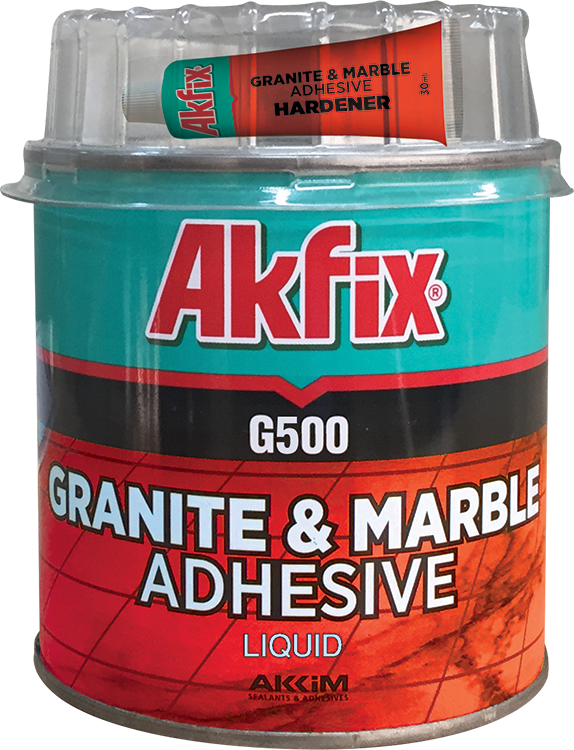
Granite fabrication involves more than cutting, grinding and polishing stone. Joining separate pieces, assembling mitred edges, repairing chips and creating clean countertop seams all require the correct bonding material. Choosing the right granite glue is essential for achieving strong joints, neat finishes and durable repairs without compromising the natural appearance of the stone.
Granite is dense, heavy and relatively non-porous, which means ordinary household adhesives are rarely suitable for professional stone fabrication. Fabricators typically use specialised polyester resin adhesives or two-part epoxy systems, depending on the application, working time, required bond strength, colour matching and exposure conditions.
Recommended Stone Solutions
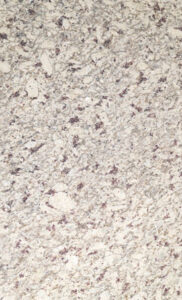


For example, joining two countertop sections requires an adhesive that produces a neat, colour-matched seam. Assembling a mitred waterfall edge requires a bonding system capable of holding accurately prepared stone surfaces together. Repairing a chipped granite corner requires a different approach involving suitable fillers, colour pigments and careful finishing.
The distinction between polyester and epoxy is particularly important. Although both are used in stone fabrication, they have different curing characteristics, working times, bonding properties and suitability for particular applications.
In Kenya, granite fabricators, countertop installers, stone workshops and contractors need to understand these differences when selecting granite glue for residential and commercial projects. The choice can influence fabrication efficiency, joint appearance and the long-term performance of the finished installation.
At Maruti Mining Limited, granite adhesive is listed among the stone fabrication tools and consumables supplied to fabricators and contractors. However, the specific chemical formulation of the listed product should be confirmed before identifying it as polyester-based or epoxy-based. You can view the Granite Adhesive product for product enquiries.
What Is Granite Glue?
Granite glue is a specialised bonding material used to join, repair and assemble natural stone components during fabrication and installation.
Unlike ordinary construction adhesives, granite glue is formulated for stoneworking applications where precise positioning, strong bonding and attractive finishes are important.
Depending on its formulation, granite glue may be used for:
- Joining granite countertop sections
- Bonding mitred countertop edges
- Repairing small chips and damaged corners
- Filling minor surface imperfections
- Joining decorative stone components
- Securing selected stone fabrication details
Professional stone adhesives are available in different formulations, with polyester resin and epoxy being two important options.
The correct product depends on the stone, joint design, working conditions and intended application.
Polyester Granite Glue vs Epoxy: What Is the Difference?
Polyester resin and epoxy are two commonly used adhesive systems in stone fabrication, but they differ in working time, curing behaviour, bonding performance and application requirements.
Understanding the differences helps fabricators select the appropriate granite glue for each job.
Polyester Resin Adhesive
Polyester resin adhesives are widely used in stone fabrication because they cure relatively quickly and can be coloured to match different stone surfaces.
Typical applications include:
- Filling small chips
- Joining countertop seams
- Repairing minor surface defects
- Assembling decorative stone components
- Bonding selected mitred edges
Advantages of Polyester Granite Glue
Polyester adhesives offer several practical advantages:
- Relatively fast curing
- Easy colour matching with pigments
- Convenient application
- Good finishing characteristics
- Suitable for many routine fabrication jobs
Limitations
Polyester adhesives also have limitations:
- Some formulations have relatively short working times.
- Bond performance varies between products.
- Certain formulations may become brittle.
- Not every product is suitable for structural or exterior applications.
Fabricators should follow the manufacturer’s recommendations rather than assuming all polyester adhesives perform identically.
Epoxy Stone Adhesive
Epoxy adhesives are generally supplied as two separate components: a resin and a hardener.
The components are mixed in the specified ratio, initiating a chemical reaction that produces a cured bond.
Epoxy systems are commonly considered for applications requiring:
- High bond strength
- Improved chemical resistance
- Strong adhesion to suitable stone surfaces
- More demanding fabrication requirements
- Selected structural bonding applications
Advantages of Epoxy Granite Glue
Depending on the formulation, epoxy adhesives can provide:
- Excellent bonding performance
- Good resistance to moisture
- Strong adhesion
- Good durability
- Options for colour matching
- Suitability for specialised stone fabrication
Limitations
Epoxy adhesives may involve:
- Higher material costs
- More precise mixing requirements
- Different curing times
- Greater preparation requirements
- More demanding application procedures
Not every epoxy is automatically suitable for every granite joint. Product specifications should always be checked.
Which Granite Glue Is Best for Countertop Seams?
The best granite seam adhesive depends on the joint design, stone type, required appearance and expected service conditions.
Countertop seams are among the most visible areas of granite fabrication.
When two granite sections meet, the adhesive should produce a neat joint that blends with the surrounding stone as closely as possible.
Important considerations include:
- Colour matching
- Viscosity
- Working time
- Bond strength
- Surface preparation
- Final polishing requirements
Polyester seam adhesives are frequently used for routine countertop fabrication because they can be pigmented and finished efficiently.
Epoxy may be appropriate where the particular joint requires its bonding or performance characteristics.
The fabricator should select a product specifically approved for the intended seam application.
What Is Knife-Grade Granite Glue?
Knife-grade granite glue is a thicker adhesive formulation designed to remain in position during application rather than flowing easily across the stone surface.
Its consistency makes it useful for controlled bonding and filling applications.
Knife-grade adhesives are particularly helpful when:
- Joining vertical stone edges
- Filling small chips
- Working on mitred edges
- Bonding decorative stone details
- Applying adhesive where excessive flow would be difficult to control
The thicker consistency helps the fabricator manage the adhesive during assembly.
However, knife-grade describes the consistency of the product, not its chemical composition. Knife-grade adhesives may be available in different formulations.
What Is Flowing-Grade Granite Glue?
Flowing-grade granite glue has a thinner consistency that allows it to spread more easily into suitable joints and small spaces.
It may be used where the application requires the adhesive to flow into a prepared gap.
Typical applications can include:
- Filling narrow seams
- Small surface repairs
- Filling fine imperfections
- Selected bonding applications
The choice between knife-grade and flowing-grade adhesive depends on the joint geometry and the manufacturer’s application instructions.
Granite Glue for Mitred Edges
Mitred granite edges require an adhesive that provides a reliable bond while allowing accurate alignment and a clean finished corner.
A mitred edge is created by cutting two stone pieces at matching angles, commonly around 45 degrees, so they can be assembled into a thicker-looking edge.
This technique is popular for:
- Waterfall kitchen islands
- Thick countertop edges
- Reception counters
- Bathroom vanity tops
- Decorative stone features
The adhesive must be compatible with the stone and the intended application.
Before bonding, the fabricator should ensure that:
- Both surfaces are accurately cut.
- The joint faces are clean.
- The pieces fit together correctly.
- The adhesive is properly mixed.
- The components are supported during curing.
Poor alignment or insufficient support can result in visible joints and uneven edges.
Granite Glue for Chip Repairs
Granite glue can be used to repair suitable small chips by filling the damaged area with a compatible adhesive or resin and restoring the surface finish.
Small chips may occur during transportation, handling, installation or everyday use.
Common areas affected include:
- Countertop corners
- Exposed edges
- Sink cut-outs
- Mitred edges
- Polished external profiles
A typical repair involves cleaning the damaged area, selecting a compatible repair compound, matching its colour and carefully filling the chip.
After curing, the repaired area may require scraping, grinding or polishing to blend with the surrounding granite.
Not every damaged slab can be repaired successfully with adhesive. Large cracks, unstable sections and extensive structural damage require professional assessment.
How to Match Granite Glue to the Stone Colour
The best granite glue for a visible joint is one that blends with the stone’s background colour and pattern rather than standing out as a separate line.
Colour matching is particularly important on kitchen countertops, reception desks, vanity tops and other surfaces where two granite pieces meet. Even a strong joint can look poorly finished if the adhesive creates a noticeable stripe across the surface.
Granite comes in many colours and patterns, including black, white, grey, cream, brown, red and mixed mineral designs. Some slabs have consistent backgrounds, while others contain veins, speckles and contrasting mineral patches. The adhesive colour should be selected with these characteristics in mind.
When choosing granite glue for a visible seam, consider:
- Background colour: Match the dominant colour of the granite as closely as possible.
- Veining and movement: A plain adhesive colour may be noticeable on granite with strong natural patterns.
- Joint width: A narrow, well-aligned seam is generally easier to make discreet than a wide gap.
- Final finish: Check the appearance of the cured adhesive after polishing, not only while it is wet.
- Lighting: Natural and artificial lighting can make a colour-matched joint appear different.
Fabricators often use pigments or colour-matching pastes with suitable stone adhesives. However, the pigment must be compatible with the adhesive formulation. Adding an unsuitable colourant can affect curing, consistency or bonding performance.
For a premium finish, test the colour on a small sample before applying the adhesive to the actual countertop or stone component.
Can You Use Marble Glue on Granite?
Some adhesives sold for marble can also bond granite, but suitability depends on the product formulation, the stone surfaces and the intended application.
Marble and granite are both natural stones, but they differ in mineral composition, porosity and surface characteristics. An adhesive labelled for marble should not automatically be assumed to be suitable for every granite fabrication task.
The important question is whether the product is approved for the particular materials and joint being bonded.
For example, a product may be suitable for joining marble vanity pieces but unsuitable for a demanding granite countertop seam. Another may be formulated for both materials and offer the strength, workability and finishing characteristics required.
Before using marble glue on granite, check:
- Whether the manufacturer lists both granite and marble as compatible materials.
- Whether the product is intended for horizontal or vertical bonding.
- Whether it is suitable for visible seams, edge bonding or repairs.
- Whether it can be polished after curing.
- Whether it is suitable for indoor or outdoor conditions.
- Whether the finished bond can withstand the expected service conditions.
The same checks apply when using granite glue on marble. Always follow the adhesive manufacturer’s technical instructions rather than relying only on the product name.
Mixing Granite Glue and Hardener Correctly
Correct mixing is essential because the wrong adhesive-to-hardener ratio can cause poor curing, weak bonding or an inconsistent finish.
Some stone adhesives are supplied as two-part systems. These typically contain a base resin and a separate hardener that must be combined before application. Other products may be supplied in a different format, so the instructions depend on the specific adhesive.
When working with a two-part granite glue, follow the manufacturer’s specified mixing ratio. Do not estimate the quantity by eye or assume that all stone adhesives use the same proportion.
A typical preparation process involves:
- Prepare the work area: Make sure the mixing surface, tools and stone components are clean and ready.
- Measure the components: Use the exact ratio stated in the product instructions.
- Combine thoroughly: Mix until the components form a consistent blend, avoiding unmixed material around the edges of the mixing surface.
- Add compatible pigment if permitted: Follow the product instructions for colour adjustment.
- Apply promptly: Use the mixture within its stated working time.
- Remove excess material appropriately: Follow the recommended cleaning method before the adhesive becomes difficult to remove.
Do not add extra hardener to make granite glue cure faster unless the manufacturer specifically permits it. Changing the ratio can interfere with the chemical reaction and compromise the finished bond.
How Long Does Granite Glue Take to Dry?
Granite glue curing time varies by formulation, temperature, mixing ratio, application thickness and the conditions in which the stone is being fabricated.
There is no single drying time that applies to every granite adhesive. Some products are designed for relatively quick fabrication work, while others require a longer period before handling, polishing or placing the finished component into service.
It is also important to distinguish between working time and full curing time.
- Working time: The period during which the mixed adhesive remains usable.
- Initial setting time: The point at which the adhesive begins to hold the bonded pieces in position.
- Handling time: When the bonded component can be moved safely, according to the manufacturer’s instructions.
- Full cure: The stage at which the adhesive has reached the required final performance.
Temperature can affect the process. Cold conditions may slow curing, while high temperatures can shorten working time. This is particularly important in busy fabrication workshops where stone pieces must be positioned accurately before the adhesive sets.
Never assume that an adhesive is ready for polishing simply because it feels dry on the surface. Follow the product’s technical data sheet and allow the recommended curing period before grinding, polishing, loading or installing the finished stone.
Preparing Granite Before Applying Adhesive
A clean, dry and properly prepared bonding surface gives granite glue a better opportunity to form a reliable joint.
Even a high-quality stone adhesive can perform poorly when applied to dusty, greasy, wet or unstable surfaces. Preparation is therefore an important part of granite fabrication.
Before applying granite glue:
- Remove dust, loose particles and fabrication residue from the bonding surfaces.
- Make sure the surfaces are dry unless the product specifically permits another condition.
- Remove oil, grease and other contaminants using a compatible cleaning method.
- Check that the two pieces fit together correctly.
- Confirm that the edges are properly cut and aligned.
- Support the stone so it cannot move while the adhesive cures.
The surfaces should also be structurally suitable for bonding. Adhesive should not be used to conceal badly cut edges, significant gaps or damaged stone that needs proper correction.
For countertop seams, dry-fitting the pieces before applying adhesive helps the fabricator identify alignment problems early. For mitred edges, accurate cutting and secure positioning are especially important because the adhesive cannot compensate for poor geometry.
Common Granite Glue Mistakes to Avoid
Most granite glue problems can be reduced by selecting the correct adhesive, preparing the surfaces properly and following the manufacturer’s application instructions.
Common mistakes include:
Using the Wrong Adhesive
Not every stone adhesive is designed for every fabrication job. A product intended for fixing stone to a wall may not provide the workability or finishing properties required for a visible countertop seam.
Choose granite glue according to the actual task, whether it involves joining slabs, bonding mitred edges or repairing chips.
Applying Too Much Adhesive
Excess adhesive can make a joint difficult to finish and may create unnecessary cleaning work. Apply the amount recommended for the joint and avoid forcing large quantities into poorly fitted gaps.
Ignoring the Mixing Ratio
For two-part systems, incorrect proportions can affect curing and bond performance. Always measure according to the product instructions.
Moving the Stone Too Soon
Movement during curing can disturb alignment and weaken the joint. Use appropriate supports and clamps where necessary, and leave the bonded pieces undisturbed for the recommended period.
Skipping Colour Tests
A glue colour that looks suitable in the container may appear different after curing and polishing. Test the colour before working on a visible finished surface.
Polishing Before Full Curing
Premature grinding or polishing can damage the joint or interfere with the adhesive’s performance. Wait for the manufacturer’s specified curing period.
Using Adhesive to Hide Poor Fabrication
Granite glue is not a substitute for accurate cutting, proper edge preparation or correct installation. Good fabrication starts with well-prepared stone components.
How to Choose Granite Glue for Your Fabrication Project
The right granite glue depends on the type of joint, the stone material, the appearance required and the conditions the finished surface will face.
Before purchasing an adhesive, identify the exact fabrication task. A countertop seam, a mitred edge, a decorative panel and a small chip repair may require different adhesive characteristics.
Use these considerations when selecting granite glue:
| Fabrication task | What to look for |
|---|---|
| Countertop seams | Strong bonding, suitable working time and colour-matching options |
| Mitred edges | Good edge adhesion, controlled consistency and reliable positioning |
| Chip repairs | Suitable filling properties and a finish that can be polished |
| Decorative stone joints | Compatibility with the stone and the required appearance |
| Vertical stone components | Adhesive approved for the intended orientation and application |
| Outdoor stonework | Suitability for the expected temperature and environmental exposure |
Do not select granite glue based on price or curing speed alone. A product that is easy to apply but unsuitable for the intended joint can create costly fabrication problems.
Ask the supplier for the technical data sheet, recommended applications, mixing instructions and curing information. These details help confirm whether the adhesive is appropriate for your project.
Is Granite Glue Waterproof and Heat Resistant?
Some granite adhesives are designed to withstand moisture and temperature changes, but the actual performance depends on the specific formulation and its approved applications.
This matters when fabricating kitchen countertops, bathroom vanities, outdoor counters and other stone surfaces exposed to changing conditions.
A countertop joint may encounter water during cleaning, while a kitchen surface may experience heat from nearby appliances or cookware. These conditions make adhesive selection important.
However, waterproof or heat-resistant claims should not be assumed for every product sold as granite glue. Check the manufacturer’s technical specifications to establish:
- Whether the adhesive is suitable for areas exposed to moisture.
- Its stated temperature resistance.
- Whether it is approved for indoor or outdoor use.
- Whether it can withstand the expected service conditions.
- Whether the cured joint requires any additional protection.
Even when an adhesive has good moisture resistance, proper installation remains essential. Water should not be allowed to penetrate poorly sealed joints or reach vulnerable parts of the installation.
For kitchen countertops, also remember that an adhesive joint is not a substitute for proper sealing where the stone itself requires sealing.
Safety Precautions When Working with Granite Glue
Granite glue should be handled according to its safety data sheet, with suitable ventilation and personal protective equipment.
Stone adhesives may contain resins, hardeners, solvents or other chemicals that require careful handling. The risks differ between products, so the safety instructions supplied with the adhesive should always take priority.
Good workshop practices include:
- Wearing suitable protective gloves.
- Using safety glasses to protect against splashes.
- Working in a well-ventilated area.
- Avoiding direct skin contact with uncured adhesive.
- Keeping products away from flames or ignition sources where the safety instructions require it.
- Keeping containers closed when not in use.
- Storing adhesives and hardeners according to the manufacturer’s recommendations.
- Keeping products away from children and unauthorised users.
Do not clean adhesive from skin using solvents unless the product’s safety instructions specifically recommend an appropriate method. Follow the manufacturer’s guidance for accidental contact, spills and disposal.
Fabricators should also consider dust safety. Cutting and polishing granite can produce respirable crystalline silica dust. Use suitable dust extraction, wet-working methods and appropriate respiratory protection in accordance with workplace safety requirements.
How to Store Granite Glue Properly
Proper storage helps preserve granite glue quality and reduces the risk of premature deterioration before use.
Storage requirements vary depending on the adhesive formulation and packaging. Some products are sensitive to heat, sunlight, moisture or contamination.
For reliable storage:
- Keep the adhesive in its original, clearly labelled container.
- Follow the manufacturer’s recommended storage temperature.
- Avoid leaving products in direct sunlight or excessive heat.
- Keep lids and caps tightly closed.
- Store hardeners separately where the instructions require it.
- Avoid using products beyond their stated shelf life.
- Check for changes in consistency, separation or other signs of deterioration before use.
Do not assume that an adhesive is still suitable simply because it has not passed its expiry date. If it has been stored incorrectly or its condition has changed, check with the supplier before using it on a finished stone surface.
What Should You Ask Before Buying Granite Adhesive in Kenya?
Before buying granite adhesive in Kenya, confirm its intended use, stone compatibility, working time, curing requirements and availability of technical instructions.
The product name alone may not provide enough information to determine whether an adhesive is suitable for your fabrication work.
Ask the supplier:
- Is the product suitable for granite, marble or engineered stone?
- Is it intended for fabrication joints, installation or both?
- Can it be used on visible countertop seams?
- Is it suitable for mitred edges and small repairs?
- Does it require a separate hardener?
- What is the correct mixing ratio?
- How long is the working time?
- When can the bonded stone be handled and polished?
- Is the cured adhesive suitable for the expected moisture and temperature conditions?
- What pack sizes are available, and what are the storage requirements?
Maruti Mining Limited lists a Granite Adhesive product for bonding granite, natural stone and engineered surfaces. Its product information describes applications including countertops, wall panels, decorative stone, fabrication and installation. It also highlights gap-filling and quick-curing characteristics. However, the published product information does not identify the adhesive’s precise resin chemistry, so confirm the formulation and application instructions directly with the supplier before choosing between polyester, epoxy or another adhesive system.
You can review the Granite Adhesive product and contact Maruti Mining for current product details, availability and guidance.
Frequently Asked Questions About Granite Glue
1. What is the best granite glue for countertop seams?
The best granite glue for countertop seams is an adhesive specifically approved for stone fabrication joints. It should provide reliable bonding, suitable working time and colour-matching options for the particular granite. The correct choice also depends on the joint design and manufacturer’s instructions.
2. Is polyester or epoxy better for granite glue?
Polyester and epoxy adhesives have different working characteristics. Polyester products are commonly used in stone fabrication because they can be formulated for convenient filling, bonding and polishing. Epoxy systems are selected for applications where their specified bonding and performance characteristics are required. Neither is automatically best for every granite project.
3. Can granite glue repair a chipped countertop?
Yes. A suitable stone adhesive or repair compound can be used for some small chips and edge damage. The repair should be compatible with the granite, appropriately colour-matched and finished through careful grinding and polishing. Larger cracks or structural damage may require professional assessment.
4. Can I use granite glue on marble?
Some stone adhesives are suitable for both granite and marble. However, check the product label and technical data sheet to confirm compatibility. Do not assume that every granite adhesive is suitable for marble or that every marble glue will work for granite fabrication.
5. How long should granite glue cure before polishing?
The required curing period depends on the adhesive formulation, temperature, mixing ratio and application conditions. Follow the manufacturer’s instructions and do not polish the joint until the recommended curing time has passed.
6. Does granite glue come in different colours?
Some stone adhesives can be supplied in different colours or adjusted with compatible pigments. Colour matching is particularly important for visible seams and repairs. Always test the finished colour on a sample before applying the adhesive to the actual stone.
7. Can granite glue fill gaps between stone slabs?
Certain stone adhesives have gap-filling properties, but they should not be used to compensate for badly cut edges or excessive gaps. The joint must be properly prepared, and the adhesive must be suitable for the gap size and intended application.
8. Is granite glue the same as granite adhesive?
The terms are often used interchangeably to describe products that bond granite and other stone surfaces. However, products differ in formulation, consistency, curing behaviour and intended use. Check the technical specifications rather than relying on the name alone.
9. Can granite glue be used outdoors?
Some products are suitable for outdoor applications, but not all granite adhesives are designed to withstand prolonged exposure to moisture, sunlight and temperature changes. Confirm the manufacturer’s outdoor-use rating before using an adhesive externally.
10. Where can I buy granite adhesive in Kenya?
Maruti Mining Limited lists granite adhesive among its stone-related products and supplies. You can view the Granite Adhesive product details or contact the company to confirm the available formulation, packaging, price and suitability for your fabrication requirements.
Conclusion: Choose the Right Granite Glue for a Professional Finish
Good granite fabrication depends on more than strong adhesive; it requires the correct product, accurate preparation, careful colour matching and sufficient curing time.
Granite glue plays an important role in joining countertop seams, bonding mitred edges, repairing chips and completing decorative stonework. Polyester and epoxy systems offer different characteristics, while knife-grade and flowing-grade consistencies help fabricators work with different joint designs.
The most important step is matching the adhesive to the job. Check compatibility with the stone, follow the mixing and application instructions, prepare the surfaces properly and allow the adhesive to cure before finishing.
Whether you are fabricating a kitchen countertop, a bathroom vanity, a reception desk or a decorative stone feature, choosing the right granite adhesive helps achieve a neat, durable and professional result.
Bring Your Vision to Life in Stone
Maruti Mining Limited supplies premium granite, marble, quartzite, engineered quartz and porcelain solutions for residential, commercial, hospitality and architectural projects across East Africa.
Whether you are a homeowner, contractor, architect, interior designer or stone fabricator, Maruti Mining can help you explore quality stone materials and related supplies for your project.
- Premium granite, marble, quartzite and engineered stone solutions
- Stone products for kitchens, bathrooms and commercial spaces
- Stone fabrication and installation solutions
- Stone adhesives and fabrication supplies
- Guidance on selecting suitable materials for your project
Serving Kenya and East Africa, including Nairobi, Mombasa, Kisumu, Nakuru, Eldoret, Diani, Malindi, Uganda, Tanzania, Rwanda and neighbouring markets.
Request Your Free Consultation
Maruti Mining Limited
Email: [email protected]
Phone: +254 736 701 174 | +254 728 789 164 | +254 733 519 836
You May Also Like
Visit Us: Nairobi, Kenya
Website: https://marutimining.com/

Leave a Reply