


Outdoor table tops have to withstand conditions that indoor furniture rarely encounters, including direct sunlight, rain, dust, temperature changes and repeated cleaning. The right stone can provide long-term performance, but material selection, finish, support and installation all determine how well the finished table performs outside.
Outdoor dining areas have become an important part of residential and commercial architecture.
Recommended Stone Solutions
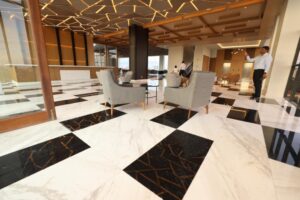
Restaurants create terraces and garden dining areas. Hotels develop poolside lounges. Homeowners build outdoor kitchens and entertainment spaces. Cafés extend their seating onto pavements, courtyards and verandas.
These spaces need furniture that looks attractive while coping with the environment.
That makes outdoor table tops fundamentally different from ordinary indoor tabletops.
A material that performs beautifully inside a climate-controlled room may behave differently when exposed to strong sunlight, rain, dust and repeated temperature changes.
Natural stone can be an excellent choice because of its durability, substantial appearance and architectural character. Granite, marble and quartzite can all create striking outdoor surfaces when appropriately selected and installed.
However, not every stone should automatically be specified for an exposed outdoor application.
Engineered quartz, for example, requires careful consideration where prolonged direct sunlight is expected because some products can experience colour changes or degradation when exposed to significant UV radiation over time.
The correct approach is therefore to evaluate the stone, exposure, support system, finish and intended use together.
For architects, homeowners, landscape designers, restaurant operators, hotel developers and contractors, this approach produces outdoor furniture that looks good on installation day and continues to perform long afterwards.
Why Outdoor Table Tops Need Different Specifications
Outdoor table tops experience UV exposure, rain, temperature fluctuations, dust, moisture and physical wear, so material selection must account for environmental exposure rather than appearance alone.
Indoor furniture is normally protected from direct weather.
Outdoor furniture is not.
A table located in an exposed garden may experience:
- Direct sunlight
- Heavy rainfall
- Dust
- Wind
- Temperature changes
- Moisture
- Bird droppings
- Food spills
- Cleaning chemicals
- Physical impact
A covered veranda will experience less exposure than a completely uncovered patio.
This distinction matters.
Outdoor table-top specifications should therefore begin with the actual location.
Fully Exposed vs Covered Outdoor Tables
The degree of exposure is one of the most important factors when selecting stone for an outdoor table because covered and uncovered installations experience very different environmental conditions.
A fully exposed table receives direct sunlight and rain.
A covered terrace may be protected from most rainfall but still experience strong UV radiation and humidity.
A semi-outdoor restaurant may experience a combination of indoor and outdoor conditions.
Before selecting the stone, establish whether the table will be:
- Fully exposed
- Partially sheltered
- Under a pergola
- Under a fixed roof
- Beside a swimming pool
- On a covered veranda
- In a garden
- On a rooftop terrace
The exposure level should form part of the specification.
For broader guidance on stone selection and applications, visit Maruti Mining’s Knowledge Base.
1. Granite Outdoor Table Tops
Granite is one of the strongest natural-stone options for many outdoor table applications because it combines durability with excellent visual variety and resistance to everyday environmental exposure.
Granite is formed from naturally occurring mineral systems and can provide a dense, hard surface suitable for demanding applications.
Outdoor granite tables can work well in:
- Gardens
- Patios
- Restaurant terraces
- Hotel pool areas
- Outdoor kitchens
- Rooftop dining
- Courtyards
The specific granite variety still matters.
Different stones can have different mineral compositions, porosity and appearance.
The actual slab should therefore be evaluated rather than assuming every granite will behave identically.
Explore Maruti Mining’s extensive granite collection when considering granite for an outdoor project.
Granite and Direct Sunlight
Quality granite is generally well suited to outdoor environments, but the specific stone, surface finish and exposure should still be considered before installation.
Natural stone can experience gradual weathering over very long periods.
However, properly selected granite can provide excellent performance for outdoor furniture.
The objective is to select a material suitable for the actual conditions rather than relying solely on the generic label “granite”.
Granite Around Swimming Pools
Granite can be a practical choice for outdoor poolside furniture when the stone, finish and supporting structure are selected appropriately for wet conditions.
Poolside environments introduce additional factors.
These include:
- Constant moisture
- Pool chemicals
- Wet hands
- Chlorinated water
- Sunlight
- Splashing
- Cleaning
The stone surface should be easy to maintain and the table base should be designed to tolerate the surrounding environment.
2. Quartzite Outdoor Table Tops
Quartzite can be an excellent premium option for exposed outdoor table tops because it is a natural stone with strong durability and distinctive mineral patterns.
Quartzite can provide a particularly attractive solution where the project requires both natural character and demanding outdoor performance.
It can be used for:
- Outdoor dining tables
- Garden tables
- Poolside furniture
- Outdoor kitchens
- Hospitality terraces
The actual stone should still be evaluated for its characteristics and intended application.
Quartzite can also provide dramatic veining that makes the table itself a design feature.
Quartzite vs Quartz Outdoors
Quartzite and engineered quartz are different materials, and the distinction becomes particularly important when specifying a surface for prolonged outdoor exposure.
Quartzite is a natural stone.
Engineered quartz is manufactured using a mixture of mineral aggregates and binding materials.
Their outdoor performance should therefore not be assumed to be identical.
Where a table will remain in strong direct sunlight for long periods, the manufacturer’s outdoor suitability information should be checked for engineered quartz.
3. Marble Outdoor Table Tops
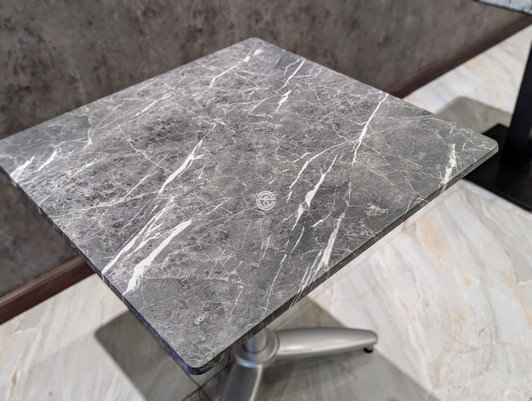
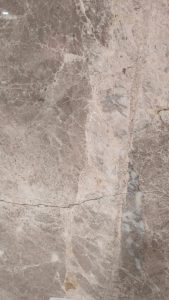
Marble can create exceptionally attractive outdoor furniture, but it requires more careful consideration of staining, etching, surface weathering and maintenance than simply choosing a stone for its appearance.
Marble is popular because of its:
- Natural veining
- Elegant appearance
- Wide colour range
- Architectural character
It can work beautifully in:
- Luxury gardens
- Hotel terraces
- Courtyards
- Covered outdoor dining
- High-end residential spaces
However, marble is not maintenance-free.
Acidic substances can etch susceptible surfaces.
Outdoor environments also expose the material to contaminants that indoor marble may encounter less frequently.
Explore Maruti Mining’s marble solutions when considering marble for outdoor furniture.
Marble in Restaurant Terraces
Marble can provide a luxurious appearance for restaurant terraces, but operators should understand the maintenance implications before choosing it for heavily used outdoor dining furniture.
Restaurant tables may encounter:
- Lemon juice
- Wine
- Vinegar
- Tomato-based foods
- Coffee
- Oils
- Cleaning chemicals
If these substances remain on susceptible marble, surface changes can occur.
The restaurant’s cleaning procedures should therefore be considered alongside the material selection.
4. Engineered Quartz Outdoors
Engineered quartz is attractive for many interior applications, but prolonged direct outdoor exposure requires careful product-specific assessment because UV radiation can affect some engineered surfaces.
This is one of the most important distinctions when choosing outdoor table tops.
A quartz surface that performs well inside a kitchen may not necessarily be recommended for an exposed outdoor table.
Potential concerns can include:
- UV-related colour change
- Long-term weathering
- Manufacturer warranty limitations
- Heat exposure
If engineered quartz is being considered for a covered outdoor space, consult the manufacturer’s technical documentation for the exact product.
Do not assume that all quartz products have identical outdoor performance.
5. Choosing the Right Surface Finish
Surface finish affects the appearance, cleaning behaviour, tactile quality and outdoor practicality of stone, so the finish should be selected according to how the table will actually be used.
Common finishes include:
- Polished
- Honed
- Leathered
- Flamed
- Brushed
The correct finish depends on the material and application.
A highly polished surface can provide strong visual impact.
A honed surface can produce a softer appearance.
Textured finishes can provide a different visual and tactile character.
For outdoor dining tables, the finish should also be assessed for cleaning requirements and interaction with the surrounding environment.
Polished Outdoor Table Tops
Polished stone can create a luxurious outdoor appearance, but the surface should be assessed for glare, staining and maintenance requirements in the specific location.
A table in direct sunlight can reflect significant light.
This may be desirable in some architectural designs and distracting in others.
The actual slab should be reviewed under the intended lighting conditions where possible.
Honed Outdoor Table Tops
Honed stone provides a lower-reflective appearance and can create a sophisticated contemporary look for outdoor furniture.
The surface is less reflective than polished stone.
However, it may display marks or staining differently.
Maintenance requirements depend on the stone.
Textured Stone Finishes
Textured finishes can provide distinctive visual character but may require more attention during cleaning because dirt can accumulate within surface irregularities.
This can matter in outdoor restaurants where tables need to be cleaned quickly between customers.
The balance is therefore between appearance and operational practicality.
6. Outdoor Table Top Thickness
The thickness of an outdoor stone table top affects weight, structural stability, visual proportions and resistance to handling damage, making it an important part of the furniture specification.
A thicker slab provides a substantial appearance.
But it also increases weight.
For example, a large stone table can become difficult to move if the slab is excessively thick.
The supporting base must therefore be designed for the finished weight.
Why Stone Weight Matters Outdoors
Outdoor tables are often moved for cleaning, weather protection or seasonal rearrangement, so the weight of the stone should be considered alongside the table’s intended use.
A very heavy table may be stable in a fixed restaurant terrace.
The same table may be impractical for a residential patio where homeowners regularly rearrange furniture.
The best design is not necessarily the thickest one.
It is the one that balances appearance, strength, weight and practicality.
Outdoor Table Bases
The table base is just as important as the stone top because outdoor exposure can affect metals, timber, fixings and other supporting components.
Possible bases include:
- Stainless steel
- Powder-coated steel
- Aluminium
- Treated timber
- Masonry
- Concrete
- Custom fabricated frames
The material should be appropriate for the environment.
Coastal Outdoor Furniture
Outdoor table bases in coastal environments require particular attention to moisture and salt exposure because unsuitable metalwork can corrode even when the stone itself performs well.
This is especially relevant for projects in coastal Kenya.
The stone should not be considered in isolation.
A durable granite top installed on an unsuitable metal base can still result in premature furniture failure.
7. Outdoor Table Top Overhangs
Stone overhangs should be carefully controlled outdoors because unsupported projections can create additional stress on the slab and increase the risk of accidental impact.
Outdoor tables are frequently used in less controlled environments.
Guests may:
- Lean against the table
- Sit on an edge
- Move chairs against it
- Place heavy objects on it
The support system should therefore be designed around realistic use.
Designing the Overhang
The correct overhang balances legroom with structural support and should be confirmed with the stone fabricator before cutting the slab.
The design should consider:
- Slab thickness
- Stone type
- Table dimensions
- Support positions
- Expected loading
- Edge profile
Large overhangs should never be treated as purely aesthetic details.
Outdoor Table Tops and Heat
Direct sunlight can heat stone surfaces significantly, while hot cookware and other heat sources can create additional thermal stresses or damage depending on the material and construction.
Outdoor dining tables may be exposed to:
- Strong sunlight
- Hot serving dishes
- Barbecue equipment
- Outdoor cooking
- Heated containers
The stone manufacturer’s recommendations should be followed.
For engineered quartz in particular, direct sunlight and heat exposure should be considered carefully.
Outdoor Kitchens and Stone Tables
Outdoor kitchens require materials that can cope with the combined effects of weather, cooking activity, cleaning and repeated temperature changes.
A stone table near an outdoor cooking area may experience more heat than an ordinary garden table.
The design should establish the distance between:
- Grills
- Burners
- Pizza ovens
- Fire features
- Table surfaces
Heat-generating equipment should not be placed directly against materials unless specifically designed for that application.
Rain and Outdoor Stone
Rain does not automatically make natural stone unsuitable for outdoor use, but water management, drainage, surface characteristics and the supporting structure all influence long-term performance.
Outdoor furniture should not trap water unnecessarily.
The surrounding surface should provide adequate drainage.
Metal supports should be protected.
The table should be installed so water can leave the surface and surrounding structure appropriately.
Water Pooling
Standing water can increase staining, dirt accumulation and deterioration of supporting components, so outdoor table designs should avoid unnecessary areas where water can remain trapped.
A flat tabletop can still shed water effectively when properly installed.
However, the surrounding furniture and base should not create pockets where water accumulates.
8. Outdoor Table Tops in Kenya
Kenyan outdoor environments vary significantly, so stone selection should reflect the actual climate and exposure of the installation rather than treating the country as one uniform environment.
A table in Nairobi may experience:
- Strong sunlight
- Seasonal rainfall
- Dust
- Temperature variation
A coastal installation may experience:
- High humidity
- Salt-laden air
- Heavy rainfall
- Strong sunlight
An outdoor installation in a drier region may experience:
- Dust
- High solar exposure
- Large temperature swings
The stone and supporting structure should therefore be specified for the project location.
Outdoor Table Tops in Nairobi
Nairobi outdoor tables should be designed for strong sunlight, seasonal rainfall, dust and regular outdoor use.
Covered patios and garden spaces can benefit from natural stone surfaces that coordinate with landscaping and architecture.
Granite can be particularly practical where durability is a priority.
Quartzite can provide a more distinctive natural-stone appearance.
Outdoor Table Tops at the Kenyan Coast
Coastal outdoor furniture requires special attention to moisture, salt exposure and corrosion of supporting materials, particularly where tables are installed near the sea.
The stone selection should be paired with suitable hardware and base materials.
This is a complete furniture-system issue rather than a stone-only issue.
Outdoor Restaurant Table Tops
Restaurants need outdoor table tops that combine appearance with rapid cleaning, durability and practical resistance to frequent customer use.
Outdoor restaurant furniture experiences repeated cycles of:
- Customer use
- Food service
- Cleaning
- Sun exposure
- Moisture
- Reuse
The selected stone should therefore be compatible with the restaurant’s operating routine.
Outdoor Hotel Table Tops
Hotel outdoor dining and poolside furniture often needs to balance luxury aesthetics with durability because guests expect premium appearance while the furniture experiences continuous commercial use.
A hotel may require stone tables for:
- Poolside dining
- Breakfast terraces
- Rooftop restaurants
- Garden restaurants
- Outdoor lounges
Material consistency can also become important across multiple areas.
Poolside Stone Table Tops
Poolside tables must withstand moisture, sunlight and exposure to pool chemicals while remaining practical for regular cleaning.
The stone should be selected according to the specific environment.
The base and fixings should also be resistant to the surrounding conditions.
Where users regularly sit near wet areas, edge design and furniture stability become particularly important.
Outdoor Dining Table Sizes
The correct outdoor table size depends on the number of users, chair dimensions and available patio space rather than the stone slab alone.
Common configurations include:
- Two-person tables
- Four-person tables
- Six-person tables
- Eight-person tables
- Large communal tables
The same principles used for restaurant furniture apply outdoors.
Always consider the complete footprint of the table and chairs.
Round Outdoor Table Tops
Round stone tables can work particularly well outdoors because their softer geometry suits gardens, terraces and informal dining environments.
They can provide:
- Easy conversation
- No sharp corners
- Flexible seating
- Strong visual appeal
The supporting base must remain stable.
Rectangular Outdoor Table Tops
Rectangular stone tables are useful where larger groups need to be accommodated or where the furniture needs to align with architectural lines.
They can work particularly well on:
- Long terraces
- Covered verandas
- Restaurant patios
- Pool decks
The larger the table, the more important weight and support become.
Outdoor Table Top Edges
Edge profiles influence safety, appearance and durability, especially where outdoor furniture is frequently approached from different directions.
Common profiles include:
- Eased
- Pencil round
- Bullnose
- Bevelled
- Straight polished
For outdoor dining, softened edges can provide a practical solution.
Why Edge Details Matter
Outdoor furniture is exposed to frequent contact, so a carefully selected edge profile can improve both comfort and resistance to accidental impact.
Sharp edges may be visually attractive in some designs but less forgiving in busy environments.
The edge should therefore reflect the intended use.
Outdoor Table Top Sealing
Some natural stones benefit from appropriate sealing, but sealing is not a substitute for selecting a suitable stone or following correct maintenance procedures.
Sealing requirements depend on:
- Stone type
- Porosity
- Finish
- Exposure
- Usage
The fabricator or stone specialist should recommend an appropriate treatment where required.
Sealers also require maintenance and eventual renewal depending on the product.
Cleaning Outdoor Stone Tables
Outdoor stone tables should be cleaned regularly because dust, organic matter, food residues and environmental pollutants can accumulate more quickly outside than indoors.
A simple maintenance routine can include:
- Remove loose dirt.
- Wipe food and drink spills promptly.
- Use a suitable stone cleaner.
- Avoid abrasive powders.
- Avoid inappropriate acidic cleaners.
- Rinse where appropriate.
- Dry the surface.
The exact cleaning method should be based on the stone.
Avoiding Harsh Chemicals
Strong household chemicals should not automatically be used on outdoor stone because some products can damage sensitive stone surfaces or affect sealers and finishes.
This is particularly important for marble.
Avoid assuming that a cleaner suitable for glass, metal or ceramic is automatically suitable for natural stone.
Outdoor Table Tops and Dust
Dust and grit can act as abrasive particles when repeatedly moved across a tabletop, so regular cleaning is particularly important in dusty outdoor environments.
A dry abrasive particle underneath a plate, glass or object can create scratches over time.
Removing loose grit before wiping the surface helps reduce this risk.
Protecting Outdoor Stone Tables
Simple protective habits can significantly extend the appearance and service life of outdoor stone furniture.
Useful measures include:
- Use coasters
- Use placemats
- Avoid dragging objects
- Clean spills promptly
- Use appropriate serving mats
- Avoid placing extremely hot objects directly on the surface
- Keep the surface free from abrasive grit
These measures are simple but effective.
Outdoor Table Tops and Furniture Covers
Furniture covers can reduce exposure to dust, bird droppings and environmental contamination when outdoor tables are not being used.
A suitable cover can be particularly useful during:
- Extended periods of non-use
- Heavy rainy periods
- Renovation work
- Dusty conditions
The cover should allow appropriate ventilation rather than trapping moisture against the furniture.
Choosing Between Granite, Marble, Quartzite and Quartz
There is no single best stone for every outdoor table, but natural granite and quartzite are often strong candidates for exposed applications, while marble requires more maintenance and engineered quartz needs product-specific verification for outdoor exposure.
| Material | Outdoor Consideration | Appearance | Maintenance |
|---|---|---|---|
| Granite | Generally strong candidate | Natural and varied | Moderate |
| Quartzite | Strong natural-stone option | Distinctive veining | Moderate |
| Marble | Attractive but more sensitive | Luxury and dramatic | Higher |
| Engineered Quartz | Check product outdoor suitability | Consistent | Generally straightforward indoors |
The table is a general guide.
The actual material should be assessed for the specific project.
Cost of Outdoor Table Tops
The cost of an outdoor stone table depends on more than the price per square metre because fabrication, thickness, edge profiles, support, transport and installation can significantly affect the finished project cost.
Important cost factors include:
- Stone selection
- Slab size
- Thickness
- Table dimensions
- Edge profile
- Cut-outs
- Number of tables
- Base construction
- Delivery
- Installation
A more expensive stone can sometimes provide better long-term value if it is better suited to the application.
Buying Outdoor Table Tops in Volume
Restaurants, hotels and property developments can improve project efficiency by standardising table dimensions and coordinating stone procurement and fabrication as a single programme.
Volume orders can simplify:
- Slab selection
- Fabrication
- Delivery
- Installation
- Replacement planning
The project team should still review the stone slabs for natural variation.
Outdoor Table Top Fabrication
Accurate fabrication is essential because large outdoor stone tables need precise dimensions, consistent edge profiles and appropriately positioned supports.
Fabrication may include:
- Cutting
- Edge profiling
- Polishing
- Honing
- Drilling
- Finishing
- Quality inspection
The final measurements should be approved before production.
Delivery and Installation
Large stone table tops require careful handling during transport and installation because damage can occur before the furniture is even placed in service.
The delivery plan should consider:
- Access roads
- Door widths
- Staircases
- Lifts
- Installation routes
- Table weight
- Handling equipment
For large commercial projects, delivery should be coordinated with the construction programme.
Outdoor Table Top Safety
A safe outdoor stone table requires appropriate slab dimensions, edge treatment, structural support and stable installation.
The table should not:
- Rock excessively
- Have unsupported vulnerable corners
- Carry loads beyond its design
- Use unsuitable bases
- Have poorly finished edges
Safety should be incorporated during design rather than addressed after installation.
Common Outdoor Table Top Mistakes
Many outdoor stone-table failures result from selecting the material without considering exposure, support, maintenance and the complete furniture system.
Common mistakes include:
Choosing Indoor Quartz for Full Outdoor Exposure
The exact product must be confirmed as suitable.
Ignoring the Table Base
Stone may survive while the supporting metal or timber deteriorates.
Using Excessive Overhang
Large unsupported projections increase structural risk.
Selecting Marble Without Understanding Maintenance
Natural beauty does not eliminate the need for care.
Ignoring UV Exposure
Direct sunlight can affect some materials and finishes.
Making the Table Too Heavy
A very heavy table can be difficult to move and install.
Using Unsuitable Cleaning Products
Outdoor surfaces still need stone-appropriate maintenance.
How to Specify Outdoor Table Tops
A professional outdoor table specification should describe the complete assembly rather than simply naming a stone.
Include:
- Stone type
- Specific slab or material reference
- Dimensions
- Thickness
- Surface finish
- Edge profile
- Corner details
- Overhang
- Support structure
- Base material
- Exposure conditions
- Expected use
- Sealing requirements
- Cleaning requirements
- Installation method
- Delivery requirements
This creates a clear fabrication and installation brief.
The Best Stone for Outdoor Table Tops
For many exposed outdoor applications, carefully selected granite or quartzite can provide an effective balance of durability, natural beauty and long-term practicality, while marble and engineered quartz require more application-specific consideration.
The correct decision depends on the project.
For a luxury garden, dramatic marble may be appropriate where the owner accepts its maintenance requirements.
For a busy restaurant terrace, granite may provide a more practical solution.
For a premium architectural feature, quartzite can deliver exceptional natural character.
For a covered outdoor area, an engineered quartz product may be appropriate if the manufacturer specifically permits the intended exposure.
The important point is to specify the material according to the environment.
Final Guide to Outdoor Table Tops
The best outdoor table tops are not simply beautiful slabs placed outside; they are complete furniture systems designed around sunlight, rain, heat, moisture, weight, support, maintenance and the way people will actually use the table.
Start with the location.
Determine the exposure level.
Establish the intended number of users.
Choose the table dimensions.
Select the stone.
Confirm the thickness.
Choose the appropriate finish.
Design the support structure.
Consider drainage and moisture.
Plan transport and installation.
Then establish the maintenance programme.
Granite can provide a durable and versatile natural-stone solution.
Quartzite can provide exceptional natural character and strong performance.
Marble can deliver luxury where its maintenance requirements are accepted.
Engineered quartz can work beautifully in appropriate covered applications, but its outdoor suitability should always be confirmed with the manufacturer.
The stone should never be selected simply because it looks good in a showroom.
The actual environment matters.
For architects, homeowners, hotel developers, restaurant owners, landscape designers and contractors planning outdoor dining or entertainment spaces, explore Maruti Mining’s stone solutions or contact the team for project consultation and fabrication guidance.
You May Also Like


Bring Your Vision to Life in Stone
Imagine a space defined by elegance, durability, and timeless beauty. At Maruti Mining Limited, we transform your vision into reality with the finest selection of granite, marble, and quartz, backed by expert fabrication and installation.
Contact our team for a consultation and let’s create a legacy set in stone.
CUSTOM FABRICATION & INSTALLATION ACROSS EAST AFRICA
✔ Premium Collection of Over 80 Stone Varieties
✔ Expert Cutting, Polishing & Installation
✔ Free Project Consultation & Quote
✔ Serving Kenya (Nairobi, Karen, Mombasa), Uganda, Tanzania & beyond.
Request Your Free Consultation:
Maruti Mining Limited
Email: [email protected]
Phone: +254 736 701 174 | +254 728 789 164 | +254 733 519 836
Visit Us: Nairobi, Kenya
Website: https://marutimining.com/


Leave a Reply