



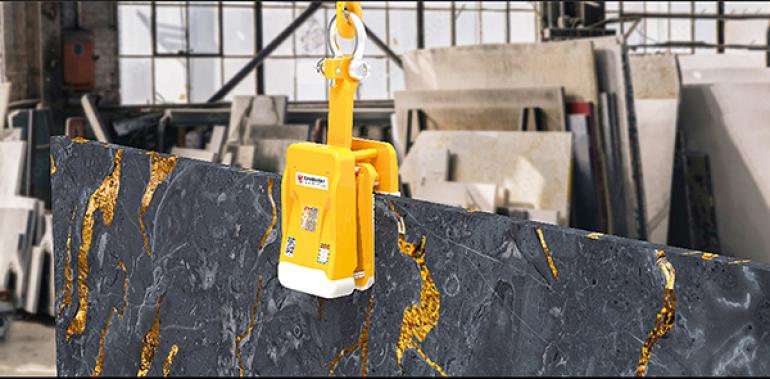
Handling stone slabs in Kenya is one of the most overlooked parts of a natural stone project. A granite, marble or other natural stone slab can be perfectly selected, carefully fabricated and correctly specified, yet still arrive at installation day with cracks, chips or other damage because it was lifted, transported or stored incorrectly.
This is particularly important because stone slabs are large, heavy and relatively rigid. Their weight does not mean they are impossible to break. In fact, their combination of mass, length, thickness and geometry makes them vulnerable to stresses when they are unsupported, lifted from unsuitable points or placed incorrectly.
Recommended Stone Solutions


A slab may survive extraction, cutting and polishing but develop a crack later when it is moved from one position to another. In some cases, damage may not become obvious until the slab is being fabricated or installed.
The problem is therefore not simply about “being careful”. Professional stone handling requires the correct equipment, support methods, storage conditions, lifting procedures and coordination between suppliers, fabricators, transporters and site teams.
For architects, developers, contractors and homeowners, understanding these requirements can help prevent unnecessary material losses and delays.
Maruti Mining Limited works with natural stone products for architectural applications, and you can explore our completed stone projects to see how stone is incorporated into finished spaces.
Why Handling Stone Slabs in Kenya Requires Special Care
Stone slabs are heavy structural pieces with different internal characteristics, and they can crack when stress is concentrated in the wrong areas. Proper handling distributes the slab’s weight and reduces bending, impact and twisting forces.
A slab may look extremely strong because it is made from stone.
However, strength and resistance to handling damage are not the same thing.
Natural stone contains mineral structures, grain patterns, fissures and geological characteristics that influence how it behaves.
Some stones are relatively uniform.
Others contain veins, natural fissures or variations that can create zones of different mechanical behaviour.
The longer and larger the slab, the more important support becomes.
Imagine carrying a long rectangular piece of rigid material by gripping only one end. Its own weight creates a bending force.
If the slab is supported incorrectly, that force can become concentrated around a weak point.
The result can be cracking, particularly around corners, cut-outs, natural fissures or areas where the slab has already been stressed.
This is why professional slab handling is based on controlled movement rather than simply manpower.
The Seven Main Causes of Stone Slab Damage
Most slab damage before installation can be traced to a small number of avoidable problems: poor lifting, inadequate support, impact, incorrect storage, unstable transport, excessive moisture exposure or mishandling after fabrication.
The most common causes include:
- Lifting slabs from unsuitable points.
- Carrying long slabs without adequate support.
- Stacking slabs incorrectly.
- Allowing slabs to lean unsafely.
- Transporting slabs without proper restraint.
- Dropping or striking corners during movement.
- Handling fabricated slabs without considering cut-outs and weakened areas.
Each of these issues can create stresses that are difficult to see immediately.
A crack may begin as a small internal fracture and become more visible later.
The safest approach is therefore to control the entire chain of movement from storage through installation.
Choosing the Right Lifting Equipment
Large stone slabs should be moved using equipment appropriate to their size, weight and condition. Mechanical lifting systems can provide controlled movement and reduce the unpredictable forces associated with manual handling.
The correct lifting equipment depends on the slab and project.
For large slabs, cranes, forklifts, vacuum lifting systems, lifting frames or other specialist equipment may be appropriate depending on the circumstances.
The equipment must have sufficient rated capacity.
It must also be suitable for the slab’s dimensions and lifting configuration.
A lifting device should never be selected simply because it can theoretically carry the weight.
The way that weight is distributed matters.
For example, lifting a long slab from one central point can produce a very different stress pattern from lifting it with multiple appropriately positioned supports.
Vacuum lifting equipment also requires suitable contact conditions and adequate vacuum capacity.
The slab surface should be inspected before lifting, and the equipment should be checked according to the manufacturer’s requirements.
For particularly large or valuable slabs, specialist handling should be considered rather than improvised methods.
Never Lift a Slab From an Unsupported Position
The way a slab is supported during lifting is often more important than the lifting speed. Poor support can cause the slab to bend under its own weight, concentrating stress in vulnerable areas.
Long slabs are especially sensitive to bending.
If the lifting points are too far apart, the unsupported sections can flex.
If the slab has a natural fissure in that area, the stress may be enough to initiate cracking.
The exact lifting arrangement depends on the slab dimensions, thickness, stone type and available equipment.
Professional handlers therefore assess the slab before movement.
They consider:
- Length
- Width
- Thickness
- Weight
- Natural fissures
- Existing cracks
- Cut-outs
- Edge profiles
- Reinforcement
- Surface finish
- Centre of gravity
Fabricated pieces require even greater care.
A countertop with a sink cut-out, for example, is no longer equivalent to an intact rectangular slab.
The cut-out creates changes in geometry and can make certain sections more vulnerable to bending.
This must be considered during lifting.
Transporting Stone Slabs Without Creating Stress
Transport is one of the highest-risk stages for stone slabs because acceleration, braking, vibration and road movement can introduce repeated stresses. Proper restraint and continuous support help minimise these forces.
A slab that is safely stored can still be damaged during transport.
Road conditions can vary considerably, and a vehicle may encounter bumps, sudden braking or changes in direction.
The slab should therefore be secured using an appropriate transport system.
It should not simply be placed flat on a vehicle floor and expected to remain stable.
Professional stone transport often uses purpose-designed racks or frames that support slabs securely while maintaining controlled orientation.
The exact arrangement depends on the slab and transport equipment.
The key principle is to prevent uncontrolled movement.
Slabs should not be allowed to slide against each other.
They should also be protected from direct impact with metal components, vehicle structures or other hard surfaces.
Why Slabs Should Not Be Stacked Flat Without a Plan
Flat stacking can create significant handling and access problems and may increase the risk of accidental damage when individual slabs are removed. Stone storage should provide stable support while allowing slabs to be safely accessed.
There is no universal storage arrangement suitable for every stone product.
However, the storage system should be designed around the slab dimensions, weight and material characteristics.
Purpose-built A-frame racks are commonly used because they allow slabs to remain supported in a controlled orientation.
The rack must be stable and capable of carrying the combined load.
Slabs should be loaded in a controlled sequence.
The heavier pieces should not be positioned in a way that creates instability or makes removal of individual slabs dangerous.
Where slabs are stored vertically or at an angle, they must be secured against tipping.
The storage area should also be protected from vehicle movement and other activities that could result in accidental impact.
Why Leaning Stone Slabs Against a Wall Can Be Dangerous
Uncontrolled leaning is one of the simplest ways to create both slab damage and a serious site hazard. Large slabs should be stored using stable support systems rather than casually leaning them against walls or other surfaces.
A large slab has a high centre of gravity.
If it is leaning against a wall without proper restraint, it can move unexpectedly.
Even a relatively small disturbance can cause the slab to fall.
Apart from the risk of damage to the stone, falling slabs can cause severe injuries and property damage.
A proper storage rack distributes the load and keeps the slab stable.
The rack should be positioned on a level, sufficiently strong surface.
The storage arrangement should also account for the sequence in which slabs will be removed.
This is particularly important when multiple slabs are stored together.
Workers should never be expected to pull a slab from an unstable stack.
Protecting Stone Corners During Movement
Corners are among the most vulnerable parts of a stone slab because they can experience concentrated impact. Protecting them during loading, unloading and movement can prevent avoidable chips and fractures.
A slab does not need to be dropped to suffer corner damage.
A corner can be struck against a rack, doorway, floor or vehicle component during movement.
The resulting chip may seem minor but can affect the final fabrication.
If the damage occurs near a planned cut, it may be possible to remove it during fabrication.
If it occurs in a visible edge or critical dimension, however, the slab may become unsuitable for the intended application.
Corner protection should therefore be used where appropriate.
Workers should also maintain controlled movement when turning or positioning slabs.
The objective is to avoid sudden contact between the stone and hard surfaces.
Natural Fissures and Weak Points in Stone
Natural stone can contain fissures, veins and geological features that influence handling behaviour. These characteristics should be identified before lifting and considered when deciding how the slab will be supported.
A natural fissure is not automatically evidence of poor-quality stone.
It may be part of the material’s geological character.
However, a fissure can become relevant when the slab is subjected to bending or impact.
Marble can display prominent veining and natural features.
Granite can also contain mineral variations and fissures.
The important question is whether the stone remains suitable for its intended application and whether the handling method accounts for its characteristics.
Before movement, slabs should be visually inspected.
Any existing cracks or damage should be recorded.
This is particularly important when responsibility for damage may change between supplier, transporter, fabricator and contractor.
Photographic records can provide useful evidence of condition before and after transportation.
Architects and project managers can also use slab inspection as part of their broader quality-control process.
How Moisture Can Affect Stone Storage
Stone should be stored in conditions appropriate to the material and application, with unnecessary exposure to moisture avoided. Wet storage can complicate inspection, affect some stone finishes and make certain forms of damage harder to identify.
Different stones respond differently to moisture.
Some natural stones have relatively low absorption.
Others are more porous.
Moisture can also interact with contaminants, packaging materials or metal supports.
For this reason, stone storage areas should be reasonably clean and protected from unnecessary water exposure.
This does not mean that every slab must be kept in a perfectly dry indoor environment.
The appropriate storage conditions depend on the stone and project.
However, uncontrolled exposure to standing water, mud, chemicals or construction debris should be avoided.
The storage area should also allow water to drain away where necessary.
Why Wet Stone Can Hide Problems
Moisture can temporarily change the appearance of some stones, making colour, staining and certain surface conditions harder to assess accurately. Slabs should therefore be inspected under suitable conditions before approval or fabrication.
Natural stone can appear significantly different when wet.
Some colours become darker.
Veining can become more pronounced.
Certain surface marks may become less visible.
This can create confusion when comparing a wet slab with a dry reference sample.
For approval purposes, the stone should be assessed under appropriate and consistent conditions.
If a slab has been exposed to water, it may need sufficient time to return to a suitable condition before a final visual assessment is made.
This is particularly important for projects where appearance is a major design requirement.
Handling Fabricated Stone Is Different From Handling Raw Slabs
Fabricated stone pieces often contain cut-outs, joints, holes and reduced sections that make them more vulnerable than intact slabs. Handling procedures must therefore change once fabrication has taken place.
A raw slab has relatively continuous geometry.
A fabricated countertop may have:
- Sink cut-outs
- Hob cut-outs
- Tap holes
- Internal corners
- Long narrow sections
- Mitred edges
- Polished edges
- Joined pieces
These features can create stress concentrations.
A long narrow countertop section should not automatically be carried in the same way as a solid slab.
The lifting and support method should reflect the finished geometry.
Fabricators should also identify pieces that require reinforcement or additional handling precautions.
Before moving fabricated pieces, workers should know where the weakest areas are likely to be.
Why Sink Cut-Outs Need Special Attention
Sink and hob cut-outs change the structural geometry of a stone countertop and can create vulnerable areas around the opening. These pieces should be lifted and supported carefully to avoid bending stresses around the cut-out.
The corners of a rectangular cut-out can be particularly important.
Poorly designed or fabricated corners may create stress concentrations.
For this reason, professional fabrication commonly considers corner geometry and reinforcement where appropriate.
The completed piece should be handled with support that reflects the position and shape of the cut-out.
It should not be lifted by gripping narrow sections immediately beside the opening.
During installation, the countertop should also have appropriate support beneath it.
The stone should not be expected to bridge large unsupported distances simply because the slab appears thick.
Why Long Slabs Are Particularly Vulnerable
The longer the slab, the greater the potential bending effect when it is inadequately supported. Long pieces require carefully planned lifting, transport and installation procedures.
Length increases the distance over which the slab’s own weight can act.
This does not mean that every long slab will crack.
It means that support becomes increasingly important as dimensions increase.
The same principle applies to thin slabs.
A long, thin piece requires more careful handling than a smaller, thicker piece.
Before lifting, the team should consider the slab’s dimensions and weight together.
The handling plan should also consider doorways, corners, staircases and other obstacles along the route.
A slab that can be lifted safely in an open yard may become difficult to control inside a narrow building.
Moving Stone Slabs Through Doorways and Corridors
The route from storage to installation should be planned before movement begins. Narrow doorways, corners, stairs and uneven surfaces can create impact and instability risks.
Large stone pieces often need to pass through spaces that were not designed specifically for their movement.
A doorway may be narrower than expected.
A staircase may require a change in orientation.
A corridor may not provide enough turning space.
These conditions should be assessed before the slab is lifted.
The route should be cleared of unnecessary obstacles.
Doors should be secured where necessary.
Workers should know where they will stand and how the slab will be controlled.
For very large pieces, a trial movement with suitable equipment or an appropriately sized mock-up can help identify problems.
Planning the route is much safer than discovering an obstruction while carrying a heavy stone piece.
Site Access Should Be Considered Before Stone Delivery
A delivery is only successful if the slab can safely reach its intended storage or installation location. Access conditions should therefore be assessed before transport is arranged.
Questions to consider include:
- Can the delivery vehicle reach the site?
- Is there sufficient unloading space?
- Can lifting equipment operate safely?
- Are there overhead obstructions?
- Are access roads suitable?
- Is the ground stable?
- Can the slab reach the building entrance?
- Are doorways large enough?
- Are stairs involved?
These issues become more important as slab dimensions increase.
A slab can be fabricated perfectly but still become difficult to install if the site cannot accommodate it.
This is why fabrication, transport and installation should be considered as one connected process.
Protecting Slabs From Construction Traffic
Stone should be stored away from unnecessary construction traffic and protected from impact by vehicles, tools and other materials. A good storage location can prevent damage that no fabrication technique can repair.
A storage rack placed beside an active vehicle route is vulnerable.
Forklifts, wheelbarrows and other equipment can strike the rack.
Workers may also accidentally knock tools or materials against the slabs.
The storage area should therefore be selected strategically.
It should be accessible to the installation team but separated from unnecessary site traffic.
Clear signage and controlled access can further reduce accidental contact.
This is especially important for expensive or limited-availability stones.
Protecting Polished Stone Surfaces
Polished stone surfaces should be protected from scratching, contamination and impact throughout storage and installation. The protective system should not introduce additional damage or trap unsuitable moisture.
Polished surfaces can show scratches and marks more readily than some textured finishes.
Stone should therefore be handled using clean equipment and appropriate protective materials.
A dirty support surface can transfer grit onto the stone.
Grit between a slab and a hard support can create abrasion during movement.
Protective materials should be selected carefully.
Adhesive tapes and films should not be used indiscriminately because residues or chemical interactions can affect certain surfaces.
Protection should also be removed at an appropriate stage so that the stone can be properly inspected.
Why Clean Handling Equipment Matters
Handling equipment should be clean and maintained because dirt, grit, oil and metal debris can stain or scratch stone surfaces. Good equipment condition is part of stone quality control.
A lifting frame may be structurally adequate but still damage a polished surface if its contact points contain abrasive debris.
Similarly, dirty straps or supports can transfer contaminants.
Before handling, contact surfaces should therefore be inspected.
Equipment should be maintained according to its manufacturer’s requirements.
This is particularly important for vacuum lifting equipment, mechanical clamps and other specialist systems.
The handling team should understand both the load capacity and the surface protection requirements.
Handling Granite Slabs in Kenya
Granite is widely valued for durability, but individual granite varieties still require careful handling because large slabs can crack or chip when subjected to poor support or impact.
Granite is often selected for:
- Kitchen countertops
- Reception desks
- Flooring
- Staircases
- Wall features
- External applications
- Commercial interiors
Its hardness does not make it immune to breakage.
Large granite slabs can be heavy and rigid.
During lifting, unsupported sections can experience bending forces.
Edges can also chip if they strike hard surfaces.
The handling process should therefore be based on slab geometry and application rather than assuming that granite can tolerate rough treatment.
For projects requiring granite selection, explore Maruti Mining’s extensive granite collection for architectural and interior applications.
Handling Marble Slabs in Kenya
Marble requires the same disciplined handling approach as other natural stones, with particular attention to veining, fissures, polished surfaces and edge protection.
Marble is frequently selected for high-end residential, hospitality and commercial projects because of its distinctive appearance.
Its visual character can make damage particularly noticeable.
A chip along a polished edge or crack across a prominent vein may significantly affect the finished appearance.
Marble slabs should therefore be inspected before handling.
The team should identify visible geological features and any existing defects.
Movement should be controlled to avoid unnecessary bending and impact.
For projects using marble across several architectural elements, learn more about Maruti Mining’s marble solutions and consider material selection together with fabrication and installation requirements.
Stone Slab Storage on Construction Sites
Construction-site storage should provide stable support, weather protection where appropriate, controlled access and sufficient room for safe loading and unloading.
The ideal storage environment varies according to the project.
However, several principles are widely applicable.
The storage area should be:
- Stable
- Level where appropriate
- Clean
- Free from unnecessary traffic
- Accessible to lifting equipment
- Protected from accidental impact
- Organised according to installation sequence
Slabs should be labelled where several varieties or pieces are involved.
This reduces the risk of selecting the wrong piece for fabrication or installation.
For large projects, slab numbering can be coordinated with shop drawings.
That creates a clear connection between the physical slab and its intended location.
Why Slabs Should Be Stored According to Installation Sequence
Organising slabs according to installation sequence can reduce repeated handling. Every unnecessary movement creates another opportunity for impact, bending or accidental damage.
Consider a project where the same slab is moved several times:
Storage area → fabrication area → temporary storage → vehicle → site → internal storage → installation area.
Every movement adds risk.
If the slabs are organised intelligently, the number of handling stages can be reduced.
This is especially valuable for large commercial projects.
The installation sequence should therefore be considered when deciding how materials are stored.
The objective is not simply to keep slabs somewhere safe.
It is to create a safe and efficient flow from delivery to final installation.
Recording Damage Before and After Delivery
Photographic and written records can help distinguish pre-existing damage from damage occurring during transportation, storage or installation. This creates accountability across the project supply chain.
When valuable stone arrives, the receiving team should inspect it.
Visible cracks, chips or surface damage should be recorded.
Photographs should show the relevant areas clearly.
The condition of the slab can then be compared with its condition after subsequent handling.
This is particularly useful where several parties are involved.
The supplier may deliver the stone.
A transporter may move it to the site.
A fabricator may cut it.
A contractor may install it.
Without records, it can become difficult to establish when damage occurred.
Documentation does not eliminate damage, but it improves project control.
Fabrication Planning Can Prevent Slab Waste
Careful fabrication planning can sometimes convert minor slab limitations into usable pieces while preventing unnecessary cutting through vulnerable areas. Slab layout should therefore be considered before fabrication begins.
Natural stone slabs should be treated as valuable resources.
A cutting plan can determine how countertops, stairs, thresholds and other components will be arranged.
The fabricator can consider:
- Vein direction
- Natural fissures
- Existing defects
- Required dimensions
- Grain direction
- Edge profiles
- Cut-outs
- Joint positions
A crack-prone section may be avoided for a critical component.
A smaller usable area may be allocated to a threshold or skirting piece.
This approach can reduce waste and improve the overall result.
It also demonstrates why architects and fabricators should communicate before final cutting.
What Happens When a Slab Cracks Before Installation?
When a slab develops a crack before installation, it should not automatically be repaired or installed without assessment. The stone should be evaluated to determine the location, cause, extent and suitability for the intended application.
The appropriate response depends on the crack.
A minor edge chip may be removable during fabrication.
A repairable fissure may be treated differently from a structural fracture.
A crack through a critical countertop section may make the piece unsuitable for its original purpose.
The key is not to conceal the problem.
The stone should be inspected by an appropriately qualified or experienced professional.
The cause should also be investigated.
If the crack resulted from poor handling, simply repairing it without correcting the handling method creates a risk of recurrence.
Preventing Cracks During Fabrication
Handling does not end when the slab reaches the fabrication workshop. Cutting, polishing, drilling and moving fabricated components can also introduce stress if the slab is poorly supported.
Fabrication equipment should be appropriate for the stone and intended cuts.
The slab should be adequately supported during cutting.
Large sections should not be allowed to become unstable as material is removed.
This is especially important around sink cut-outs, internal corners and narrow sections.
The cutting sequence can also influence stability.
Experienced fabricators understand how to maintain support as the slab changes geometry.
After cutting, pieces should be moved using support appropriate to their new dimensions.
Coordination Between Architect, Fabricator and Installer
The best way to prevent slab damage is to treat handling as part of the overall project design rather than as a task left to the site team. Early coordination allows dimensions, access, lifting and installation requirements to be resolved before materials arrive.
Architects should communicate important stone characteristics.
Fabricators should communicate handling requirements.
Contractors should assess site access.
Transporters should understand the dimensions and weight.
Installers should know how finished pieces are supported.
This communication becomes increasingly important as stone elements become larger or more complex.
A large-format feature wall, oversized countertop or long staircase component should have a defined handling plan.
The plan can address movement from fabrication through delivery, storage and installation.
A Practical Stone Slab Handling Checklist
A simple handling checklist can prevent many avoidable problems by forcing the project team to address storage, lifting, transport, access and inspection before movement begins.
Before handling stone slabs, confirm:
Before Delivery
- Slab dimensions are known.
- Weight is estimated accurately.
- Access routes have been checked.
- Appropriate transport has been arranged.
- Lifting equipment is available.
During Loading
- Lifting equipment has adequate capacity.
- Contact points are protected.
- Slabs are adequately supported.
- Corners are protected.
- Movement is controlled.
During Transport
- Slabs are properly restrained.
- The transport rack is stable.
- Contact between slabs is controlled.
- The load is protected from unnecessary impact.
During Storage
- Racks are stable.
- Slabs are securely supported.
- The storage area is clean.
- Unnecessary traffic is excluded.
- Slabs are labelled.
Before Fabrication
- Slabs are inspected.
- Existing defects are documented.
- Cutting layouts are approved.
- Natural fissures are considered.
- Veining direction is understood.
After Fabrication
- Cut-outs are inspected.
- Edges are protected.
- Finished pieces are supported correctly.
- Pieces are labelled according to installation location.
Before Installation
- Access routes are clear.
- Lifting equipment is ready.
- Supports are available.
- The installation area is prepared.
- Finished stone will be protected after installation.
Why Professional Stone Handling Saves Money
Proper handling is not simply a safety measure; it is a cost-control strategy. Preventing one damaged premium slab can save material replacement costs, fabrication expenses, transport charges and project delays.
The true cost of a damaged slab is rarely limited to the stone itself.
There may also be:
- Replacement material costs
- Additional fabrication
- Additional transport
- Labour
- Installation delays
- Design changes
- Programme disruption
- Wasted time
- Client dissatisfaction
If the stone is a rare or imported material, replacement may take considerably longer.
This can delay other trades.
For developers, the financial impact can therefore be much greater than the original material price.
Preventive handling is usually more economical than corrective work.
Why Good Handling Protects the Architectural Design
Poor handling can force design compromises when a selected slab becomes unusable. Protecting the original material helps preserve the architect’s intended colour, pattern, veining and layout.
Natural stone is often selected for its specific appearance.
A replacement may not match the original slab.
This is particularly problematic with strongly veined marble or distinctive granite.
If a slab is damaged after selection, finding a replacement with exactly the same visual character may be impossible.
The design team may then have to alter the layout.
This is why material protection should begin as soon as slabs are approved and continue until installation is complete.
Final Guidance on Handling Stone Slabs in Kenya
Handling stone slabs in Kenya requires planning, suitable equipment, stable storage, controlled transportation and careful coordination between every party involved. The strongest approach is to minimise unnecessary movement and support every slab according to its size, weight, geometry and material characteristics.
Stone cracking before installation is rarely an unavoidable mystery.
In many cases, damage can be linked to a specific stage:
The slab was lifted incorrectly.
It was transported without adequate restraint.
It was stored on an unstable rack.
It was struck against a doorway.
It was carried without sufficient support.
A fabricated piece was lifted around a vulnerable cut-out.
Or a slab was moved repeatedly when better planning could have reduced the number of handling stages.
The solution is not to treat natural stone as fragile.
It is to treat it as a high-value architectural material that requires controlled handling.
Granite, marble and other natural stones can provide exceptional durability and longevity when they are correctly selected, fabricated, installed and maintained.
The same level of care applied to material selection should be applied to transportation and handling.
For professional guidance on stone selection, fabrication and installation, contact Maruti Mining’s project team.
You May Also Like
Bring Your Vision to Life in Stone
Imagine a space defined by elegance, durability, and timeless beauty. At Maruti Mining Limited, we transform your vision into reality with the finest selection of granite, marble, and quartz, backed by expert fabrication and installation.
Contact our team for a consultation and let’s create a legacy set in stone.
CUSTOM FABRICATION & INSTALLATION ACROSS EAST AFRICA
✔ Premium Collection of Over 80 Stone Varieties
✔ Expert Cutting, Polishing & Installation
✔ Free Project Consultation & Quote
✔ Serving Kenya (Nairobi, Karen, Mombasa), Uganda, Tanzania & beyond.
Request Your Free Consultation:
Maruti Mining Limited
Email: [email protected]
Phone: +254 736 701 174 | +254 728 789 164 | +254 733 519 836
Visit Us: Nairobi, Kenya
Website: https://marutimining.com/
Leave a Reply