


Designing a new kitchen involves countless decisions, from choosing cabinet finishes and worktops to selecting taps, sinks, appliances, and lighting. One detail that is often overlooked until late in the project is the wall finish behind the countertop. Yet this choice can have a major impact on the kitchen’s appearance, maintenance requirements, and overall cost.
When comparing a stone splashback in Kenya with a simple upstand, many homeowners assume the difference is purely decorative. In reality, these two options serve different purposes and offer distinct advantages depending on the style of the kitchen, the level of wall protection required, and the available budget.
Recommended Stone Solutions


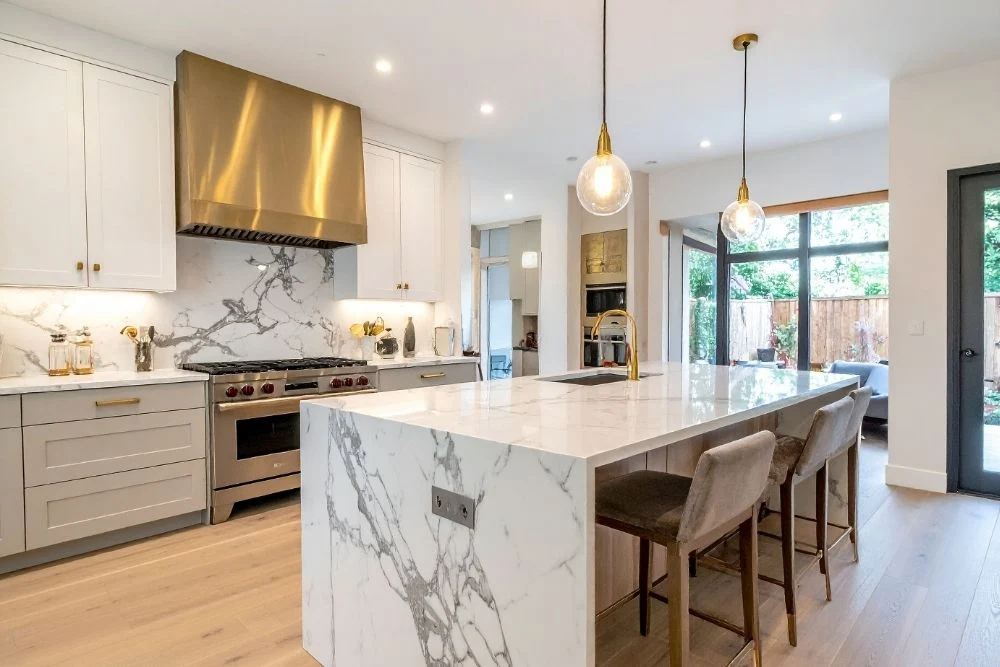
A full-height stone splashback creates a seamless continuation of the countertop material, delivering a luxurious, contemporary finish while protecting the wall from water, cooking splashes, grease, and stains. An upstand, by contrast, is a much shorter strip of stone fixed along the back of the worktop. It provides basic protection while allowing the remainder of the wall to be finished with paint, tiles, or another decorative material.
Understanding the benefits and limitations of each option helps homeowners, architects, interior designers, and contractors make informed design decisions that balance appearance, practicality, and long-term value.
At Maruti Mining Limited, we help clients select natural stone and engineered quartz solutions that complement every kitchen design, whether the goal is a minimalist modern space or a timeless luxury interior.
Explore premium marble, granite, quartzite, and engineered quartz collections from Maruti Mining Limited at marutimining.
What Is a Stone Splashback?
A stone splashback in Kenya is a full-height panel of natural stone or engineered quartz installed on the wall behind a countertop to protect the surface while creating a continuous, elegant finish.
Rather than stopping just above the worktop, the stone extends upward, often reaching:
- The underside of wall cabinets
- Cooker hood height
- Ceiling level
- Open shelving
- Feature wall sections
The result is a clean, uninterrupted appearance with very few visible joints.
What Is an Upstand?
An upstand is a narrow strip of the same material as the countertop installed vertically along the rear edge of the worktop.
It typically provides protection against:
- Water splashes
- Minor food spills
- Cleaning moisture
The remaining wall surface is usually finished using:
- Ceramic tiles
- Porcelain tiles
- Glass splashbacks
- Painted plaster
- Decorative wall panels
Upstands provide a simpler and more economical alternative to full-height splashbacks.
Stone Splashback in Kenya vs Upstand: The Main Difference
The primary difference is coverage. A stone splashback protects the entire wall area behind the countertop, while an upstand protects only the immediate junction between the countertop and the wall.
This difference influences:
- Appearance
- Cleaning
- Installation
- Material usage
- Cost
- Maintenance
Choosing between the two depends on the priorities of the project.
Why Full-Height Stone Splashbacks Have Become Popular
Modern kitchen design increasingly favours continuous surfaces with minimal visual interruptions.
A stone splashback in Kenya creates this effect by extending the countertop material vertically.
Benefits include:
- Seamless appearance
- Luxury finish
- Fewer visible joints
- Easier cleaning
- Improved moisture protection
- Greater visual impact
The continuous grain and colour can transform an ordinary kitchen into a premium architectural space.
Advantages of a Stone Splashback in Kenya
A full-height stone splashback in Kenya offers both practical protection and premium aesthetics, making it a popular choice for contemporary kitchens.
Some of the key advantages include:
- Excellent wall protection
- Minimal grout lines
- Easy maintenance
- Elegant appearance
- Improved hygiene
- Long service life
- Consistent material throughout the kitchen
These benefits make stone splashbacks particularly attractive in busy family kitchens.
Advantages of an Upstand
Although smaller, an upstand still provides several practical benefits.
Advantages include:
- Lower material cost
- Faster installation
- Greater flexibility for decorative wall finishes
- Simpler replacement if wall finishes change later
- Suitable for traditional kitchens
An upstand is often chosen where budget is a major consideration.
Which Option Is Easier to Clean?
A stone splashback in Kenya is generally easier to clean because it has fewer joints where grease, food residue, and moisture can accumulate.
Unlike tiled splashbacks, large stone panels often require minimal grout.
Routine cleaning usually involves:
- Soft cloths
- Mild stone-safe cleaners
- Warm water
This makes daily maintenance straightforward.
Which Looks More Luxurious?
For many homeowners, the answer is the full-height stone splashback.
The continuous stone surface creates:
- Strong visual impact
- Premium architectural styling
- Larger-looking spaces
- Seamless transitions
- Elegant focal points
This is why luxury kitchens frequently incorporate full-height stone behind cooking areas and sinks.
Popular Materials for Stone Splashbacks
Several premium materials are suitable for splashbacks.
Common choices include:
Granite
Granite provides:
- Excellent durability
- Heat resistance
- Natural beauty
- Unique patterns
It is ideal for busy kitchens.
Marble
Marble offers:
- Elegant veining
- Timeless appearance
- Luxury appeal
It is particularly popular in high-end residential projects.
Quartzite
Quartzite combines:
- Natural aesthetics
- High hardness
- Excellent durability
It performs well in demanding environments.
Engineered Quartz
Engineered quartz provides:
- Consistent colour
- Low maintenance
- Excellent stain resistance
- Contemporary styling
It has become one of the most popular choices for modern kitchens.
Where Are Stone Splashbacks Installed?
A stone splashback in Kenya is commonly installed behind:
- Kitchen sinks
- Hob areas
- Cooker hoods
- Breakfast bars
- Coffee stations
- Preparation areas
Some homeowners also extend the same material onto feature walls for a fully integrated design.
Common Mistakes When Choosing Between a Splashback and an Upstand
Avoid these common mistakes:
- Choosing based only on initial cost
- Ignoring long-term cleaning requirements
- Mixing too many wall materials
- Forgetting appliance clearances
- Overlooking lighting effects
- Selecting unsuitable stone finishes
Careful planning ensures that the finished kitchen remains practical as well as visually appealing.
For more kitchen design inspiration and expert stone advice, visit the Maruti Mining Knowledge Base at knowledge-base.
Stone Splashback in Kenya vs Upstand: Cost Comparison
A stone splashback in Kenya generally costs more than an upstand because it uses considerably more material and involves additional fabrication and installation.
A full-height splashback requires:
- Larger stone panels
- Precision cutting
- Additional polishing
- Transport of larger pieces
- More installation time
An upstand uses only a narrow strip of stone, making it the more budget-friendly option.
However, total project cost also depends on:
- Stone type
- Slab size
- Wall dimensions
- Cut-outs
- Fabrication complexity
- Installation requirements
An itemised quotation allows you to compare both options accurately.
Which Option Offers Better Wall Protection?
A stone splashback in Kenya provides significantly greater wall protection because it covers the entire exposed area behind the worktop.
This helps protect walls from:
- Water splashes
- Cooking oils
- Steam
- Food stains
- Cleaning chemicals
An upstand protects only the joint where the countertop meets the wall, leaving the upper wall finish exposed.
Stone Splashbacks Behind Cooktops
The area behind a hob experiences the highest levels of:
- Heat
- Grease
- Steam
- Food splashes
A full-height stone splashback creates a durable, easy-to-clean surface in this demanding zone.
Its smooth finish allows grease and cooking residue to be wiped away more easily than painted walls or heavily grouted tile surfaces.
Stone Splashbacks Behind Sinks
Water is one of the biggest causes of wall damage in kitchens.
Installing a stone splashback in Kenya behind the sink helps reduce problems caused by:
- Continuous splashing
- Soap residue
- Moisture penetration
- Staining
This is particularly beneficial in busy family kitchens where the sink is used throughout the day.
Do Splashbacks Make Kitchens Look Larger?
Yes.
Large continuous stone panels reduce visual interruptions, helping create the impression of a more spacious kitchen.
A full-height splashback contributes to:
- Cleaner sight lines
- Better light reflection
- Fewer visible joints
- A more seamless overall design
This effect is especially noticeable in smaller kitchens and apartments.
Matching the Splashback to the Countertop
Many homeowners choose the same material for both the worktop and splashback.
Benefits include:
- Consistent colour
- Continuous veining
- Cohesive appearance
- Elegant finish
Popular combinations include:
- Granite countertop with granite splashback
- Marble countertop with marble splashback
- Quartz countertop with quartz splashback
- Quartzite countertop with quartzite splashback
Using matching materials creates one of the most refined kitchen designs.
Can You Mix Materials?
Yes.
Some projects intentionally combine different finishes.
Examples include:
- Stone upstand with tiled walls
- Quartz worktop with glass splashback
- Granite countertop with porcelain feature wall
Mixing materials can reduce costs while still achieving an attractive design, provided the finishes complement one another.
Installation Considerations
Professional installation ensures the splashback fits accurately around:
- Electrical sockets
- Cooker hoods
- Windows
- Shelving
- Plumbing fixtures
Precise measurements are essential because natural stone panels cannot easily be altered after fabrication.
Experienced installers also ensure:
- Proper alignment
- Secure fixing
- Clean joints
- High-quality finishing
Maintenance Requirements
Both splashbacks and upstands require relatively little maintenance.
Routine care includes:
- Wiping surfaces with a soft cloth
- Using stone-safe cleaning products
- Removing spills promptly
- Avoiding abrasive cleaners
Natural stone may also require periodic sealing depending on the material selected.
Following the manufacturer’s care recommendations helps preserve the appearance of the stone.
How to Choose Between a Stone Splashback and an Upstand
When comparing the two options, consider the following questions:
Do you want a luxury, seamless kitchen?
A full-height stone splashback in Kenya is often the preferred choice.
Is budget your main concern?
An upstand provides practical protection while reducing material and installation costs.
How much maintenance do you want?
Full-height stone panels generally have fewer joints than tiled walls, making them easier to clean.
What style are you creating?
- Contemporary kitchens often favour full-height splashbacks.
- Traditional kitchens frequently combine upstands with decorative tiles or painted walls.
Why Professional Planning Matters
Choosing between a splashback and an upstand is not simply a design decision.
Professionals also evaluate:
- Wall dimensions
- Stone slab size
- Vein matching
- Appliance clearances
- Installation sequence
- Budget
Planning these details before fabrication helps avoid unnecessary waste and ensures a polished final result.
Clients can also explore engineered quartz collections at quartz-stone, discover premium granite surfaces at top-granite-manufacturer-kenya-maruti-mining, view elegant marble collections at marble-manufacturer-kenya, or browse completed stone installations at our-works.
How Maruti Mining Limited Helps You Choose the Right Kitchen Finish
Choosing between a stone splashback in Kenya and an upstand is about more than appearance. The right option should complement your kitchen design, suit your lifestyle, fit your budget, and provide lasting performance. At Maruti Mining Limited, we help homeowners, architects, interior designers, and developers compare these options so every project achieves the perfect balance of style and practicality.
Our specialists provide guidance on:
- Selecting the most suitable natural stone or engineered quartz
- Comparing full-height splashbacks and upstands
- Matching splashbacks with countertops
- Planning seamless vein alignment
- Measuring and templating
- Precision fabrication
- Professional installation recommendations
- Stone care and maintenance advice
Whether you are creating a minimalist apartment kitchen, a luxury family home, or a commercial food preparation area, we help you select a solution that enhances both functionality and visual appeal.
Clients can also explore premium quartz surfaces at quartz-stone, discover granite collections at top-granite-manufacturer-kenya-maruti-mining, view premium marble at marble-manufacturer-kenya, browse completed projects at our-works, visit our Knowledge Base at knowledge-base, or contact our specialists at contact-us.
Frequently Asked Questions About Stone Splashback in Kenya
Is a stone splashback better than an upstand?
Both options have advantages.
A stone splashback in Kenya provides greater wall protection, easier cleaning, and a seamless premium appearance. An upstand is more economical and works well when you want to combine the countertop with painted walls, tiles, or other decorative finishes.
Which option costs more?
A full-height stone splashback generally costs more because it requires additional material, fabrication, transport, and installation.
An upstand uses much less stone, making it the more budget-friendly choice.
Which materials are suitable for splashbacks?
Popular materials include:
- Granite
- Marble
- Quartzite
- Engineered quartz
The best choice depends on your preferred appearance, maintenance expectations, and overall kitchen design.
Are stone splashbacks easy to maintain?
Yes. Stone splashbacks are relatively easy to maintain because they have very few joints where grease and dirt can accumulate.
Routine cleaning with a soft cloth and a stone-safe cleaner is usually sufficient to keep the surface looking its best.
Can a splashback match my countertop?
Absolutely. Many homeowners choose the same stone for both the countertop and splashback to create a continuous, elegant appearance with consistent colour and veining throughout the kitchen.
Conclusion
When comparing a stone splashback in Kenya with an upstand, there is no universal right or wrong choice. The ideal solution depends on your design goals, budget, and the level of wall protection you require.
A full-height stone splashback creates a striking, seamless finish that protects the wall behind sinks, cooktops, and preparation areas while reducing visible joints and simplifying cleaning. It is a popular choice for contemporary and luxury kitchens where a premium architectural appearance is desired.
An upstand, on the other hand, offers practical protection at the junction between the countertop and the wall while allowing greater flexibility in the choice of wall finishes. It remains an excellent solution for homeowners seeking a more economical option or a traditional kitchen design.
Whichever option you choose, careful planning, accurate measurements, high-quality fabrication, and professional installation are essential to achieving a kitchen that is both beautiful and built to last.
Bring Your Vision to Life in Stone
Maruti Mining Limited supplies premium marble, granite, quartzite, and engineered quartz solutions for residential, commercial, and architectural projects throughout East Africa.
PREMIUM KITCHEN SPLASHBACKS & NATURAL STONE SOLUTIONS
✔ Premium Marble, Granite, Quartzite & Engineered Quartz Collections
✔ Full-Height Stone Splashbacks & Upstands
✔ Expert Kitchen Design & Material Selection Guidance
✔ Precision Fabrication & Professional Installation Support
✔ Custom Stone Solutions for Homes, Hotels & Commercial Projects
✔ Serving Kenya (Nairobi, Mombasa, Kisumu, Nakuru), Uganda, Tanzania, Rwanda and the wider East African region
Request Your Free Consultation
Maruti Mining Limited
Email: [email protected]
Phone: +254 736 701 174 | +254 728 789 164 | +254 733 519 836
You May Also Like


Visit Us: Nairobi, Kenya
Website: https://marutimining.com/
Leave a Reply