


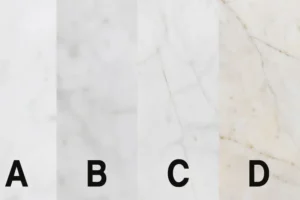
Marble is one of the most admired natural stones in architecture and interior design because every slab has unique colours, patterns, and mineral characteristics. However, when buyers start comparing marble options, one term often creates confusion: marble grading.
Many customers assume marble grades work like a simple beauty ranking, where Grade A automatically means the most attractive stone and Grade D means an inferior product. In reality, marble grading is more complex. Grades usually consider factors such as structural quality, surface imperfections, consistency, availability, and suitability for different applications.
Recommended Stone Solutions



Understanding marble grading helps homeowners, architects, contractors, and designers make better decisions when comparing slabs and quotations. A higher grade may offer fewer visible defects and easier fabrication, but a lower grade may still be the perfect choice for certain projects where natural variation is part of the desired appearance.
Before selecting marble for flooring, countertops, stairs, wall cladding, bathrooms, or decorative features, buyers should understand what different grades actually mean and inspect the physical slab rather than relying only on a label.
At Maruti Mining Limited, we help clients evaluate marble based on application, performance, appearance, and budget—not just a grade name. Every project begins with understanding the characteristics of the actual stone being selected.
Explore premium marble collections and natural stone solutions from Maruti Mining Limited at marutimining.
What Is Marble Grading?
Marble grading is a system used to classify natural stone based on quality characteristics such as appearance, defects, consistency, and usability. It helps suppliers and buyers communicate differences between marble selections, although grading systems may vary between countries, suppliers, and quarries.
Unlike manufactured products, marble is created by nature. Each block contains unique mineral formations, which means two slabs from the same quarry may still have visible differences.
Marble grading may consider:
- Colour consistency
- Vein patterns
- Surface imperfections
- Cracks or fissures
- Density
- Structural stability
- Fabrication suitability
- Expected application
A grade does not necessarily determine whether marble is beautiful. Some lower-grade stones have dramatic veining and character that designers specifically choose for luxury interiors.
Does Higher Marble Grade Always Mean Better Marble?
A higher grade usually indicates fewer visible imperfections and more consistent appearance, but it does not automatically mean the stone is more beautiful.
For example:
A premium white marble with very little variation may receive a higher grade because it offers consistency.
However:
A dramatic marble with bold veins, natural movement, and unique patterns may be more desirable for a feature wall even if it has more natural variation.
When choosing marble, buyers should consider:
- Where the stone will be installed
- The desired design style
- Maintenance expectations
- Budget
- Long-term performance
The best marble is not always the highest grade—it is the marble that suits the project.
What Does A Grade Marble Mean?
A Grade marble generally represents the highest quality category, with fewer visible defects, strong structural characteristics, and better overall consistency.
A Grade marble typically has:
- Minimal cracks or imperfections
- More uniform colour
- Cleaner surface appearance
- Better fabrication performance
- Higher selection standards
This grade is commonly chosen for:
- Luxury flooring
- Premium countertops
- Executive interiors
- High-end hotels
- Feature walls
Because A Grade marble usually has better consistency and fewer issues during fabrication, it is often priced higher.
However, natural stone will always contain some variation. Even premium marble is not perfectly identical like a manufactured surface.
What Does B Grade Marble Mean?
B Grade marble offers good quality with slightly more natural variation or minor imperfections compared with premium grades.
Possible characteristics include:
- Slight colour differences
- More visible veining
- Small natural marks
- Minor surface variations
B Grade marble is often an excellent choice for:
- Residential flooring
- Bathroom applications
- Staircases
- Wall cladding
- Large projects requiring balance between quality and cost
Many B Grade stones provide exceptional visual appeal because the differences are often part of the natural beauty of marble.
What Does C Grade Marble Mean?
C Grade marble generally contains more noticeable natural characteristics and may require more careful selection during installation.
Characteristics may include:
- More colour variation
- Visible mineral markings
- Larger natural patterns
- Small repaired areas in some cases
C Grade marble can still be suitable for:
- Decorative walls
- Outdoor applications
- Budget-conscious projects
- Areas where natural character is preferred
The key is selecting the right application. A stone with dramatic variation may look outstanding on a feature wall but may not be ideal where a perfectly uniform countertop is required.
What Does D Grade Marble Mean?
D Grade marble usually represents stones with the highest level of natural variation or visible imperfections and requires careful evaluation before use.
Possible characteristics include:
- Strong colour differences
- More visible fissures
- Larger natural markings
- Greater selection limitations
This does not mean the marble is unusable.
Some designers intentionally choose highly varied marble because it creates:
- Artistic surfaces
- Statement walls
- Unique architectural features
However, D Grade marble requires expert selection and planning to ensure the final installation achieves the desired appearance.
Why Marble Grading Systems Can Be Confusing
One challenge with marble grading is that there is no single worldwide grading standard followed by every quarry and supplier.
Different suppliers may use:
- A/B/C/D systems
- Premium/Commercial classifications
- First choice/Second choice terms
- Quarry-specific categories
Therefore, buyers should not compare grades between suppliers without seeing the actual slabs.
A supplier’s Grade A may not be identical to another supplier’s Grade A.
The physical stone remains the most important factor.
Why Slab Inspection Matters More Than the Grade Label
The best way to evaluate marble is to inspect the actual slab.
Before purchasing, examine:
- Vein direction
- Surface finish
- Natural fissures
- Colour balance
- Edge condition
- Lighting conditions
Large marble applications depend heavily on slab selection.
A beautiful slab can transform a space, while a poorly selected slab may create unwanted visual imbalance.
How Marble Grading Affects Price
Generally, higher-grade marble costs more because it offers:
- Better selection
- Lower defect rates
- More consistent appearance
- Greater fabrication efficiency
However, price is influenced by many other factors:
- Quarry origin
- Availability
- Thickness
- Size
- Finish
- Transportation
- Demand
A rare lower-volume marble may cost more than a common higher-grade stone.
For more expert guidance on selecting marble, visit the Maruti Mining Knowledge Base at knowledge-base.
How Marble Grading Affects Different Applications
The importance of marble grading depends greatly on where the stone will be installed. A grade that works perfectly for one application may not be the best choice for another.
Different projects have different performance requirements.
Marble Flooring
For flooring, buyers usually prioritise:
- Strength
- Slip resistance
- Consistent thickness
- Durability
- Visual balance
Higher-grade marble is often preferred for large luxury floors because fewer imperfections create a more uniform appearance across large areas.
However, some designers choose more naturally varied marble because dramatic veining can create a distinctive artistic floor pattern.
Marble Countertops and Worktops
Countertops require careful marble selection because the surface experiences:
- Daily contact
- Spills
- Heat exposure
- Cleaning
- Frequent use
For kitchen worktops, buyers should pay attention to:
- Structural integrity
- Existing fissures
- Porosity
- Surface condition
A visually attractive slab may not always be the most practical choice for a heavily used countertop.
Marble Wall Cladding
Wall applications often allow more flexibility with grading.
Because walls experience less physical stress, stones with stronger natural variation can create impressive architectural features.
Lower grades may work well for:
- Feature walls
- Reception areas
- Decorative panels
- Hotel interiors
The key requirement is visual selection rather than only structural performance.
Marble Staircases
Staircases require careful consideration because they combine appearance with safety.
Important factors include:
- Edge strength
- Thickness
- Surface finish
- Resistance to wear
Professional stone suppliers help match the marble grade with the expected traffic level.
Does Marble Grade Affect Durability?
Marble grading can indicate certain quality differences, but durability depends on more than grade alone.
The long-term performance of marble depends on:
- Stone type
- Mineral composition
- Installation quality
- Maintenance routine
- Location of use
A properly installed and maintained lower-grade marble may perform better than a poorly installed premium marble.
Important durability factors include:
Stone Density
Denser marble generally performs better in demanding applications.
Absorption Rate
More porous marble may require additional sealing and maintenance.
Structural Integrity
Visible cracks, weak areas, or excessive fissures can affect suitability.
Installation Quality
Even the highest-grade marble requires professional installation.
Natural Defects vs Damage in Marble
One important part of understanding marble grading is knowing the difference between natural characteristics and actual defects.
Natural characteristics may include:
- Veins
- Mineral patterns
- Colour movement
- Small natural variations
These are part of what makes marble unique.
Potential concerns include:
- Structural cracks
- Unstable fissures
- Weak areas
- Poor repairs
A professional stone supplier can help distinguish between acceptable natural features and problems that may affect performance.
Why Two Marble Slabs From the Same Block Can Have Different Grades
Marble is extracted from large natural blocks, which are then cut into slabs.
Even within one block:
- Mineral concentration can change.
- Veining can become stronger or lighter.
- Colour can vary.
- Internal features may appear differently.
This explains why slab selection is so important.
A showroom sample may provide an indication of the stone, but the final slab should always be reviewed before fabrication.
How Architects and Designers Use Marble Grading
Professional designers often use marble grading as one factor among many when specifying stone.
They also consider:
- Design intention
- Lighting
- Project scale
- Installation method
- Maintenance expectations
- Budget
For example:
A luxury hotel lobby may require highly consistent marble for a sophisticated appearance.
A private residence feature wall may benefit from dramatic natural variation.
The correct choice depends on the vision of the project.
Common Mistakes Buyers Make When Comparing Marble Grades
Many marble buyers focus only on the grade and overlook other important factors.
Common mistakes include:
Assuming Grade A Means Perfect Marble
Even premium marble contains natural variation.
No natural stone slab is completely identical.
Choosing Based Only on Price
The cheapest option may not always provide the best long-term value.
Important considerations include:
- Installation requirements
- Maintenance costs
- Suitability
- Expected lifespan
Comparing Different Suppliers’ Grades Directly
Because grading systems vary, a Grade A slab from one supplier may differ from another supplier’s Grade A classification.
Always inspect the actual material.
Ignoring Installation Requirements
A suitable marble grade can still fail if installed incorrectly.
Professional fabrication and installation remain essential.
How to Choose the Right Marble Grade for Your Project
The best approach is to evaluate the complete project requirements.
Consider:
1. Where Will the Marble Be Used?
A kitchen countertop requires different considerations from a decorative wall.
2. What Appearance Do You Want?
Do you prefer:
- Clean and consistent?
- Bold natural movement?
- Dramatic veining?
- Minimal variation?
3. How Much Maintenance Is Acceptable?
Some marble selections require more care than others.
4. What Is Your Budget?
A balanced decision considers both upfront cost and long-term value.
Questions to Ask Your Marble Supplier
Before purchasing marble, ask:
- What does this grade classification mean?
- Is the grading system quarry-specific?
- Are there any repaired areas?
- Is this marble suitable for my application?
- How should it be maintained?
- Can I inspect the actual slab?
- What thickness options are available?
A knowledgeable supplier should provide clear answers before purchase.
Clients can also explore premium marble collections at marble-manufacturer-kenya, view granite solutions at top-granite-manufacturer-kenya-maruti-mining, discover engineered quartz surfaces at quartz-stone, or browse completed stone installations at our-works.






Leave a Reply