


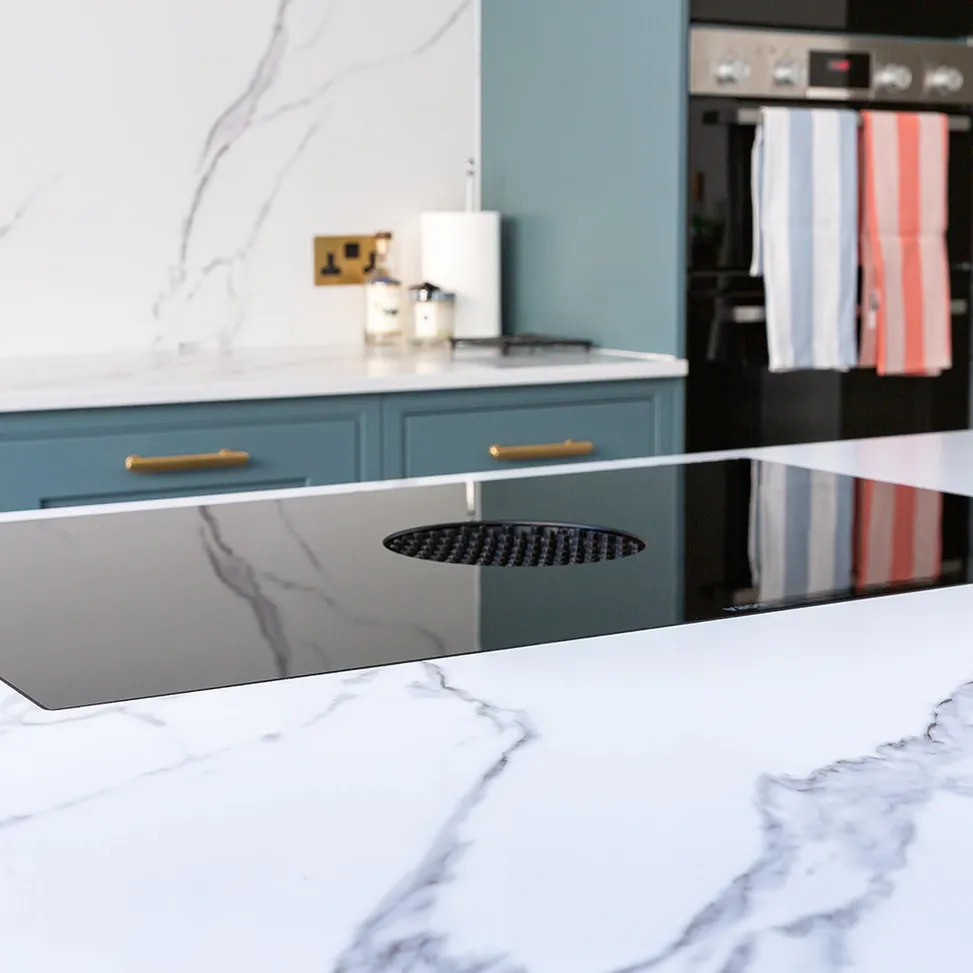
Stone worktops have become a defining feature of modern kitchens, combining durability with timeless elegance. Whether fabricated from marble, granite, quartz, or quartzite, these premium surfaces are designed to withstand years of daily use. However, one of the most technically demanding stages of fabrication is creating hob cutouts in stone worktops. A poorly planned or incorrectly machined cutout can introduce stress into the stone, increasing the likelihood of cracks both during installation and throughout the life of the countertop.
Unlike simple straight cuts, hob openings interrupt the structural continuity of the slab. The remaining stone around the opening must continue to support its own weight while resisting everyday loads, thermal expansion, and normal kitchen use. Small fabrication errors—such as sharp internal corners, insufficient clearance, or poorly positioned cutouts—can concentrate stress and weaken the worktop.
Recommended Stone Solutions



Professional fabricators therefore pay close attention to corner radii, minimum clearances, support requirements, and appliance specifications before any cutting begins. Modern CNC machinery, digital templating, and accurate installation all play an important role in producing strong, reliable hob openings.
Understanding hob cutouts in stone worktops helps homeowners, architects, designers, and contractors appreciate why professional fabrication is essential when installing gas, electric, or induction hobs in premium stone surfaces.
At Maruti Mining Limited, we fabricate precision hob cutouts using advanced CNC technology, ensuring every worktop is engineered for both performance and long-term durability.
You can explore our complete collection of premium marble, granite, quartz, quartzite, and other architectural stone products available through Maruti Mining Limited at marutimining.
Why Hob Cutouts Require Special Attention
Unlike the rest of the countertop, a hob opening removes a significant section of supporting material.
This creates areas that must safely resist:
- Structural loads
- Everyday use
- Thermal movement
- Installation stresses
Correct fabrication helps maintain the strength of the remaining stone.
What Is a Hob Cutout?
A hob cutout is the precisely machined opening that allows a cooking hob to sit within the countertop.
Depending on the appliance, this may accommodate:
- Induction hobs
- Electric hobs
- Ceramic hobs
- Gas hobs
Every manufacturer specifies precise installation dimensions that must be followed during fabrication.
Why Sharp Corners Cause Problems
One of the most common causes of cracking is the use of square internal corners.
Sharp corners concentrate stress within a very small area.
Professional fabricators instead use rounded internal corners to:
- Reduce stress concentrations
- Improve durability
- Lower the risk of cracking
- Create smoother load distribution
This small detail makes a significant difference to the long-term performance of the worktop.
Understanding Corner Radius
The internal corner radius is one of the most important aspects of hob cutouts in stone worktops.
Rounded corners help:
- Distribute structural loads
- Reduce crack initiation
- Improve fabrication quality
- Enhance durability
Modern CNC machinery produces consistent, accurate corner radii.
Why Clearance Matters
A hob should never fit tightly against the stone.
Appropriate clearance allows for:
- Thermal expansion
- Manufacturing tolerances
- Safe installation
- Sealant application
Insufficient clearance may place unnecessary stress on both the appliance and the countertop.
Heat and Stone Worktops
Although premium stone surfaces are highly durable, cooking appliances generate significant heat.
Correct installation helps manage:
- Temperature changes
- Expansion
- Air circulation
- Appliance ventilation
Following the appliance manufacturer’s installation requirements is essential.
Digital Templating
Digital templating improves fabrication accuracy by ensuring:
- Exact measurements
- Correct hob positioning
- Accurate cutout dimensions
- Better appliance alignment
This reduces the likelihood of installation problems.
CNC Precision Cutting
Modern CNC equipment produces hob cutouts with:
- Smooth edges
- Accurate dimensions
- Consistent corner radii
- Minimal edge chipping
Precision machining contributes to both appearance and structural performance.
Stone Materials Suitable for Hob Cutouts
Professionally fabricated hob openings can be produced in:
Quartz
Provides:
- Consistent finish
- Excellent stain resistance
- Modern appearance
Granite
Offers:
- Outstanding durability
- Heat resistance
- Natural beauty
Marble
Creates:
- Elegant luxury
- Unique natural veining
- Timeless character
Quartzite
Combines:
- Exceptional hardness
- Premium natural aesthetics
- Excellent long-term performance
Each material requires careful fabrication techniques to achieve safe and durable hob cutouts.
Why Professional Fabrication Matters
Precision is essential throughout the fabrication process.
Professional stone fabricators ensure:
- Accurate cutout sizing
- Correct corner radii
- Smooth polished edges
- Proper appliance clearances
- Structural integrity
Every detail contributes to a safer, longer-lasting installation.
For additional guidance, you can also visit our Knowledge Base for expert insights at knowledge-base.
How Hob Position Affects Worktop Strength
The location of the hob has a direct impact on the structural performance of the countertop. When planning hob cutouts in stone worktops, fabricators carefully assess the amount of stone that will remain around the opening.
Proper positioning helps ensure there is adequate material between the hob and:
- Front countertop edge
- Back wall or splashback
- Sink cut-outs
- Countertop seams
- Cabinet divisions
- Adjacent appliance openings
Maintaining sufficient stone around the cut-out reduces stress concentrations and improves long-term durability.
Hob Cut-Outs and Sink Cut-Outs
Many kitchens position the hob and sink on the same countertop run.
While this is practical, it removes a considerable amount of supporting material.
Professional planning ensures:
- Adequate spacing between openings
- Proper reinforcement where required
- Stable support beneath both cut-outs
- Safe load distribution
Careful layout planning helps minimise the risk of future cracking.
Support Around Hob Openings
The remaining stone around the hob should always be properly supported.
Support may include:
- Fully level cabinets
- Reinforcement beneath narrow stone sections
- Stable substrates where appropriate
- Correct countertop fixing methods
Good structural support reduces flexing during everyday use.
Expansion and Ventilation
Cooking appliances generate heat, particularly gas and induction hobs operating at high power.
Professional installation allows for:
- Manufacturer-recommended clearances
- Air circulation
- Safe heat dissipation
- Normal thermal expansion
Ignoring these requirements can place unnecessary stress on both the appliance and the surrounding stone.
Edge Finishing Around the Cut-Out
The edges of the hob opening should be professionally finished.
A quality cut-out includes:
- Smooth machined edges
- Consistent polishing
- Rounded internal corners
- Accurate dimensions
Proper finishing reduces the likelihood of chips and improves the overall appearance of the installation.
Common Mistakes That Lead to Cracks
Square Internal Corners
Sharp internal corners concentrate stress and increase the likelihood of crack initiation.
Rounded corner radii distribute loads more evenly.
Insufficient Clearance
A hob fitted too tightly within the opening has less room for manufacturing tolerances and normal expansion.
Always follow the appliance manufacturer’s installation dimensions.
Poor Cabinet Support
Even a perfectly fabricated cut-out can fail if the supporting cabinets are uneven or unstable.
The worktop should be fully supported before the hob is installed.
Incorrect Appliance Position
Placing the hob too close to another cut-out, seam, or countertop edge may weaken the remaining stone.
Professional digital layout planning helps avoid these situations.
Questions to Ask Before Fabrication
Before approving the worktop design, ask your fabricator:
- Will the cut-out be CNC machined?
- What corner radius will be used?
- Has the appliance manufacturer’s template been verified?
- How much clearance will be left around the hob?
- Will the surrounding stone receive adequate structural support?
- Has the cabinet installation been checked before templating?
These questions help ensure the worktop is fabricated to a professional standard.
Why Experience Matters
Producing reliable hob cutouts in stone worktops requires experience with both stone fabrication and kitchen appliance installation.
An experienced fabricator understands how to balance:
- Structural integrity
- Appliance specifications
- Stone characteristics
- Installation practicality
- Long-term durability
This knowledge helps reduce the likelihood of costly problems after installation.
Clients can also learn more about premium marble collections at marble-manufacturer-kenya, explore our granite range at top-granite-manufacturer-kenya-maruti-mining, discover engineered quartz surfaces at quartz-stone, or browse our completed stone installations at our-works.


Leave a Reply