



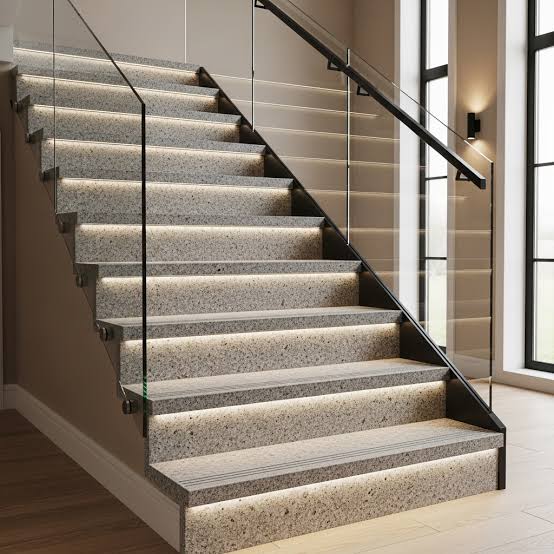
When selecting natural stone for a kitchen, bathroom, staircase, feature wall, or commercial project, many buyers focus on colour, finish, and price. However, one of the most important decisions is often overlooked—the size of the slab itself. Understanding stone slab sizes in Kenya can significantly affect the appearance of your finished project, the number of visible joints, material wastage, fabrication efficiency, and the overall project cost.
Natural stone and engineered surfaces are produced in large slabs rather than small pieces. These slabs are then cut and fabricated to match the exact dimensions of your project. The larger the slab, the greater the opportunity to create seamless worktops, expansive kitchen islands, continuous splashbacks, and dramatic feature walls with fewer joints.
Recommended Stone Solutions



Not every project requires the largest slab available. In fact, choosing a jumbo slab for a compact kitchen may increase material costs without providing any practical benefit. Conversely, selecting a standard slab for a large island or commercial counter may require additional joints that could have been avoided with a larger format.
Understanding stone slab sizes in Kenya allows homeowners, architects, designers, and contractors to choose the most efficient slab size based on layout, design goals, fabrication requirements, and budget.
At Maruti Mining Limited, we help clients evaluate slab dimensions before fabrication begins, ensuring each project uses the most suitable material while minimising waste and maximising visual impact.
You can explore our complete collection of premium marble, granite, quartz, quartzite, travertine, limestone, sandstone, and other architectural stone products available through Maruti Mining Limited at marutimining.
What Is a Stone Slab?
A stone slab is a large section of natural or engineered stone cut directly from a quarry block or manufactured during production.
Slabs are used to fabricate:
- Kitchen worktops
- Bathroom vanities
- Islands
- Reception counters
- Staircases
- Feature walls
- Dining tables
- Commercial work surfaces
Each slab is unique in its size, pattern, and natural characteristics.
Why Slab Size Matters
The size of a slab influences several important aspects of a project.
These include:
- Number of joints
- Material waste
- Fabrication flexibility
- Transportation
- Installation
- Overall appearance
Larger slabs generally provide greater design freedom but may also require more careful handling.
Standard Stone Slab Sizes
Standard slabs are the most commonly available format across many stone varieties.
They are suitable for:
- Residential kitchens
- Bathroom vanities
- Utility rooms
- Small islands
- Window sills
Advantages include:
- Widely available
- Easier transportation
- Lower handling requirements
- Suitable for most residential layouts
Many homes can be completed successfully using standard slab sizes.
Jumbo Stone Slabs
Jumbo slabs are manufactured or quarried in larger dimensions than standard slabs.
They are particularly useful for:
- Large kitchen islands
- Commercial counters
- Hotel receptions
- Boardroom tables
- Feature walls
- Open-plan kitchens
Benefits include:
- Fewer visible joints
- Greater design flexibility
- Larger continuous surfaces
- Improved pattern continuity
Jumbo slabs are especially popular with modern architectural designs that emphasise seamless surfaces.
Stone Slab Sizes for Different Materials
Different materials are available in different slab dimensions.
Examples include:
Marble
Marble slab sizes vary depending on:
- Quarry
- Block size
- Stone variety
Because marble is a natural product, dimensions are rarely identical from one slab to another.
Granite
Granite slabs are generally available in both standard and large formats.
Many granite varieties are suitable for:
- Kitchen worktops
- Commercial counters
- Outdoor kitchens
Quartz
Engineered quartz manufacturers often produce:
- Standard slabs
- Jumbo slabs
These controlled manufacturing processes provide more consistent slab dimensions.
Quartzite
Quartzite slab sizes vary depending on quarry production and the dimensions of the original stone block.
How Slab Size Affects Kitchen Design
When planning a kitchen, slab size determines whether a worktop can be fabricated as one continuous piece.
Larger slabs help reduce:
- Visible joints
- Pattern interruptions
- Fabrication complexity
This creates a cleaner, more premium appearance.
Islands and Long Worktops
Large kitchen islands often benefit from jumbo slabs.
Advantages include:
- Continuous surface
- Better vein matching
- Improved aesthetics
- Reduced joint visibility
However, not every island requires a jumbo slab. Careful planning helps determine the most efficient solution.
Feature Walls
Large-format slabs are increasingly popular for wall cladding.
Benefits include:
- Fewer grout lines
- Minimal joints
- Dramatic visual impact
- Easier maintenance
Large slabs allow the natural pattern of the stone to become a key design feature.
Slab Size and Material Waste
One important consideration when choosing stone slab sizes in Kenya is material optimisation.
Professional fabricators carefully plan cutting layouts to:
- Reduce waste
- Maximise usable material
- Improve project efficiency
Selecting the correct slab size often results in better material utilisation and lower overall project costs.
For additional guidance, you can also visit our Knowledge Base for expert insights at knowledge-base.
How Fabricators Plan Slab Layouts
Selecting the correct stone slab sizes in Kenya is only the first step. Before any cutting begins, professional fabricators prepare a slab layout that determines how every component will be cut from the stone.
This planning helps to:
- Maximise slab utilisation
- Reduce unnecessary waste
- Minimise visible joints
- Preserve natural veining
- Position cut-outs efficiently
Modern digital templating software allows fabricators to optimise every slab before production begins.
Why Offcuts Matter
After fabrication, sections of the slab often remain.
These are commonly known as offcuts.
Depending on their size, offcuts can be reused for:
- Bathroom vanity tops
- Window sills
- Shelves
- Coffee tables
- Splashbacks
- Utility room worktops
Efficient slab planning can significantly reduce unused material.
Slab Size and Pattern Matching
Larger slabs provide greater flexibility when working with stones that have dramatic natural movement.
Benefits include:
- Better vein alignment
- Continuous patterns
- Improved book-matching
- More consistent visual flow
This is particularly important for luxury kitchens and feature walls where the natural pattern becomes the focal point.
Slab Sizes for Kitchen Islands
Kitchen islands are often the largest single stone element in a home.
When evaluating stone slab sizes in Kenya, consider:
- Island length
- Island width
- Overhang requirements
- Waterfall ends
- Seating areas
A jumbo slab may allow the entire island to be fabricated with few or no visible joints, depending on the final dimensions.
Slab Sizes for Splashbacks
Large-format slabs are increasingly replacing traditional tiled splashbacks.
Advantages include:
- Continuous surface
- Minimal grout lines
- Easier cleaning
- Better hygiene
- Modern appearance
Where possible, fabricators may cut splashbacks from the same slab as the countertop to achieve consistent colour and pattern.
Transportation Considerations
As slab size increases, transportation becomes more specialised.
Larger slabs require:
- Heavy-duty transport frames
- Protective packaging
- Specialist lifting equipment
- Careful site access planning
For some projects, transportation logistics may influence the most practical slab size.
Installation Challenges
Installing larger slabs requires careful coordination.
Factors include:
- Doorway dimensions
- Stair access
- Lift capacity
- Site handling space
- Structural support
These practical considerations are assessed before fabrication begins to avoid installation delays.
Standard vs Jumbo: Which Should You Choose?
There is no universal answer.
Choose standard slabs if your project involves:
- Compact kitchens
- Bathroom vanities
- Utility rooms
- Smaller residential worktops
- Simpler layouts
Choose jumbo slabs if your project includes:
- Large kitchen islands
- Long countertop runs
- Full-height splashbacks
- Hotel receptions
- Commercial counters
- Feature walls
The right choice depends on balancing aesthetics, practicality, and budget.
Common Mistakes When Choosing Slab Sizes
Assuming Bigger Is Always Better
Jumbo slabs offer many advantages, but they are not necessary for every project.
Selecting an oversized slab for a small installation may increase material costs without delivering meaningful benefits.
Ignoring Site Access
Even if a jumbo slab fits the design, it must also fit through:
- Gates
- Doorways
- Corridors
- Staircases
- Lifts
Professional site assessments help identify potential access issues before fabrication.
Focusing Only on Material Price
A lower slab price may not result in the lowest overall project cost.
Always consider:
- Waste
- Fabrication
- Transportation
- Installation
- Long-term appearance
A well-planned slab layout often delivers better value than simply selecting the cheapest material.
Questions to Ask Before Choosing a Slab Size
Before approving fabrication, ask your supplier:
- What slab sizes are available for this stone?
- Can the island be produced without joints?
- Will the splashback come from the same slab?
- How much material waste is expected?
- Can any offcuts be reused?
- Will site access accommodate the selected slab size?
These questions help ensure the chosen slab format is both practical and cost-effective.
Clients can also learn more about premium marble collections at marble-manufacturer-kenya, explore our granite range at top-granite-manufacturer-kenya-maruti-mining, discover engineered quartz surfaces at quartz-stone, or browse our completed natural stone projects at our-works.






Leave a Reply