


Protecting stone floors in Kenya is less about constantly applying stronger chemicals and more about controlling the small sources of damage that reach the floor every day. Grit carried in through entrances, dust, sand, furniture movement, poorly selected cleaning tools and untreated spills can gradually affect the appearance of marble, granite, limestone and other natural stone surfaces.
This is especially important in busy homes, offices, hotels, retail spaces and other properties where the floor experiences repeated foot traffic.
Recommended Stone Solutions


Natural stone is durable, but durability does not mean immunity from abrasion.
A tiny particle of sand under a shoe can act as an abrasive when repeatedly dragged across a polished floor. A chair moved across the same area thousands of times can gradually create marks. Furniture without protective pads can concentrate pressure onto small points of the surface.
The good news is that many of these risks are preventable.
A well-designed protection programme begins before damage occurs.
Entrance matting, regular grit removal, furniture felt pads, sensible cleaning practices, prompt spill management and sensible traffic control can all reduce unnecessary wear.
Maruti Mining Limited supplies natural and engineered stone solutions for architectural applications, and property owners can visit our Knowledge Base for expert stone insights when planning stone selection, installation and maintenance.
Why Protecting Stone Floors in Kenya Starts with Prevention
The most effective way of protecting stone floors in Kenya is to prevent abrasive dirt, grit, moisture and unnecessary physical impact from reaching the stone in the first place.
Many flooring problems are treated after they become visible.
A floor becomes dull, so stronger cleaning chemicals are introduced.
A scratch appears, so abrasive polishing is attempted.
A stain develops, so aggressive stain removers are used.
This approach can sometimes create more problems.
Stone maintenance should instead begin with prevention.
The objective is to reduce the amount of damaging material that reaches the floor.
This means asking simple questions:
Where does grit enter the building?
Where does it accumulate?
Which furniture moves frequently?
Where are spills most likely?
Which areas experience the highest traffic?
Which cleaning methods are currently being used?
Once these sources are identified, the maintenance strategy becomes much more practical.
Why Grit Is One of the Biggest Enemies of Stone Floors
Grit is highly abrasive, and repeated foot traffic can drag particles across the surface of a stone floor, gradually reducing its appearance and increasing wear.
Grit can come from several sources.
In Kenya, it may be introduced through:
- Outdoor soil
- Dust
- Sand
- Road debris
- Construction residue
- Garden areas
- Unpaved surfaces
- Shoes
- Trolleys and equipment
- Open entrances
The amount varies according to the property.
A home next to an unpaved road can experience a very different level of grit than a sealed commercial building.
The same applies to properties near construction sites.
The important point is that grit does not have to be visible in large quantities to contribute to wear.
Small particles can accumulate in entrance areas and high-traffic routes.
When people walk over them repeatedly, they can become abrasive agents between footwear and the floor.
How Grit Scratches Polished Stone
Polished stone surfaces can reveal abrasion more readily because their reflective finish highlights changes in surface clarity and sheen.
Imagine a polished marble floor near an entrance.
Every person entering the building can bring small particles under their shoes.
The particles are then repeatedly moved across the floor.
Over time, areas with heavy traffic may begin to look less reflective than protected areas.
This does not necessarily mean that the stone itself has become structurally weak.
The issue may be surface wear.
This is one reason entrance protection is so important.
Rather than waiting until the floor shows visible wear, reduce the amount of abrasive material entering the area.
Entrance Matting Is the First Line of Defence
A properly positioned entrance mat can capture a significant amount of dirt and moisture before it reaches the stone, making matting one of the simplest protective measures available.
An entrance system should ideally begin outside or at the building threshold and continue into the interior.
The exact arrangement depends on the building.
A useful entrance strategy can include:
- An outdoor dirt-removal area.
- A coarse entrance mat.
- A finer internal mat.
- Adequate space for people to walk naturally across the mat.
- Regular cleaning of the mat itself.
A small decorative mat that people simply step over may provide little protection.
The objective is not merely to place something attractive beside the door.
The objective is to intercept dirt.
Why Mat Size Matters
A mat that is too small may not provide enough contact time for footwear to release dirt and moisture before people step onto the stone.
Consider a large commercial entrance.
If the mat is only large enough for one step, most people will cross it without effectively cleaning their footwear.
A longer mat provides more opportunity for particles to be removed.
The design should consider:
- Door width
- Traffic volume
- Direction of travel
- Available floor area
- Wheelchair and trolley movement
- Cleaning access
For a large building, entrance matting should be treated as part of the floor protection system rather than an afterthought.
Why Mats Must Be Cleaned
A dirty mat can lose effectiveness because accumulated grit can eventually be transferred back onto footwear and into the building.
This is an often-overlooked part of floor protection.
Installing a high-quality mat is not enough.
The mat itself needs maintenance.
Depending on its construction and location, maintenance may include:
- Vacuuming
- Shaking where appropriate
- Washing
- Replacement
- Periodic deep cleaning
The correct procedure depends on the mat material.
The maintenance schedule should reflect traffic levels.
A hotel entrance requires a different cleaning frequency from a lightly used residential doorway.
Grit Control in High-Traffic Buildings
High-traffic properties should identify predictable dirt routes and place protective measures where abrasive particles are most likely to enter and accumulate.
Examples include:
- Main entrances
- Service entrances
- Garden access points
- Parking connections
- Loading areas
- Construction access
- Reception areas
The floor does not experience equal wear everywhere.
Traffic patterns create concentrated zones.
These areas should receive additional attention.
For example, a polished stone floor may remain visually excellent across most of a building while showing wear primarily along the main entrance route.
That is not necessarily a stone-quality problem.
It may be a traffic-management problem.
Protecting Stone Floors During Construction
Natural stone should be protected during construction because dust, sand, tools, equipment and other materials can create avoidable damage before the building is even occupied.
This is particularly important for newly installed floors.
Construction sites can contain:
- Cement residue
- Sand
- Metal fragments
- Timber
- Screws
- Tools
- Dust
- Paint
- Adhesives
- Heavy equipment
Workers can also move materials across the floor.
A newly finished stone floor should not simply be left exposed while other trades continue working.
Appropriate temporary protection should be specified.
The protective system must itself be suitable for the stone and installation condition.
It should not trap moisture or introduce adhesive residues without proper consideration.
Why Temporary Protection Is Different from Permanent Protection
Temporary construction protection is designed to shield the stone during building works, while permanent protection focuses on controlling everyday traffic, grit, furniture movement and spills.
The two should not be confused.
During construction, the primary risks may be:
- Impact
- Dust
- Cement
- Paint
- Heavy equipment
After occupation, the risks may shift toward:
- Grit
- Furniture
- Foot traffic
- Food spills
- Cleaning chemicals
The protection strategy should therefore change as the building moves from construction to normal use.
Felt Pads Are Essential for Furniture
Felt pads under furniture legs reduce direct contact between hard furniture components and the stone, helping minimise scratching and concentrated abrasion when furniture is moved.
They are particularly useful beneath:
- Dining chairs
- Tables
- Coffee tables
- Sofas
- Cabinets
- Office chairs
- Bed frames
- Side tables
The pads should be correctly sized.
A tiny pad under a heavy chair leg may compress quickly.
A larger, properly attached pad can distribute contact more effectively.
The condition of the pads should also be inspected regularly.
Why Furniture Pads Need Regular Replacement
Felt pads wear down, collect grit and lose their protective function over time, so they should be inspected and replaced when necessary.
A damaged felt pad can expose the furniture leg.
A loose pad can trap grit.
A worn pad may also allow direct contact.
For frequently moved furniture, inspection should be part of routine housekeeping.
The replacement cost is small compared with refinishing a large stone floor.
Why Dragging Furniture Damages Stone
Even heavy, durable stone can be damaged by concentrated friction when furniture is dragged across its surface, especially when grit is trapped underneath the furniture leg.
The correct practice is to lift furniture where practical.
For larger pieces, use appropriate moving equipment designed to protect the floor.
Do not assume that a polished stone floor can tolerate unlimited dragging simply because the stone is hard.
The combination of weight, grit and friction can be damaging.
Office Chairs Require Special Attention
Office chairs can repeatedly move across the same small area, making them a significant source of concentrated wear on stone floors in commercial environments.
An office chair can move back and forth hundreds of times.
The movement is often concentrated around a desk.
If the chair has hard casters and grit is present, the floor can experience repeated abrasion.
Depending on the application, a suitable protective floor mat may be considered.
The chosen mat should be compatible with the stone and appropriate for the environment.
The objective is to reduce direct repetitive contact.
Protecting Marble Floors in Kenya
Protecting marble floors requires particular attention to scratches, grit, staining and chemical exposure because marble can be more sensitive to certain substances and surface damage than many people expect.
Marble is a beautiful natural material, but it should be maintained according to its characteristics.
A polished marble floor can lose some of its visual clarity when subjected to prolonged abrasive traffic.
Marble can also react to acidic substances.
Therefore, protection should address both mechanical and chemical risks.
Mechanical protection includes:
- Matting
- Furniture pads
- Grit control
- Traffic management
Chemical protection includes:
- Prompt spill removal
- Suitable cleaners
- Avoiding acidic products
- Appropriate sealing where recommended
Protecting Granite Floors in Kenya
Granite is generally highly durable, but protecting granite floors from grit and unnecessary abrasion can still preserve their finish and reduce maintenance requirements.
Granite comes in many varieties and finishes.
A polished granite floor has different visual characteristics from a honed or textured finish.
Even where the material itself is highly resistant to wear, surface maintenance remains important.
Entrance mats can reduce dirt.
Furniture pads can reduce scratching.
Routine cleaning can remove abrasive particles before they accumulate.
The goal is not to make granite indestructible.
The goal is to reduce unnecessary wear.
For projects requiring durable natural stone, explore Maruti Mining’s extensive granite collection and discuss the appropriate finish for the intended application.
Protecting Limestone and Other Softer Stones
Softer or more absorbent natural stones may require even greater attention to grit control, staining prevention and cleaning practices.
Natural stone should never be treated as one uniform material category.
Different stones can have different:
- Hardness
- Porosity
- Mineral composition
- Surface finishes
- Stain resistance
- Chemical sensitivity
The protection programme should therefore follow the material.
A softer stone in a high-traffic entrance may require more intensive protection than a highly durable stone in the same location.
This is one reason material selection should consider the intended environment.
Why Polished Stone Needs Grit Control
Polished surfaces can make scratches and wear more visually apparent because the reflective finish reveals changes in surface clarity.
A polished floor can look spectacular when maintained correctly.
However, its appearance also makes deterioration easier to notice.
Entrance protection is therefore especially important.
A property owner who invests in a high-polish finish should also invest in a suitable maintenance programme.
The floor finish and maintenance strategy should be considered together.
Honed Stone and Maintenance
Honed stone has a softer visual appearance and may disguise some minor surface changes more effectively than polished stone, but it still requires protection from grit and unsuitable cleaning.
Honed does not mean maintenance-free.
Dust and grit still accumulate.
Furniture can still scratch.
Spills can still stain absorbent stone.
Cleaning products can still be inappropriate.
The maintenance routine should therefore be adjusted to the stone’s finish rather than eliminated.
Why Sand Is Particularly Important
Sand can act as an abrasive material when repeatedly moved across a stone surface, making sand control particularly relevant in properties connected to outdoor areas, gardens, construction zones or unpaved surfaces.
The source does not have to be a beach.
Sand and fine mineral particles can enter from many outdoor environments.
The solution is source control.
Use:
- Entrance mats
- Clean access routes
- Regular sweeping
- Appropriate vacuuming
- Furniture pads
- Prompt removal of visible grit
This reduces the amount of abrasive material available to damage the floor.
Sweeping Versus Vacuuming
The correct cleaning method depends on the stone and the equipment, but the main objective is to remove abrasive particles without dragging them across the surface.
A soft, suitable dust-control method can be effective.
Vacuuming can also be useful where the equipment is appropriate for the surface.
The cleaning equipment should not contain damaged components that could scratch the floor.
Dirty or worn tools can create problems.
Housekeeping staff should understand that removing dirt is not enough if the cleaning process itself introduces abrasion.
Why Clean Equipment Matters
A cleaning tool can become a source of abrasion if it contains trapped grit, damaged components or unsuitable materials.
This applies to:
- Vacuum attachments
- Mops
- Brushes
- Dust-control equipment
- Floor machines
Before cleaning a premium stone floor, the equipment should be inspected.
A brush that has collected sand can transfer it around the floor.
A damaged machine component can create marks.
Cleaning equipment should therefore be maintained just like the floor itself.
Cleaning Products and Stone Protection
Using the correct cleaning product is part of floor protection because aggressive or chemically incompatible products can damage stone surfaces even when there is no physical abrasion.
Natural stone is not chemically identical to ceramic tile.
Some stones are sensitive to acids.
Others may react to strong chemicals or inappropriate treatments.
The safest approach is to identify the stone first and use products recommended for that material.
Do not assume that a general household cleaner is suitable for every stone.
Why Stronger Chemicals Are Not Better
Increasing chemical strength does not necessarily improve stone cleaning and can instead create etching, discolouration or surface damage on sensitive natural stone.
A cleaner should solve the specific problem.
Routine dust and grit generally require mechanical removal.
A food spill requires prompt cleaning.
A mineral deposit may require a specialist approach.
A stain may require a product specifically formulated for the stone.
Using the strongest available chemical for every problem is poor maintenance practice.
Protecting Stone from Spills
Prompt spill removal reduces the time a potentially staining substance remains in contact with the stone and makes routine maintenance easier.
This is especially important for absorbent materials.
Common household and commercial spills include:
- Coffee
- Tea
- Wine
- Cooking oils
- Sauces
- Cosmetics
- Cleaning chemicals
The correct response is usually prompt removal using a suitable cleaning method.
Avoid rubbing a spill aggressively across a large area.
Blot or remove it appropriately according to the material’s care instructions.
Kitchens Need Extra Protection
Kitchen stone floors face a combination of grit, food spills, oils, moisture and frequent traffic, making preventive maintenance especially valuable.
The floor around:
- Kitchen entrances
- Sinks
- Cooking areas
- Dining spaces
- Waste areas
may experience higher exposure.
Routine cleaning should focus on removing grit and food residue.
Mats can be useful around selected work areas, provided they are appropriate for the space and do not trap moisture against the stone.
Bathrooms Need Different Protection
Bathroom stone floors require attention to moisture, soap residue, cleaning chemicals and slip considerations rather than relying solely on abrasion control.
The maintenance strategy should address:
- Water
- Soap
- Mineral deposits
- Cleaning products
- Grout
- Drainage
The stone and grout should be cleaned with compatible products.
Persistent moisture problems should be investigated rather than hidden through increasingly aggressive cleaning.
Protecting Stone in Commercial Lobbies
Commercial lobbies experience concentrated entrance traffic, making entrance matting and routine grit removal particularly important for preserving the appearance of premium stone flooring.
A hotel or office lobby may receive hundreds or thousands of visitors.
Even small quantities of grit can become significant over time.
A commercial protection programme may include:
- Large entrance mats
- Frequent mat cleaning
- Scheduled floor cleaning
- Periodic professional maintenance
- Furniture protection
- Traffic monitoring
The maintenance programme should be designed around actual usage.
Hotels and High-Traffic Properties
Hotels, shopping areas and other high-traffic properties should treat stone-floor protection as an operational requirement rather than an occasional cleaning task.
The cost of preventive maintenance can be compared with the cost of:
- Grinding
- Honing
- Polishing
- Stain removal
- Repairs
- Replacement
Preventive measures are often considerably less disruptive.
A floor that requires extensive restoration may also affect business operations.
Keeping the surface protected from the beginning is therefore a practical investment.
The Importance of Furniture Layout
Furniture placement can influence where wear occurs because repeatedly used routes and concentrated contact points can create localised stress and abrasion.
During interior planning, consider:
- Main walking routes
- Dining areas
- Reception desks
- Seating areas
- Door openings
- Trolley paths
Furniture should be placed with appropriate floor protection.
Moving furniture repeatedly without replacing protective pads can gradually affect the surface.
Protecting Stone During Events
Temporary events can expose stone floors to unusual levels of foot traffic, furniture movement, equipment and spilled substances, so additional protection may be necessary.
Examples include:
- Weddings
- Conferences
- Exhibitions
- Corporate events
- Product launches
Event equipment may include heavy tables, staging, displays and temporary structures.
Protective measures should be planned before the event.
Do not wait until equipment is already being moved across the floor.
Why Lift Instead of Drag
Lifting furniture and equipment instead of dragging it is one of the simplest ways to reduce unnecessary friction and concentrated abrasion on stone flooring.
Where an object is too heavy to lift manually, use appropriate moving equipment.
The equipment should be suitable for the floor.
Staff should be trained to avoid dragging objects across the surface.
A simple operating rule can prevent repeated damage:
If it can be lifted safely, do not drag it.
Protecting Stone During Moving and Renovation
Renovation work can expose an existing stone floor to tools, ladders, debris, dust and heavy traffic, so temporary protection should be planned before work begins.
Renovation contractors should understand that an existing finished floor is a valuable asset.
Protection may be needed around:
- Doorways
- Work zones
- Material storage
- Cutting areas
- Access routes
Dust and grit should not be allowed to accumulate unnecessarily.
The protective material should be selected so that it does not damage the stone or trap moisture.
Why Moisture Can Matter Under Floor Protection
Temporary floor coverings can create problems if they trap moisture against a stone surface or interfere with drying, so protection systems should be appropriate for the installation conditions.
This is particularly important where:
- The floor has recently been installed.
- Cleaning has occurred.
- Moisture is present.
- The building has ventilation limitations.
Protection should not automatically mean completely sealing the surface with an unsuitable material.
The stone’s condition and the installation system should be considered.
Should Stone Floors Be Sealed?
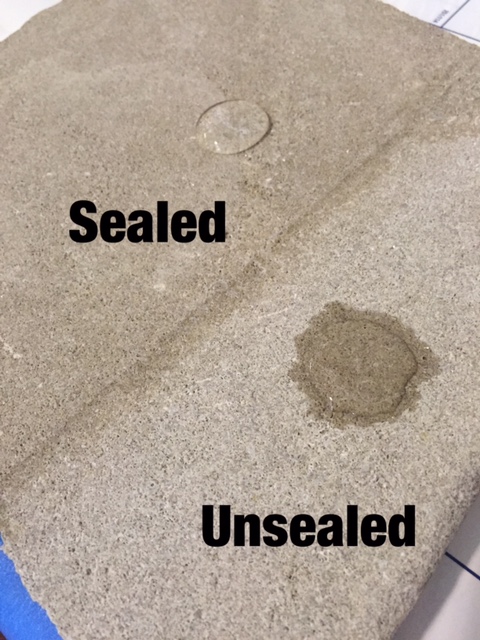
Some natural stones benefit from an appropriate impregnating sealer, but sealing is not a substitute for matting, grit control or good maintenance and should be selected according to the specific stone and finish.
Sealing can sometimes reduce the penetration of certain substances.
However, it does not make a floor:
- Scratch-proof
- Stain-proof
- Acid-proof
- Maintenance-free
The stone should still be cleaned appropriately.
The sealer itself may also require periodic maintenance.
Always confirm whether sealing is appropriate for the specific stone.
Sealing and Polished Stone
A polished stone surface may already have relatively low absorption compared with some other finishes, so the need for additional sealing should be assessed rather than assumed.
Different stones respond differently.
The correct question is not:
“Should every stone floor be sealed?”
Instead ask:
“Does this specific stone and finish benefit from this specific treatment?”
That answer should come from appropriate technical guidance.
Preventing Stains Before They Happen
The easiest stain to remove is the one that never reaches the stone, which is why mats, prompt spill response and appropriate surface treatments can work together as a preventative strategy.
A good maintenance programme combines several layers:
Layer 1: Stop dirt entering.
Use entrance matting.
Layer 2: Remove dirt quickly.
Sweep or vacuum appropriately.
Layer 3: Protect contact points.
Use furniture pads.
Layer 4: Remove spills promptly.
Do not allow staining substances to remain unnecessarily.
Layer 5: Use suitable cleaning products.
Avoid inappropriate chemicals.
Layer 6: Maintain the surface.
Follow the recommended stone-care programme.
This layered approach is more effective than relying on a single product.
A Practical Daily Stone-Floor Routine
Daily maintenance should focus on removing loose dirt, controlling entrance grit and responding quickly to spills rather than repeatedly applying chemical treatments.
For a busy property, the daily routine may include:
- Check entrance mats.
- Remove visible grit.
- Clean high-traffic areas.
- Address spills promptly.
- Check furniture pads in heavily used spaces.
- Inspect entrances and outdoor connections.
The exact frequency should depend on traffic.
A low-use residential room does not require the same schedule as a commercial lobby.
Weekly Stone-Floor Maintenance
Weekly maintenance should look beyond visible dirt and identify developing sources of wear, including damaged mats, missing furniture pads and accumulating grit.
Inspect:
- Entrance mats
- Furniture feet
- High-traffic routes
- Floor edges
- Areas around doors
- Cleaning equipment
- Spill-prone areas
This is where preventive maintenance becomes practical.
Small issues can be corrected before they become expensive problems.
Monthly and Periodic Maintenance
Periodic inspections help identify changes in the stone surface before significant restoration becomes necessary.
Depending on the building, inspect for:
- Dull traffic lanes
- Scratches
- Stains
- Chipped edges
- Damaged grout
- Loose furniture pads
- Worn mats
A professional stone-care programme may be appropriate for high-value or high-traffic floors.
The exact frequency depends on material and use.
Signs That a Stone Floor Needs Professional Attention
Visible dullness, persistent stains, widespread scratches or deteriorating surface finish may indicate that routine cleaning is no longer sufficient and professional stone restoration should be considered.
Possible services can include:
- Deep cleaning
- Honing
- Polishing
- Grinding
- Stain treatment
- Re-sealing where appropriate
The correct process depends on the stone and the problem.
Do not automatically assume that polishing is the solution.
A qualified assessment should determine the cause first.
Common Stone-Floor Protection Mistakes
Many avoidable problems come from simple maintenance mistakes rather than from poor-quality stone.
Common mistakes include:
Using tiny entrance mats
They provide insufficient dirt-control space.
Never cleaning the mats
Dirty mats can transfer grit.
Dragging furniture
This increases friction and concentrated pressure.
Using worn felt pads
They stop providing adequate protection.
Using abrasive cleaning tools
These can contribute to surface wear.
Applying unsuitable chemicals
Some cleaners can damage sensitive stone.
Ignoring spills
Extended contact can increase staining risk.
Allowing construction debris onto finished floors
Hard particles can scratch or abrade the surface.
Assuming stone is maintenance-free
Even durable stone benefits from preventive care.
Waiting for visible damage
By the time wear becomes obvious, restoration may be more expensive.
Choosing Stone With Maintenance in Mind
The best stone for a project is not necessarily the most expensive material; it is the material whose performance characteristics match the intended environment and maintenance capacity.
When selecting a stone floor, consider:
- Traffic
- Indoor or outdoor use
- Cleaning frequency
- Desired finish
- Expected maintenance
- Exposure to grit
- Moisture
- Spill risk
A luxury residential bedroom has different requirements from a shopping-centre entrance.
Material selection should reflect actual use.
Design and Protection Should Work Together
Floor protection does not need to compromise architectural design; carefully selected mats, furniture pads and maintenance systems can be integrated into the interior without distracting from the stone.
Entrance mats can be recessed.
Furniture pads can remain almost invisible.
Traffic routes can be planned.
Protective measures can become part of the operational design.
The objective is to preserve the stone without making the building feel like a maintenance facility.
Why Quality Stone Still Needs Protection
High-quality natural stone deserves protection precisely because its finish and appearance are valuable. Durability reduces risk, but it does not eliminate the effects of repeated abrasion and misuse.
Buying premium stone and then ignoring maintenance is like purchasing quality furniture and leaving it exposed to unnecessary damage.
Protection is part of ownership.
A well-maintained stone floor can retain its architectural character for many years.
Final Guide to Protecting Stone Floors in Kenya
Protecting stone floors in Kenya should begin with prevention: control grit at entrances, use suitable mats, protect furniture contact points, remove spills promptly and use cleaning methods compatible with the specific stone.
The most effective protection programme is not complicated.
Start at the entrance.
Stop as much grit as possible before it reaches the stone.
Clean mats regularly.
Remove loose dirt before it is walked repeatedly across the floor.
Place appropriate felt pads beneath furniture.
Replace worn pads.
Lift rather than drag heavy furniture.
Use protective measures during construction and renovation.
Clean spills promptly.
Avoid unsuitable chemicals.
Understand the characteristics of the specific stone.
Use sealing only where appropriate.
Inspect high-traffic areas regularly.
And bring in professional stone-care specialists when routine maintenance is no longer enough.
The most important lesson is that stone-floor protection is largely about controlling small problems before they become large ones.
A scratch that takes seconds to create may require professional restoration to remove.
A few minutes spent cleaning grit from an entrance mat can prevent months of unnecessary abrasion.
A small felt pad can prevent repeated contact between a furniture leg and a valuable stone surface.
A suitable cleaner can prevent chemical damage that would otherwise require refinishing.
For architects, developers and homeowners, these details should form part of the floor specification from the beginning.
Stone selection, finish, installation and maintenance are connected.
If a highly polished marble floor is selected for a busy entrance, the project should also include an appropriate grit-control and maintenance strategy.
If granite is selected for a high-traffic commercial floor, entrance protection and regular cleaning should still be planned.
If a softer or more absorbent stone is selected, the maintenance requirements should be communicated clearly to the building owner.
A good stone floor is not simply installed and forgotten.
It is protected, maintained and managed according to its environment.
For help selecting natural stone, planning a suitable finish or discussing a flooring project, explore Maruti Mining’s completed works and contact our team for project consultation.
You May Also Like
Bring Your Vision to Life in Stone
Imagine a space defined by elegance, durability, and timeless beauty. At Maruti Mining Limited, we transform your vision into reality with the finest selection of granite, marble, and quartz, backed by expert fabrication and installation.
Contact our team for a consultation and let’s create a legacy set in stone.
CUSTOM FABRICATION & INSTALLATION ACROSS EAST AFRICA
✔ Premium Collection of Over 80 Stone Varieties
✔ Expert Cutting, Polishing & Installation
✔ Free Project Consultation & Quote
✔ Serving Kenya (Nairobi, Karen, Mombasa), Uganda, Tanzania & beyond.
Request Your Free Consultation:
Maruti Mining Limited
Email: [email protected]
Phone: +254 736 701 174 | +254 728 789 164 | +254 733 519 836
Visit Us: Nairobi, Kenya
Website: https://marutimining.com/
Leave a Reply