


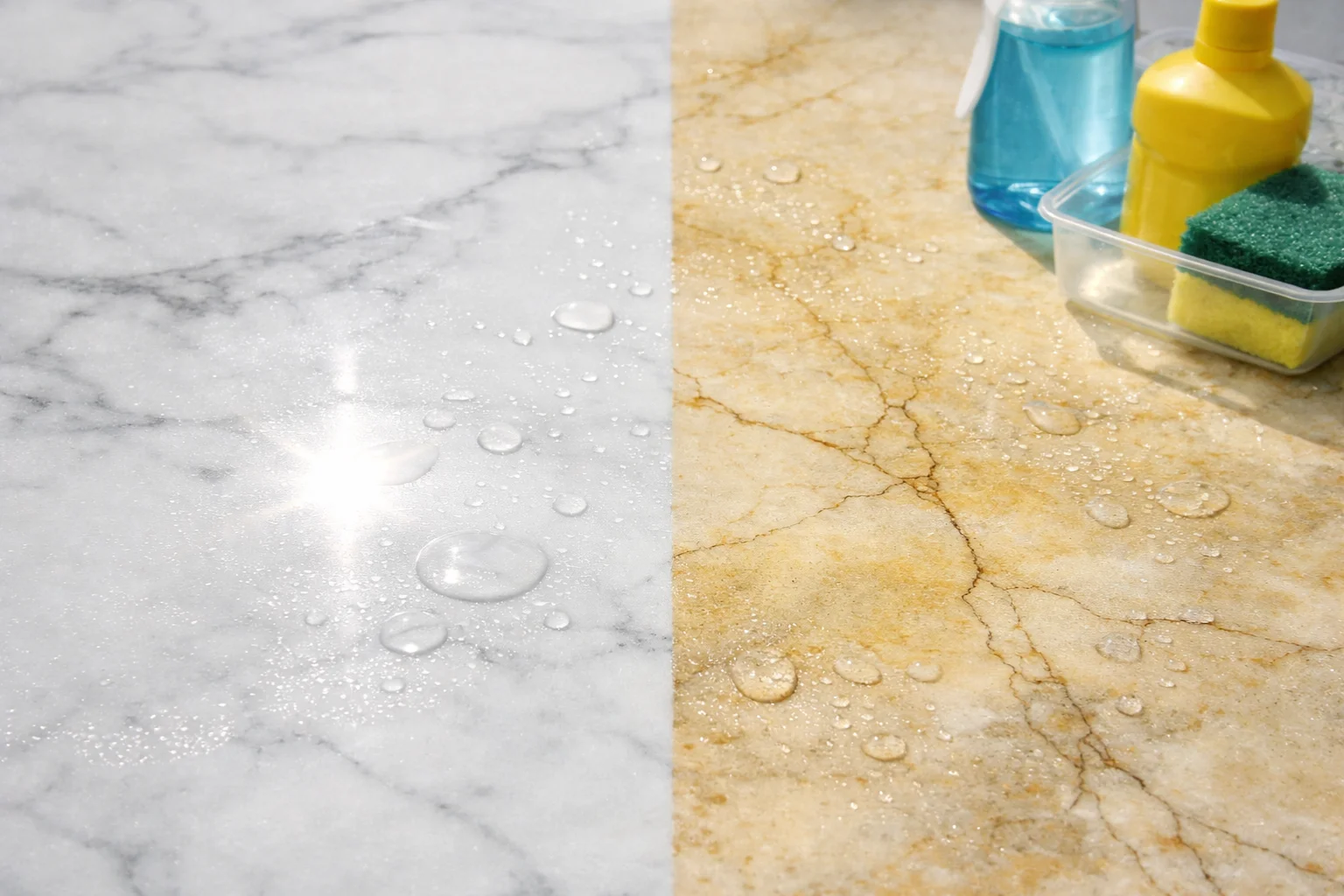
Marble has remained one of the world’s most desirable building materials for thousands of years. From luxury homes and five-star hotels to shopping centres and executive offices, marble delivers timeless beauty, elegant veining, and lasting value. However, one question continues to concern many homeowners and property managers after installation: why marble turns yellow.
If you have ever noticed white marble slowly developing cream, yellow, brown, or rust-coloured patches, you are not alone. Understanding why marble turns yellow is important because the discoloration is rarely random. In most cases, it results from natural minerals inside the stone, trapped moisture, incorrect installation, unsuitable cleaning products, prolonged exposure to sunlight, or poor maintenance practices.
Recommended Stone Solutions

Fortunately, yellowing does not always mean the marble is permanently damaged. Many causes can be prevented, while others can be successfully treated by experienced stone restoration professionals. Knowing why marble turns yellow allows homeowners to take action before minor discoloration becomes a costly restoration project.
Whether your marble is installed as kitchen worktops, bathroom vanities, flooring, staircases, wall cladding, or commercial surfaces, understanding why marble turns yellow helps you protect your investment for decades.
At Maruti Mining Limited, we supply premium natural marble together with professional guidance on installation, maintenance, and long-term stone care to ensure every project retains its original beauty.
You can explore our complete collection of premium marble, granite, quartzite, quartz, and architectural stone at marutimining.
What Does Yellow Marble Staining Actually Mean?
Before attempting to clean or restore marble, it is important to understand why marble turns yellow.
Yellowing does not always indicate surface dirt.
Instead, it may result from:
- Iron oxidation
- Trapped moisture
- Wax accumulation
- UV exposure
- Incorrect cleaning chemicals
- Poor installation
- Natural ageing
Each cause affects the stone differently and requires its own solution.
Simply cleaning the surface may not solve the problem if the discoloration originates inside the marble.
Why Marble Turns Yellow Because of Iron Oxidation
One of the most common answers to why marble turns yellow is iron oxidation.
Many natural marbles contain microscopic traces of iron.
Normally these minerals remain invisible.
However, when moisture reaches them, oxidation begins.
This is the same natural process that causes exposed steel to rust.
As oxidation develops inside the marble, homeowners may notice:
- Yellow patches
- Orange staining
- Rust-coloured marks
- Brown discolouration
Unlike ordinary dirt, these stains originate beneath the polished surface.
Some white marbles contain higher iron content than others, making careful stone selection particularly important for moisture-prone environments.
Why Marble Turns Yellow Due to Trapped Moisture
Another major reason why marble turns yellow is excessive moisture.
Marble is naturally porous.
Although sealing reduces absorption, water can still migrate through the stone if installation problems exist.
Common moisture sources include:
- Wet screeds
- Plumbing leaks
- Rising damp
- Inadequate waterproofing
- Poor drainage
- Flooding
- Excessive cleaning water
As moisture travels through the marble, it may react with naturally occurring minerals, creating yellow staining that gradually becomes more visible.
This is one reason professional installers always verify moisture levels before laying natural stone flooring.
Can Incorrect Installation Cause Marble to Turn Yellow?
Absolutely.
Improper installation is another important explanation for why marble turns yellow.
Natural stone requires specialist installation methods.
Problems may occur when installers use:
- Incorrect adhesives
- Wet substrates
- Inappropriate grout
- Poor waterproofing
- Unsuitable curing procedures
Moisture trapped beneath newly installed marble may take months to evaporate.
During this period, yellowing can gradually appear across sections of the floor or wall.
Professional installation significantly reduces these risks.
Why Marble Turns Yellow After Using the Wrong Cleaning Products
Many homeowners unknowingly contribute to why marble turns yellow by using household cleaning products designed for ceramic tiles rather than natural stone.
Products containing:
- Bleach
- Vinegar
- Lemon juice
- Ammonia
- Acidic cleaners
- Harsh degreasers
may damage protective sealers and leave residues that gradually affect the appearance of the marble.
Professional stone cleaners are specifically formulated to clean marble without altering its natural colour.
Wax Build-Up Can Make Marble Appear Yellow
Older maintenance methods often relied on waxes to increase surface shine.
Although initially attractive, wax gradually:
- Oxidises
- Collects dirt
- Traps dust
- Discolours over time
Eventually the surface develops a yellow appearance.
In many cases, homeowners believe the marble itself has changed colour when the actual problem is simply aged surface coating.
Professional stripping and polishing can often restore the original finish.
Does Sunlight Cause Marble to Yellow?
Direct sunlight can contribute to why marble turns yellow, particularly in bright interiors with large windows or skylights.
Long-term UV exposure may lead to:
- Colour changes
- Uneven fading
- Yellow tones
- Surface ageing
The extent depends on:
- Marble variety
- Mineral composition
- Surface finish
- Duration of sunlight exposure
High-quality window films and interior shading can help reduce prolonged UV exposure.
Which Marble Colours Show Yellowing Most Easily?
Although yellowing can affect many marble varieties, it is far more noticeable on:
- Pure white marble
- Light grey marble
- Cream marble
- Off-white marble
Darker marbles may also experience oxidation, but the colour change is usually much less visible.
For this reason, owners of white marble should pay particular attention to moisture control and routine maintenance.
Can Sealing Prevent Marble from Turning Yellow?
Sealing helps—but it is not a complete solution.
A quality penetrating sealer reduces the amount of water entering the stone, helping address one of the most common reasons why marble turns yellow.
However, sealers cannot completely prevent:
- Internal oxidation
- UV exposure
- Poor installation
- Wax build-up
- Incorrect cleaning
Instead, sealing should form part of a broader marble maintenance programme that includes proper cleaning and regular inspections.
Early Warning Signs You Should Never Ignore
The sooner you recognise why marble turns yellow, the easier it is to prevent permanent damage.
Watch for:
- Small yellow patches
- Rust-coloured spots
- Dark damp areas
- Uneven colour changes
- Yellow grout lines
- Moisture around plumbing fixtures
Early professional assessment often prevents more extensive restoration later.
For additional expert guidance on marble care, installation, and natural stone maintenance, visit the Maruti Mining Knowledge Base at:
How to Diagnose Why Marble Turns Yellow
Before choosing any cleaning method or restoration treatment, it is essential to identify the real reason why marble turns yellow. Treating the wrong cause may waste money and could even make the problem worse.
A professional stone specialist will usually examine:
- The location of the yellowing
- The age of the installation
- The marble type
- The cleaning products used
- Moisture conditions
- Previous sealing or polishing treatments
For example, yellowing near bathrooms, sinks, or exterior walls may indicate moisture-related issues, while yellow patches across a polished floor may suggest oxidation or surface coating problems.
Correct diagnosis is the foundation of effective marble restoration.
Surface Yellowing vs Internal Marble Discolouration
Understanding the difference between surface and internal staining helps explain why marble turns yellow in different situations.
Surface-Level Yellowing
Surface yellowing occurs when something affects the top layer of the marble.
Common causes include:
- Wax residues
- Dirt accumulation
- Cleaning product build-up
- Old polish coatings
This type of discoloration is often easier to correct through professional cleaning and refinishing.
Internal Yellowing
Internal discoloration occurs when the issue exists within the stone itself.
Common causes include:
- Iron oxidation
- Moisture penetration
- Mineral reactions
Internal stains often require specialist treatment because ordinary cleaning products cannot reach beneath the polished surface.
How Professionals Restore Yellow Marble
The restoration process depends on why marble turns yellow.
A professional stone restoration specialist may use several techniques.
Deep Cleaning
For surface contamination, deep cleaning removes:
- Dirt
- Grease
- Old residues
- Surface coatings
Specialist stone cleaners are selected carefully to avoid damaging the marble.
Wax and Coating Removal
If yellowing comes from aged wax or polish, professionals may strip the surface coating before evaluating the actual condition of the stone.
This often reveals the marble’s original colour beneath the discoloured layer.
Diamond Honing and Polishing
When the surface has become damaged or dull, mechanical restoration may be required.
This process can:
- Remove surface imperfections
- Restore smoothness
- Improve light reflection
- Enhance the natural marble appearance
Stain Treatment
Some oxidation or mineral stains require targeted treatment.
The approach depends on:
- Type of marble
- Depth of staining
- Mineral composition
- Location of the affected area
A professional assessment is important before applying any stain removal method.
How to Prevent Marble Yellowing in Homes and Commercial Buildings
The best way to manage why marble turns yellow is prevention.
A well-maintained marble surface can remain beautiful for decades when correct practices are followed.
Choose the Right Marble for the Location
Not every marble is suitable for every environment.
Before installation, consider:
- Indoor or outdoor use
- Moisture exposure
- Traffic levels
- Sunlight exposure
- Maintenance expectations
For example:
- Bathroom areas require careful moisture management.
- High-traffic floors require durable finishes.
- Bright areas may need UV protection planning.
Selecting the right stone reduces future maintenance challenges.
Install Marble Using Professional Techniques
Correct installation is one of the most effective ways to prevent discoloration.
A professional marble installation should include:
- Proper substrate preparation
- Correct adhesive selection
- Adequate curing time
- Moisture control
- Correct grout selection
- Appropriate sealing
Many cases of why marble turns yellow can be linked back to installation mistakes made years earlier.
Use Marble-Safe Cleaning Methods
Daily maintenance has a major impact on marble appearance.
Recommended practices include:
- Use pH-neutral stone cleaners.
- Avoid acidic household cleaners.
- Remove spills quickly.
- Use soft cleaning materials.
- Avoid excessive water during cleaning.
Regular gentle cleaning is safer than occasional aggressive cleaning.
Maintain Proper Sealing
Sealing protects marble from absorbing liquids and staining agents.
A proper maintenance programme includes:
- Initial sealing after installation
- Periodic inspection
- Re-sealing when required
The frequency depends on:
- Marble type
- Location
- Amount of use
- Cleaning routine
A kitchen worktop may require different care compared with decorative wall cladding.
Avoid Common Marble Care Mistakes
Many homeowners unintentionally accelerate discoloration by making simple maintenance mistakes.
Using Vinegar on Marble
Although vinegar is popular as a natural cleaner, it is acidic and unsuitable for marble.
It can gradually affect the stone surface and protective finishes.
Leaving Spills Unattended
Liquids such as:
- Coffee
- Tea
- Wine
- Cooking oils
- Cleaning chemicals
should be wiped quickly.
Using Abrasive Scrubbing Materials
Rough brushes and abrasive powders may damage the polished finish.
Applying Unknown Polishing Products
Some products create temporary shine but leave coatings that later contribute to yellow appearance.
Does White Marble Require More Maintenance?
White marble often receives more attention because even small colour changes are visible.
However, the solution is not avoiding white marble.
With correct care, white marble can remain one of the most elegant interior finishes available.
Important considerations include:
- Professional installation
- Correct sealing
- Suitable cleaning products
- Regular maintenance
Many luxury homes and commercial properties successfully use white marble because its beauty outweighs the additional care requirements.
Can Yellow Marble Become White Again?
The answer depends on the reason why marble turns yellow.
If the yellow appearance comes from:
- Wax build-up
- Surface residue
- Dirt
- Incorrect coatings
professional cleaning may restore much of the original appearance.
However, if the yellowing results from:
- Deep iron oxidation
- Permanent mineral changes
- Long-term moisture damage
complete colour restoration may not always be possible.
A stone specialist can assess the marble and recommend realistic solutions.
Questions to Ask Before Marble Restoration
Before hiring someone to restore yellow marble, ask:
- What is causing the yellow colour?
- Is the stain inside the stone or on the surface?
- Will polishing remove the problem?
- Does the marble need resealing?
- Could moisture still be present?
- What maintenance routine should be followed afterwards?
A correct diagnosis prevents unnecessary treatments.
Clients can also explore premium marble collections at marble-manufacturer-kenya, view granite solutions at top-granite-manufacturer-kenya-maruti-mining, discover engineered quartz surfaces at quartz-stone, or see completed stone projects at our-works.


Leave a Reply