


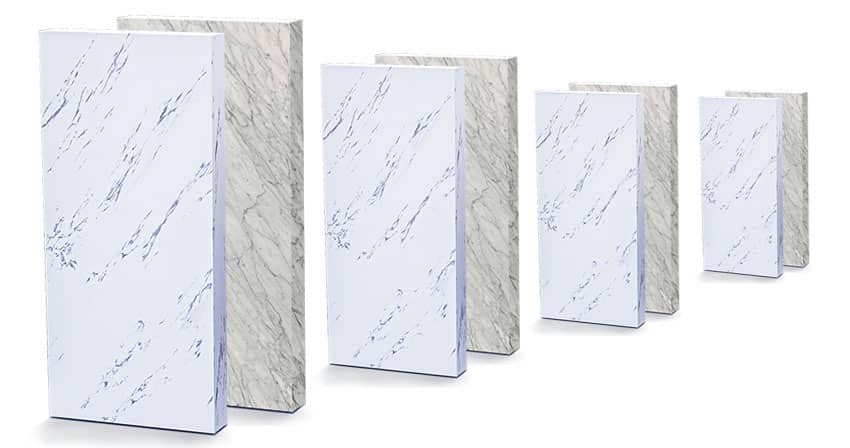
Choosing the correct marble thickness is one of the most important decisions when planning a natural stone project. While colour, pattern, and finish usually receive the most attention, slab depth directly affects the stone’s strength, weight, installation method, appearance, and suitability for different applications.
Marble is available in different thicknesses because every application has different structural requirements. A lightweight wall cladding project does not need the same depth as a kitchen island, staircase tread, or heavy-duty table top. Selecting the wrong thickness can lead to unnecessary costs, installation challenges, or performance issues.
Recommended Stone Solutions


Understanding marble thickness helps homeowners, architects, contractors, and designers choose the right slab for each purpose. Thin slabs can create elegant finishes while reducing weight, whereas thicker marble provides additional strength and durability where structural support is required.
At Maruti Mining Limited, we guide clients through material selection, helping them choose the correct marble thickness based on the project type, installation method, and long-term performance expectations.
You can explore our complete range of premium marble, granite, quartzite, quartz, and architectural stone products available through Maruti Mining Limited at marutimining.
Why Marble Thickness Matters
The thickness of a marble slab affects several important factors:
- Structural strength
- Weight
- Installation method
- Fabrication requirements
- Cost
- Visual appearance
Choosing the correct thickness ensures the stone performs properly throughout its lifespan.
Common Marble Thickness Options
Although thickness varies depending on supplier, quarry, and application, common marble slab depths include:
| Thickness | Common Applications |
|---|---|
| 10–15 mm | Wall cladding, decorative panels |
| 18–20 mm | Flooring, light-use surfaces |
| 25–30 mm | Kitchen worktops, vanities, table tops |
| 40 mm+ | Heavy-duty edges, statement pieces |
The ideal choice depends on where the marble will be installed.
Thin Marble Slabs for Wall Cladding
Thin marble is commonly used for decorative vertical applications.
Suitable areas include:
- Feature walls
- Lobby walls
- Bathroom walls
- Decorative panels
- Interior columns
Advantages include:
- Lower weight
- Easier handling
- Reduced structural load
- Elegant appearance
Because wall applications do not carry the same load as horizontal surfaces, thinner marble can often provide the desired visual effect without unnecessary material thickness.
Marble Flooring Thickness
Flooring requires careful consideration because the surface must withstand regular foot traffic.
The right marble thickness for flooring depends on:
- Traffic levels
- Subfloor condition
- Installation method
- Location
Residential flooring may require different specifications compared with hotels, offices, or commercial buildings.
Proper installation is just as important as slab thickness. Even premium marble can perform poorly if the substrate preparation or installation process is incorrect.
Marble Worktop Thickness
Kitchen worktops and bathroom vanities are among the most common applications where thickness matters.
A thicker marble worktop provides:
- Increased strength
- Better edge appearance
- Premium visual weight
- Improved durability
Popular options include:
- Standard slab thickness
- Laminated edges to create a thicker appearance
- Custom fabricated profiles
Many luxury kitchens use built-up edges to achieve the appearance of a much thicker stone while maintaining practical weight requirements.
Marble Table Top Thickness
Dining tables, coffee tables, and side tables require careful thickness selection.
Factors include:
- Table size
- Support structure
- Span length
- Expected use
A large marble dining table requires sufficient thickness or additional reinforcement to prevent stress on the stone.
For furniture applications, professional fabrication is essential because the marble must be balanced, supported, and finished correctly.
Marble Staircase Thickness
Staircases require strong, durable marble pieces because they experience repeated impact and weight.
Important considerations include:
- Tread thickness
- Stair width
- Support structure
- Edge finishing
Thicker marble treads provide additional strength and a premium architectural appearance.
Marble Thickness for Outdoor Applications
Outdoor marble installations require careful stone selection.
Consider:
- Weather exposure
- Temperature changes
- Surface finish
- Installation method
Outdoor applications may require different thickness specifications compared with interior projects.
Proper drainage and installation techniques are essential for long-term performance.
Thickness and Marble Weight
One reason thickness matters is weight.
Thicker marble:
- Requires stronger handling equipment
- Increases transport considerations
- May require additional structural support
During planning, architects and installers must consider whether the building structure can support the selected material.
For additional guidance, you can also visit our Knowledge Base for expert insights at knowledge-base.
How Marble Thickness Affects Cost
When selecting marble thickness, cost is an important consideration because thicker slabs generally require more raw material, additional processing, and more complex handling.
The final cost may be influenced by:
- Thickness of the slab
- Marble variety
- Slab availability
- Cutting requirements
- Transportation
- Installation complexity
A thicker marble slab is not always the best choice. The goal is to select the correct thickness for the application rather than simply choosing the thickest available option.
Thin vs Thick Marble: Which Is Better?
There is no single “best” marble thickness for every project.
The correct choice depends on the intended use.
Advantages of Thinner Marble
Thin marble can provide:
- Lower material costs
- Easier transportation
- Reduced structural load
- Faster installation
It is particularly suitable for:
- Wall applications
- Decorative features
- Large vertical surfaces
Advantages of Thicker Marble
Thicker marble provides:
- Greater strength
- Better impact resistance
- Premium appearance
- More fabrication possibilities
It is commonly preferred for:
- Kitchen islands
- Worktops
- Staircases
- Furniture pieces
Marble Thickness and Edge Profiles
The selected thickness affects the final edge design.
Popular marble edge options include:
- Square edge
- Pencil edge
- Bullnose edge
- Bevel edge
- Mitred edge
- Custom decorative profiles
A thicker slab allows more flexibility when creating substantial edge details.
For example, a luxury kitchen may use a fabricated edge that creates the appearance of a thick marble block while maintaining efficient material usage.
Built-Up Marble Edges
Many premium installations use built-up edges to achieve a thicker visual effect.
This involves:
- Installing a standard thickness slab
- Adding matching marble strips underneath
- Creating the appearance of a thicker profile
Benefits include:
- Luxury appearance
- Reduced material weight
- Improved design flexibility
- Easier handling
This technique is common in:
- Kitchen islands
- Reception counters
- Bathroom vanities
Marble Thickness and Seams
The thickness of marble can also influence how joints and seams appear.
Professional planning considers:
- Slab dimensions
- Installation layout
- Pattern direction
- Joint placement
Thicker marble does not automatically eliminate seams, but careful slab selection and fabrication can minimise their visual impact.
Choosing Marble Thickness for Different Projects
Residential Projects
Homes often use different thicknesses depending on the room.
Examples:
Kitchen:
- Stronger slabs for worktops and islands
Bathroom:
- Medium thickness for vanities and walls
Living Areas:
- Flooring thickness based on traffic requirements
Commercial Projects
Commercial spaces require additional planning because of heavier use.
Examples include:
- Hotels
- Shopping centres
- Offices
- Restaurants
These projects require consideration of:
- Foot traffic
- Maintenance schedules
- Safety requirements
- Long-term durability
The Role of Professional Fabrication
Selecting the right marble thickness is only one part of creating a successful installation.
Professional fabrication ensures:
- Accurate cutting
- Proper edge finishing
- Safe handling
- Correct reinforcement
- Quality installation
Experienced stone fabricators understand how different marble thicknesses behave during cutting, polishing, and installation.
Common Marble Thickness Mistakes
Choosing Thickness Based Only on Appearance
A thicker slab may look impressive, but it may not be necessary for every application.
The correct thickness should match the structural requirements.
Ignoring Support Requirements
Large marble pieces require proper support.
This is especially important for:
- Floating vanities
- Large islands
- Extended table tops
Selecting Thin Marble for High-Stress Areas
Thin marble may be unsuitable for surfaces exposed to:
- Heavy impact
- Excessive weight
- Frequent use
Always match the material specification with the environment.
How to Select the Right Marble Thickness
Before choosing a slab depth, consider:
- Where the marble will be installed
- Expected daily use
- Support structure
- Desired appearance
- Budget
- Maintenance expectations
Working with a professional stone supplier ensures the final choice balances design and performance.
Clients can also learn more about premium marble options at marble-manufacturer-kenya, explore granite alternatives at top-granite-manufacturer-kenya-maruti-mining, or discover engineered quartz surfaces at quartz-stone.
Marble Thickness and Installation Methods
The selected marble thickness influences how the stone is installed and what preparation is required before installation begins.
Different applications use different installation approaches.
Wall Installation
For marble wall cladding, installers consider:
- Wall strength
- Adhesive compatibility
- Panel size
- Weight distribution
Thinner marble panels are often preferred for vertical applications because they reduce the load placed on the supporting structure.
Floor Installation
Floor marble requires:
- A stable substrate
- Correct adhesive selection
- Proper levelling
- Accurate joint alignment
The installation method must match the thickness and expected traffic conditions.
Worktop Installation
For marble countertops and islands, installers consider:
- Cabinet support
- Overhang length
- Reinforcement requirements
- Sink and appliance cut-outs
Large marble pieces require careful handling because incorrect support can create stress points.
Marble Thickness for Luxury Designs
In premium architectural projects, thickness is often used as a design feature rather than only a structural requirement.
Designers use thicker-looking marble elements to create:
- Strong visual impact
- Architectural depth
- Luxury detailing
- Statement features
Examples include:
- Thick island edges
- Floating vanity tops
- Sculptural furniture
- Reception counters
Modern fabrication techniques allow designers to achieve dramatic appearances while maintaining practical installation requirements.
How Architects Specify Marble Thickness
Architects and designers usually consider several factors before specifying marble depth.
These include:
- Application type
- Building regulations
- Structural support
- Visual requirements
- Maintenance expectations
- Project budget
A well-designed specification ensures the marble performs correctly while achieving the intended aesthetic result.
Why Viewing the Actual Slab Matters
Thickness selection should always be combined with proper slab selection.
Viewing the actual marble slab allows you to evaluate:
- Natural veining
- Colour movement
- Surface quality
- Pattern direction
- Available dimensions
This is especially important for premium installations where the stone itself becomes a major design element.
Why Choose Maruti Mining Limited
At Maruti Mining Limited, we help clients select the correct marble thickness for every application, from luxury residential interiors to large commercial developments. Our experienced team provides technical guidance to ensure each stone choice delivers the right balance of beauty, strength, and practicality.
Our services include:
- Premium marble slab selection
- Thickness recommendations
- Full slab viewing
- Digital measurements
- Precision CNC fabrication
- Custom edge finishing
- Professional installation support
Whether you are planning marble flooring, kitchen worktops, bathroom vanities, staircases, furniture pieces, or feature walls, our specialists help you choose a specification that meets your project’s needs.
Clients can also visit our Knowledge Base for expert insights at knowledge-base, explore completed stone projects at our-works, learn more about marble collections at marble-manufacturer-kenya, explore granite solutions at top-granite-manufacturer-kenya-maruti-mining, discover quartz surfaces at quartz-stone, or contact our team for project consultation at contact-us.
Conclusion
Understanding marble thickness is essential when planning any natural stone project. The correct slab depth depends on where the marble will be installed, how much stress it will experience, and the design outcome you want to achieve. Thin marble slabs can provide elegant and efficient solutions for wall applications, while thicker slabs deliver the strength and visual presence required for worktops, stairs, and furniture.
Choosing the wrong thickness can lead to unnecessary costs or performance issues, which is why professional advice is valuable during the planning stage. By considering application, support requirements, fabrication methods, and installation conditions, homeowners, architects, and developers can select marble thickness that delivers both lasting durability and exceptional beauty.
The ideal marble installation is not simply about choosing the thickest slab available—it is about choosing the right thickness for the right purpose.
Bring Your Vision to Life in Stone
From elegant marble walls to premium worktops and custom architectural features, Maruti Mining Limited provides complete natural stone solutions tailored to every project. Our experts help you select the right marble, thickness, finish, and fabrication approach for outstanding results.
CUSTOM FABRICATION & INSTALLATION ACROSS EAST AFRICA
✔ Premium Collection of 80+ Natural Stone Varieties
✔ Expert Marble Thickness & Material Consultation
✔ Precision CNC Cutting & Professional Installation
✔ Full Slab Viewing Before Fabrication
✔ Residential, Commercial & Hospitality Stone Solutions
✔ Serving Kenya (Nairobi, Mombasa, Kisumu, Nakuru), Uganda, Tanzania, Rwanda and the wider East African region.
Request Your Free Consultation
Maruti Mining Limited
Email: [email protected]
Phone: +254 736 701 174 | +254 728 789 164 | +254 733 519 836
You May Also Like


Visit Us: Nairobi, Kenya
Website: https://marutimining.com/
Leave a Reply