


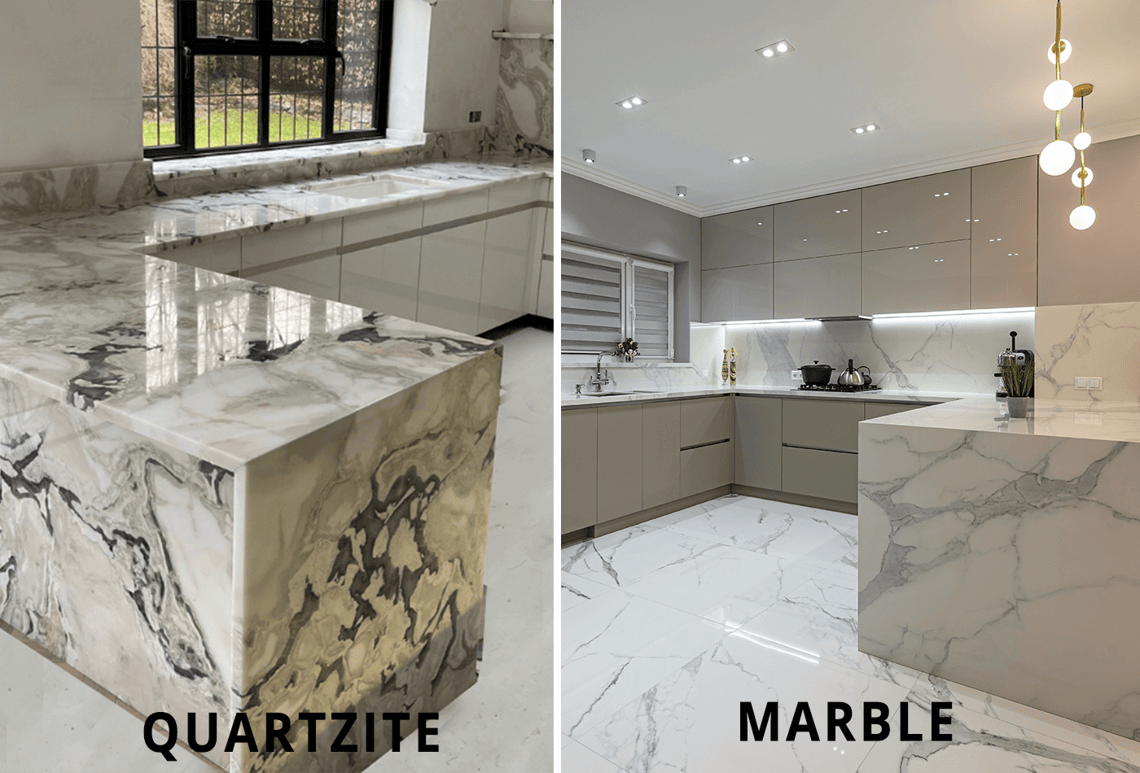
When choosing a premium natural stone for a kitchen worktop, bathroom vanity, feature wall, island, or commercial interior, many buyers find themselves comparing marble vs quartzite. The two materials can appear remarkably similar, with flowing veins, elegant backgrounds, and luxurious finishes that make them popular choices among architects, designers, and homeowners.
However, despite their visual similarities, marble and quartzite behave very differently in everyday use. Their geological formation, hardness, resistance to acids, maintenance requirements, and suitability for different applications vary significantly.
Recommended Stone Solutions



Marble is a metamorphic stone formed from limestone and is valued for its classic beauty, soft veining, and timeless elegance. Quartzite is also a metamorphic stone, but it forms from sandstone under intense heat and pressure, creating a much harder material with exceptional durability.
This difference in formation explains why quartzite often performs closer to granite while maintaining the elegant appearance many people associate with marble.
Understanding the difference between marble vs quartzite allows buyers to select the right material based on how the space will be used. A luxury bathroom wall may benefit from the artistic beauty of marble, while a heavily used kitchen island may require the additional durability of quartzite.
At Maruti Mining Limited, we help homeowners, architects, and developers compare natural stones based on both appearance and performance, ensuring every material choice suits the project’s practical requirements and design goals.
You can explore our premium collection of marble, quartzite, granite, quartz, and other architectural stones available through Maruti Mining Limited at marutimining.
Marble vs Quartzite: Quick Comparison
| Feature | Marble | Quartzite |
|---|---|---|
| Appearance | Soft flowing veins | Marble-like patterns with stronger durability |
| Hardness | Softer natural stone | Extremely hard natural stone |
| Scratch Resistance | Moderate | Excellent |
| Acid Resistance | Sensitive | Better resistance |
| Heat Resistance | Very good | Excellent |
| Maintenance | Requires more care | Lower maintenance |
| Ideal Use | Luxury interiors | High-use surfaces |
Both stones offer exceptional beauty, but their performance characteristics are different.
How Marble Is Formed
Marble develops when limestone undergoes heat and pressure deep beneath the earth’s surface.
This process creates:
- Crystalline structure
- Elegant veining
- Soft colour movement
- Unique patterns
The minerals present during formation determine the final appearance of the marble.
Popular marble varieties include:
- Carrara marble
- Calacatta marble
- Statuario marble
- Emperador marble
Each variety has its own visual character and rarity.
How Quartzite Is Formed
Quartzite begins as sandstone that transforms under extreme geological pressure and heat.
During this process:
- Quartz grains fuse together
- The stone becomes extremely dense
- Hardness increases significantly
This creates a natural stone with:
- High durability
- Excellent scratch resistance
- Strong structural performance
Many quartzites have marble-like veining, making them attractive alternatives for demanding applications.
Appearance Differences
The biggest reason people compare marble vs quartzite is their similar appearance.
Marble Appearance
Marble is known for:
- Dramatic veining
- Soft transitions
- Elegant movement
- Classic luxury appeal
It creates a sophisticated and artistic look.
Quartzite Appearance
Quartzite often features:
- Bold veins
- Crystalline patterns
- Strong natural movement
- Marble-inspired designs
Popular quartzites can resemble premium marble while offering greater durability.
Hardness Comparison
Hardness is one of the biggest differences between marble and quartzite.
Quartzite is significantly harder because of its high quartz content.
This makes quartzite more resistant to:
- Scratching
- Daily wear
- Heavy kitchen activity
Marble remains a durable stone but requires more careful use in demanding environments.
The Acid Test Difference
One important difference in marble vs quartzite is how each stone reacts to acids.
Marble contains calcium carbonate, which can react with acidic substances such as:
- Lemon juice
- Vinegar
- Some cleaning products
This reaction can create dull marks known as etching.
Quartzite generally offers much better resistance because its composition is dominated by quartz minerals.
However, professional testing is recommended because some stones marketed as quartzite may actually be softer stones or marble varieties.
Kitchen Applications
The kitchen is where the marble versus quartzite decision becomes most important.
Marble Kitchens
Marble works beautifully for:
- Luxury islands
- Statement counters
- Baking areas
- Decorative surfaces
It requires more care but delivers unmatched elegance.
Quartzite Kitchens
Quartzite is ideal for:
- Busy family kitchens
- Large islands
- High-use countertops
- Commercial food preparation areas
It combines premium appearance with excellent durability.
Bathroom Applications
Both materials perform well in bathrooms.
Marble is often selected for:
- Shower walls
- Vanity tops
- Luxury flooring
- Feature walls
Quartzite provides:
- Strong vanity surfaces
- Durable wall cladding
- Long-lasting finishes
The choice depends on the desired appearance and maintenance expectations.
For more guidance, you can also visit our Knowledge Base for expert insights at knowledge-base.
Maintenance Requirements: Marble vs Quartzite
When comparing marble vs quartzite, maintenance is one of the most important practical differences. Both materials are natural stones and require proper care, but marble generally demands more attention because of its chemical sensitivity.
Marble Maintenance
Marble requires:
- Regular sealing
- Prompt cleaning of spills
- pH-neutral cleaning products
- Protection from acidic substances
- Careful handling in high-use areas
Because marble can develop etching from acidic materials, homeowners should understand that some surface changes are part of the natural ageing process.
Many designers appreciate this characteristic because marble develops a unique patina over time, adding character and depth to the surface.
Quartzite Maintenance
Quartzite is generally easier to maintain because of its hardness and resistance.
Recommended care includes:
- Periodic sealing
- Regular cleaning
- Avoiding harsh chemicals
- Using appropriate stone cleaners
Its dense structure makes it suitable for areas where durability is a priority.
Scratch Resistance
Scratch resistance is another major difference between the two stones.
Marble
Marble is softer and can show signs of wear more easily in busy areas.
Potential concerns include:
- Knife marks
- Surface scratches
- Edge wear
For this reason, marble is often preferred for carefully designed luxury spaces rather than extremely high-use surfaces.
Quartzite
Quartzite performs exceptionally well against everyday wear.
Benefits include:
- Strong resistance to scratching
- Excellent durability
- Better performance in busy kitchens
This makes quartzite a popular alternative for homeowners who want the marble appearance with improved practical performance.
Heat Resistance
Both marble and quartzite handle heat well compared with many manufactured surfaces.
However:
Marble
Suitable for:
- Fireplace surrounds
- Kitchen areas
- Decorative applications
Quartzite
Suitable for:
- Kitchen islands
- Cooking areas
- Outdoor applications (depending on the stone)
Despite their heat resistance, using protective pads under extremely hot cookware is recommended to preserve the finish.
Porosity and Staining
Natural stone porosity varies depending on the specific material.
Marble
Marble may absorb liquids more easily, meaning substances such as:
- Oil
- Wine
- Coffee
- Coloured liquids
should be cleaned quickly.
Quartzite
Quartzite generally offers better resistance to staining due to its dense composition.
However, sealing remains important because even high-quality quartzite benefits from additional protection.
Cost Comparison
The cost difference between marble vs quartzite depends on:
- Stone rarity
- Origin
- Availability
- Slab size
- Thickness
- Fabrication requirements
Marble Cost Factors
Premium marble varieties may have higher prices due to:
- Limited quarry production
- Recognised origins
- Unique veining
- Global demand
Rare Italian marbles, for example, often command premium prices.
Quartzite Cost Factors
Quartzite pricing is influenced by:
- Quarry location
- Colour popularity
- Pattern complexity
- Extraction difficulty
Some quartzites are among the most premium natural stones available because of their beauty and performance.
Fabrication Differences
Both stones require professional fabrication, but their characteristics affect the process.
Marble Fabrication
Fabricators must consider:
- Softer composition
- Edge protection
- Careful handling
- Polishing requirements
Quartzite Fabrication
Quartzite requires:
- Strong cutting equipment
- Diamond tooling
- Skilled workmanship
- Careful handling due to density
Experienced fabricators understand how to work with each material safely.
Choosing the Right Stone for Your Lifestyle
The best choice between marble vs quartzite depends on how the space will be used.
Choose marble if you prioritise:
- Artistic appearance
- Luxury aesthetics
- Classic design
- Unique veining
Choose quartzite if you prioritise:
- Durability
- Lower maintenance
- Heavy-use performance
- Marble-like appearance
Neither material is universally better. The right choice depends on your lifestyle and project requirements.
Common Buying Mistakes
Assuming Similar Appearance Means Similar Performance
Two slabs may look almost identical but behave very differently because of their mineral composition.
Always understand the technical characteristics before purchasing.
Choosing Based Only on Colour
A beautiful stone must also suit its intended application.
Consider:
- Daily usage
- Maintenance expectations
- Exposure to heat or moisture
- Cleaning habits
Not Testing the Material
Because some quartzites and marbles can appear similar, professional identification is important.
A reliable supplier can help confirm:
- Stone classification
- Performance characteristics
- Suitable applications
Clients can also explore quartzite options , learn more about premium marble collections at marble-manufacturer-kenya, or compare granite alternatives at top-granite-manufacturer-kenya-maruti-mining.




Leave a Reply