


Choosing between marble and granite is one of the biggest decisions homeowners, architects, interior designers, and property developers make when selecting natural stone for a project. Whether you’re designing a luxury kitchen, an elegant bathroom, a hotel reception, a commercial workspace, or a feature wall, understanding the differences between marble vs granite will help you choose a material that balances beauty, durability, maintenance, and long-term value.
Although both materials are natural stones formed over millions of years, they differ significantly in appearance, composition, hardness, porosity, and performance. Marble is celebrated for its soft veining, timeless elegance, and luxurious aesthetic, making it a favourite for premium interiors. Granite, on the other hand, is renowned for its exceptional durability, scratch resistance, and suitability for demanding, high-traffic environments.
Recommended Stone Solutions


Many buyers assume one material is universally better than the other. In reality, the right choice depends entirely on the intended application. A marble feature wall that creates a stunning focal point in a hotel lobby may not be the ideal material for a heavily used commercial kitchen, while granite’s rugged durability may be unnecessary for a decorative bathroom vanity where visual impact takes priority.
When comparing marble vs granite, it is also important to consider practical factors such as maintenance, sealing requirements, heat resistance, stain resistance, fabrication complexity, and overall project budget. Looking beyond the initial purchase price helps ensure that the selected stone continues to perform beautifully for many years.
At Maruti Mining Limited, we help homeowners, architects, contractors, and developers compare marble and granite side by side, allowing them to make informed decisions based on performance, aesthetics, and project requirements rather than marketing claims alone.
You can explore our complete collection of premium marble, granite, quartz, quartzite, travertine, limestone, sandstone, and other architectural stone products available through Maruti Mining Limited at marutimining.
Marble vs Granite at a Glance
Both stones offer outstanding performance, but each excels in different situations.
| Feature | Marble | Granite |
|---|---|---|
| Appearance | Elegant flowing veining | Speckled or crystalline patterns |
| Hardness | Softer | Harder |
| Scratch Resistance | Moderate | Excellent |
| Heat Resistance | Excellent | Excellent |
| Stain Resistance | Requires sealing | Better natural resistance |
| Maintenance | Moderate | Lower |
| Typical Style | Luxury interiors | High-use residential and commercial spaces |
Understanding these differences is the first step in choosing the right material.
Appearance
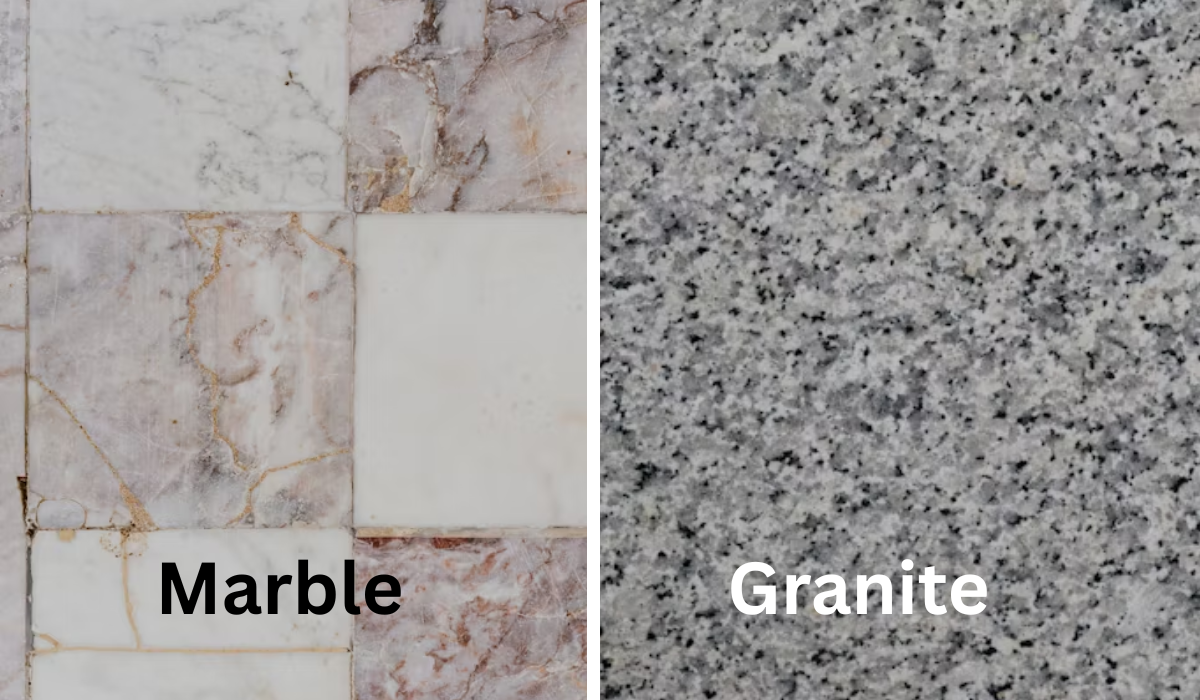
One of the biggest differences in marble vs granite is visual character.
Marble
Marble is known for:
- Elegant veining
- Soft colour transitions
- Luxurious appearance
- Timeless architectural appeal
Each slab has a distinctive natural pattern that cannot be replicated exactly.
Granite
Granite typically features:
- Mineral crystals
- Speckled textures
- Rich colour variation
- Consistent durability
Granite offers a broader range of darker colours and dramatic natural textures.
Hardness
Granite is generally harder than marble.
This makes granite more resistant to:
- Scratches
- Chips
- Everyday wear
- Heavy use
Marble remains durable but requires greater care in busy environments.
Heat Resistance
Both materials perform exceptionally well around heat.
Suitable applications include:
- Kitchen worktops
- Fireplace surrounds
- Outdoor kitchens
- Commercial preparation areas
However, using trivets or protective pads is still recommended to preserve the surface finish.
Scratch Resistance
Granite has a clear advantage where scratch resistance is important.
Granite performs well in:
- Family kitchens
- Restaurants
- Commercial workspaces
- High-traffic areas
Marble is better suited to areas where aesthetics are prioritised over heavy daily use.
Stain Resistance
Neither marble nor granite is completely stain-proof.
Both benefit from professional sealing.
Marble generally absorbs liquids more readily than granite, making prompt cleaning particularly important.
Maintenance Requirements
Routine maintenance helps preserve both materials.
Recommended care includes:
- Cleaning with pH-neutral stone cleaners
- Wiping spills quickly
- Avoiding acidic chemicals
- Resealing when necessary
Following proper maintenance guidelines significantly extends the life of natural stone.
Available Colours
Marble is commonly available in:
- White
- Grey
- Black
- Green
- Beige
- Brown
Granite is available in an even wider colour range, including:
- Black
- White
- Grey
- Blue
- Red
- Green
- Gold
- Brown
Colour choice often depends on the overall interior design concept.
Popular Applications
Marble
Ideal for:
- Luxury bathrooms
- Feature walls
- Fireplace surrounds
- Reception counters
- Dining tables
Granite
Ideal for:
- Kitchen worktops
- Islands
- Staircases
- Commercial counters
- Outdoor kitchens
Selecting the right stone for the right application improves long-term performance.
For additional information about premium natural stone, you can also visit our Knowledge Base for expert insights at knowledge-base.
Durability
When comparing marble vs granite, durability is often one of the deciding factors.
Marble
Marble is a durable natural stone that has been used in architecture for thousands of years. However, because it is softer than granite, it is more susceptible to:
- Surface scratches
- Edge chipping
- Acid etching
- Wear in high-traffic areas
With proper care, marble installations can last for generations.
Granite
Granite is one of the hardest natural stones available for architectural use.
Its durability makes it highly resistant to:
- Scratches
- Abrasion
- Heavy impacts
- Everyday wear
This makes granite an excellent choice for busy family homes and commercial environments.
Porosity and Sealing
Both marble and granite are natural stones with varying levels of porosity.
Professional sealing helps:
- Reduce moisture absorption
- Improve stain resistance
- Simplify cleaning
- Extend the stone’s lifespan
Because marble is generally more porous, it often benefits from more frequent resealing than granite.
Fabrication
Both materials require specialist equipment for professional fabrication.
The process generally includes:
- Digital templating
- CNC precision cutting
- Edge profiling
- Sink and hob cut-outs
- Polishing
- Quality inspection
Experienced fabricators understand the different machining characteristics of each material and adjust their techniques accordingly.
Marble vs Granite for Kitchens
The kitchen is where buyers most often compare marble vs granite.
Choose Marble If You Want:
- Elegant veining
- Luxury aesthetics
- Statement kitchen islands
- High-end interior design
Choose Granite If You Want:
- Maximum durability
- Better scratch resistance
- Lower maintenance
- Excellent everyday performance
The best choice depends on how the kitchen will be used and the level of maintenance you are comfortable with.
Marble vs Granite for Bathrooms
Bathrooms generally experience less wear than kitchens, making both materials suitable options.
Marble creates:
- Spa-inspired interiors
- Luxury vanities
- Elegant shower walls
- Sophisticated flooring
Granite provides:
- Excellent moisture resistance
- Strong vanity tops
- Durable flooring
- Easy maintenance
Marble vs Granite for Commercial Projects
Commercial environments demand materials that combine appearance with long-term performance.
Marble is frequently specified for:
- Hotel receptions
- Luxury retail stores
- Corporate headquarters
- Feature walls
Granite is often preferred for:
- Reception desks
- Restaurant worktops
- Office kitchens
- Public staircases
- High-traffic flooring
Selecting the appropriate stone helps reduce long-term maintenance costs.
Long-Term Value
Both materials offer excellent long-term value when professionally installed.
Factors influencing lifetime value include:
- Installation quality
- Regular maintenance
- Correct sealing
- Intended application
- Daily usage
Choosing the right material for the environment often matters more than selecting the most expensive option.
Common Misconceptions
Several myths continue to influence the marble vs granite discussion.
“Granite Is Indestructible”
Granite is extremely durable, but it can still chip under heavy impact and benefits from proper care and sealing.
“Marble Is Too Delicate”
Although marble requires more maintenance than granite, it has been used successfully in prestigious buildings and luxury homes for centuries.
“One Stone Is Better Than the Other”
Neither material is universally superior.
The best choice depends on:
- Project type
- Design preferences
- Budget
- Maintenance expectations
- Performance requirements
Questions to Ask Before Choosing
Before selecting either marble or granite, consider the following:
- Will the surface experience heavy daily use?
- Is stain resistance a priority?
- Do you prefer dramatic veining or crystalline patterns?
- How much maintenance are you willing to perform?
- Does the project prioritise aesthetics or durability?
Answering these questions will help narrow the best option for your specific application.
Clients comparing natural stone can also learn more about marble collections at marble-manufacturer-kenya, explore our premium granite range at top-granite-manufacturer-kenya-maruti-mining, or discover engineered quartz surfaces at quartz-stone.


Leave a Reply